

EpicureanFriends - Classical Epicurean Philosophy
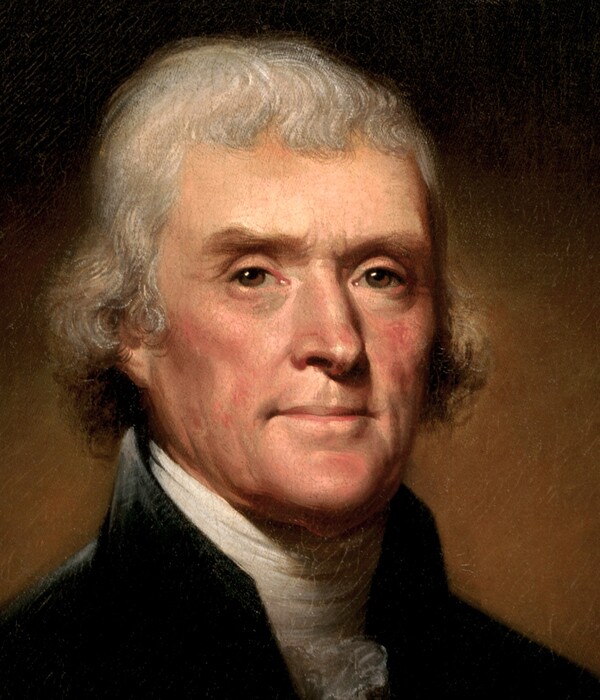 Thomas Jefferson, to William Short, October 31, 1819
I take the liberty of observing that you are not a true disciple of our master Epicurus, in indulging the indolence to which you say you are yielding. One of his canons, you know, was that “that indulgence which prevents a greater pleasure, or produces a greater pain, is to be avoided.” Your love of repose will lead, in its progress, to a suspension of healthy exercise, a relaxation of mind, an indifference to everything around you, and finally to a debility of body, and hebetude of mind, the farthest of all things from the happiness which the well-regulated indulgences of Epicurus ensure; fortitude, you know is one of his four cardinal virtues. That teaches us to meet and surmount difficulties; not to fly from them, like cowards; and to fly, too, in vain, for they will meet and arrest us at every turn of our road. Weigh this matter well; brace yourself up....
Welcome to EpicureanFriends.com
EpicureanFriends.com is an internet home for the study and promotion of Epicurean Philosophy. Guests are welcome to browse our public resources and ask questions about the philosophy of Epicurus. If you find yourself in agreement with the Epicurean worldview, please consider applying for a full account, which allows greater access and interaction with those of us who are working as a team for the rediscovery of Epicurean philosophy in the modern world. We have a firm set of rules that apply to all posting on this site, but we invite all who are sincerely inquiring about Epicurean philosophy to interact with us. If you have any questions about guest accounts just send us an email.
Who Was Epicurus and What Did He Really Teach?
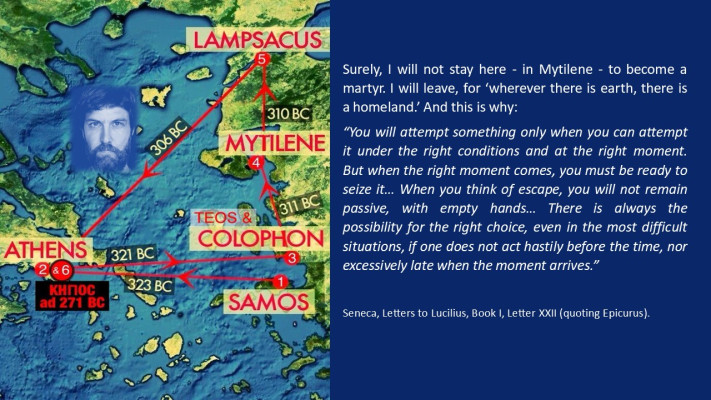
Epicurus (341—270 BC) was a Greek philosopher who founded one of the most influential and enduring philosophical schools of the ancient world. After recruiting a network of like-minded friends and colleagues in the provincial areas of Greece, he moved his school to Athens itself, where he taught for decades in a school that came to be known as “the Garden.” Epicurus built his philosophy on three interlocking foundations:
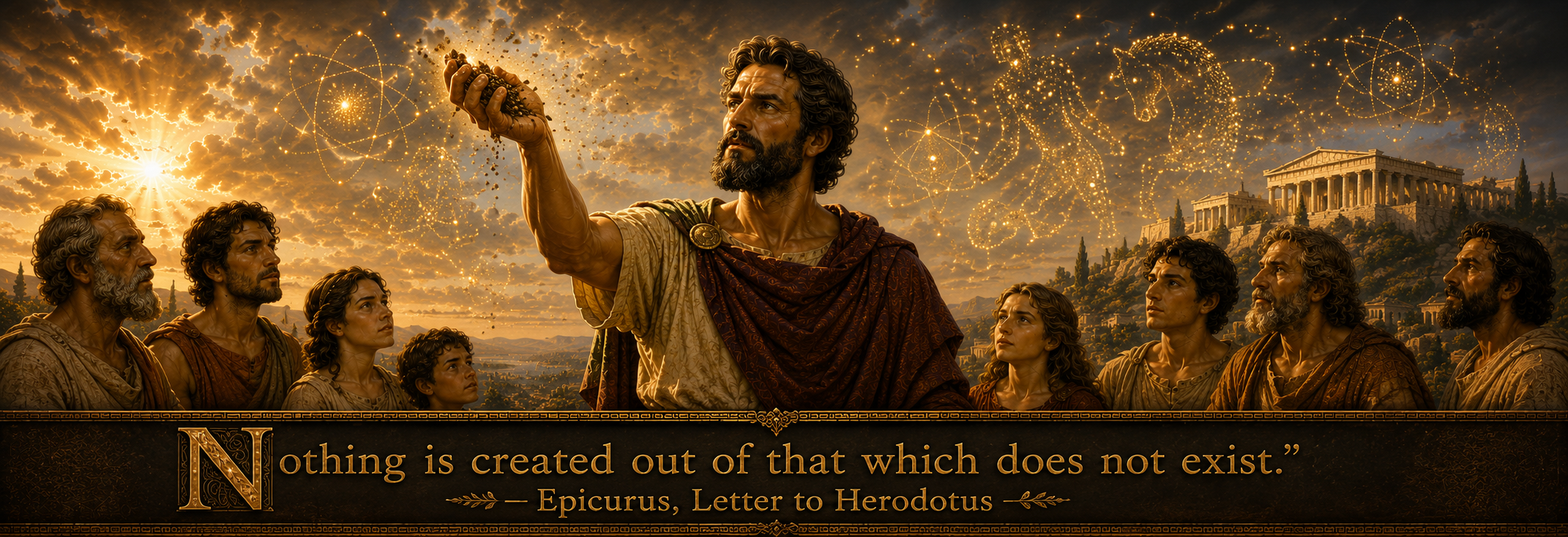
- Physics: The universe is entirely natural, and as a whole it has always existed, not created or controlled by supernatural forces. Nothing is ever created from nothing, and there is no life after death or reason to be concerned about any supernatural forces governing our lives.
- Canonics: Reality and Truth are established by the faculties given to us by Nature, which are our five senses, our feelings of pleasure and pain, and our anticipations (a natural capacity to recognize patterns). Knowledge does not and cannot come from divine revelation or dialectical logic disconnected from the evidence we obtain through these natural faculties.
- Ethics: The guides of life are the feelings of Pleasure and Pain. While we are alive, everything we experience in life, whether mental or physical, is felt by us as either pleasing or painful. We do not always choose each immediate pleasure, or avoid every immediate pain, because our ultimate success in life is not judged by any single moment but by the predominance of pleasure over pain in our lives as a whole. It is the feeling of Pleasure - mental and physical and all positive feeling in all its forms - that gives meaning to life rather than Virtue, Piety, Logic, or any other man-made abstraction.
The Physics, Canonics, and Ethics of Epicurus are mutually-reinforcing. Epicurus was insistent that you cannot understand how to live well until you understand the nature of the universe, and you cannot understand the universe without the right tools for separating true from false. Epicurean philosophy stands as a whole or not at all.
How Has Epicurus Been Misread?
If you have encountered Epicurus before — in a philosophy class, an article, a popular book — there is a substantial chance that what you read was shaped by one of four traditions that have systematically distorted Epicurus' philosophy.
Stoicism was Epicurus’s most direct ancient rival. The Stoics held that virtue alone is the good, that pleasure is at best irrelevant and at worst corrupting, and that the wise man accepts fate with equanimity. Stoic writers — including Seneca, Plutarch, and Cicero in his own voice — wrote extensively about Epicurus, often in ways that portrayed him as essentially a failed Stoic: someone who used the word “pleasure” but really meant something very like Stoic tranquility. This portrait is dishonest to the texts.
Platonism taught that the highest realities are not the things we experience with our senses but abstract, eternal Forms accessible only through pure reason. Platonic philosophy elevates the abstract over the real, demotes the body as a prison of the soul, and treats sensory pleasure as philosophically unworthy. Scholars shaped by Platonic assumptions have consistently read Epicurean pleasure as something more abstract and less embodied than Epicurus actually described.
Supernatural religion — above all the Judeo-Christian tradition — treats pleasure as morally suspect, prizes self-denial as a virtue, and promises reward and punishment after death. The caricature of Epicurus as a crude hedonist was already being promoted by Christian apologists in the second century AD, and it has never fully gone away. Reading Epicurus through a framework that assumes bodily pleasure is base and that the highest good is spiritual produces a distorted picture at every point.
Humanism, in the broad modern sense, substitutes idealism, rational self-restraint, and service to others for pleasure as the foundational category of ethics. Humanist readings of Epicurus tend to emphasize moderation, civic duty, and the subordination of desire to idealism — importing assumptions that are foreign to Epicurean philosophy and transforming it into something closer to Kantian ethics than to what the texts actually say.
All four of these traditions share one structural feature: each posits a highest good that transcends the natural guidance of pleasure and pain. Whether that highest good is called Virtue, the Form of the Good, God’s Will, Rational Dignity, or Good Without God, it is always something other than the pleasure that Nature has actually provided as our guide. Epicurus rejected each of these frameworks completely, and understanding his philosophy requires being willing to examine them critically rather than importing them as unexamined assumptions.
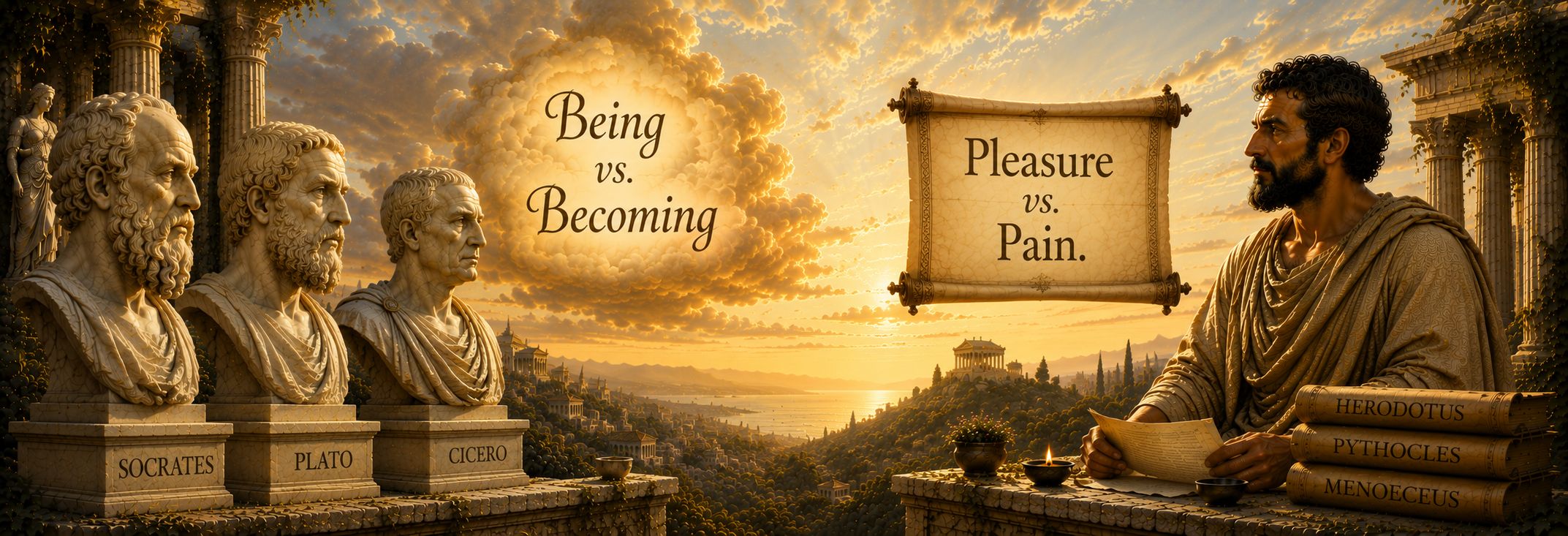
We pursue Epicurus' original teachings by prioritizing what he himself wrote to his friends Herodotus, Pythocles, and Menoeceus, and in his Principal Doctrines. We also prioritize the works of his primary followers such as Lucretius and Cicero's Epicurean spokesmen Torquatus and Velleius.
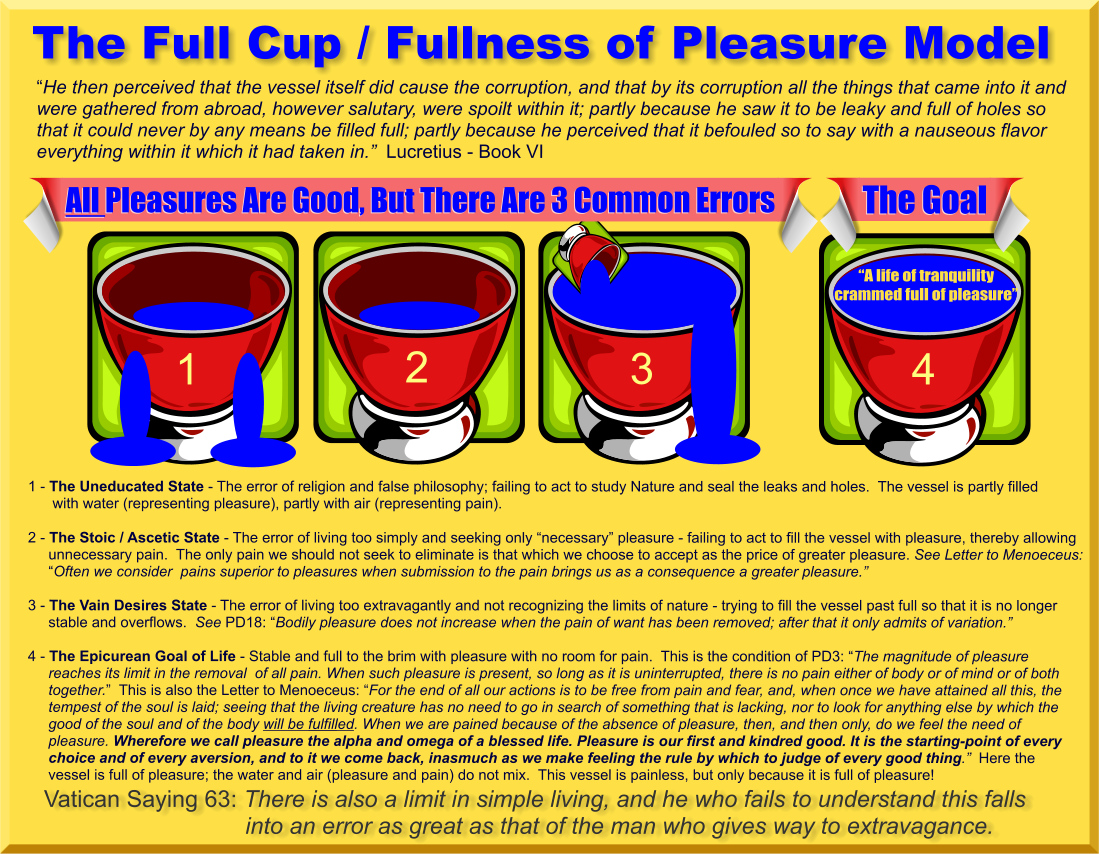
Keeping the focus on Pleasure answers the question of what is the highest good, but leaves unanswered the practical question of "Which pleasures?" Because Epicurus held that all mental and physical experiences in life fall within either pleasure or pain, the scope of choice is wide. Physical pleasures are necessary for life, but mental pleasures are necessary for happiness. The pleasures we choose to pursue will differ according to individual circumstances, but some circumstances are universal: All of us eventually die and cease to exist. There are no supernatural forces or rules. Under these universal conditions, Epicurus teaches that Nature tells us to pursue maximum net pleasure -- not minimum total pain. Some modern writers argue that Epicurus taught pursuit of minimum total pain as his overriding goal. This is false, as presented here on this site in articles such as Against Katastematic Supremacy: Pleasure Is a Unified Good, Not a House Divided Against Itself or others listed below. Epicurean happiness embraces active engagement with life and willing acceptance of pains that lead to greater net pleasure. It rejects retreat, resignation, and avoidance of all pain at every turn.
Think about how you will judge your life when it nears its end. If you are the type who will be happiest if you can say that you lived your life pursuing the maximum net pleasure that was possible to you, then you are in the right place here at EpicureanFriends. If you agree that pleasure is the highest good and you would like to join us and participate in our work, check here for our Rules, Policies, and Terms of Use and consider setting up an account.
Epicurean Quote of the Day
- That which is blessed and indestructible has no troubles itself, nor does it give trouble to anyone else, so that it is not affected by feelings of anger or gratitude. For all such things imply weakness. (tr. Long & Sedley)
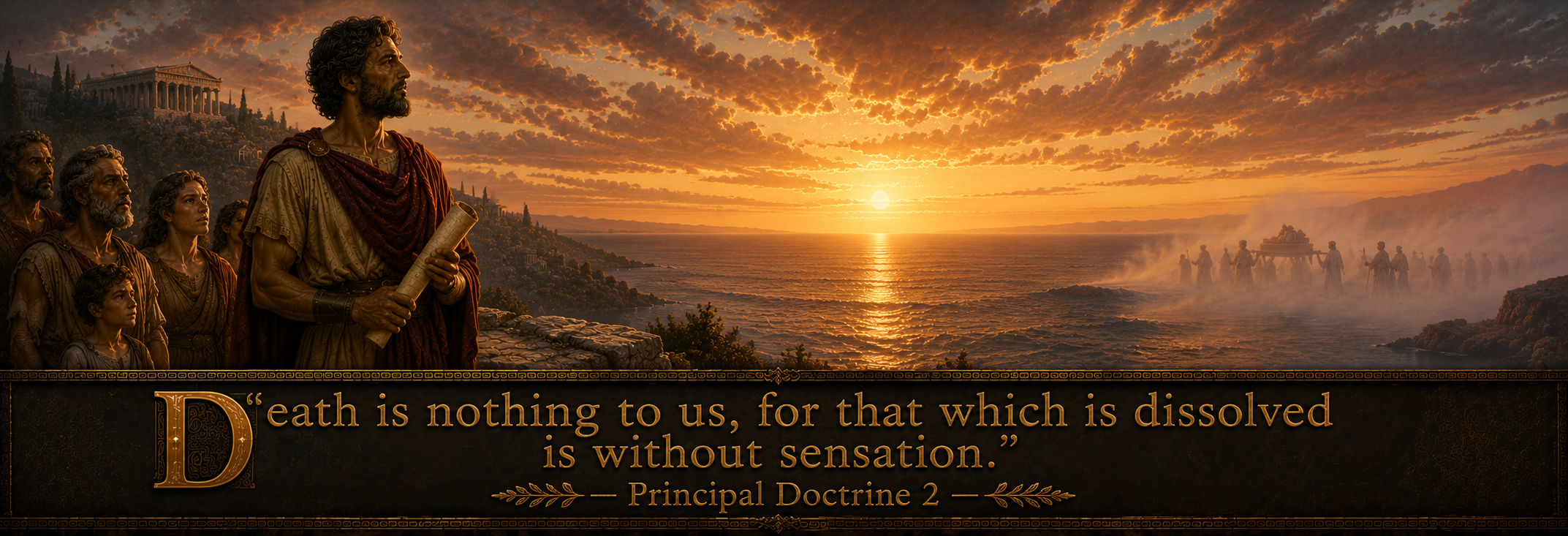
- Death is nothing to us. For what has been dissolved has no sensation, and what has no sensation is nothing to us. (tr. Long & Sedley)
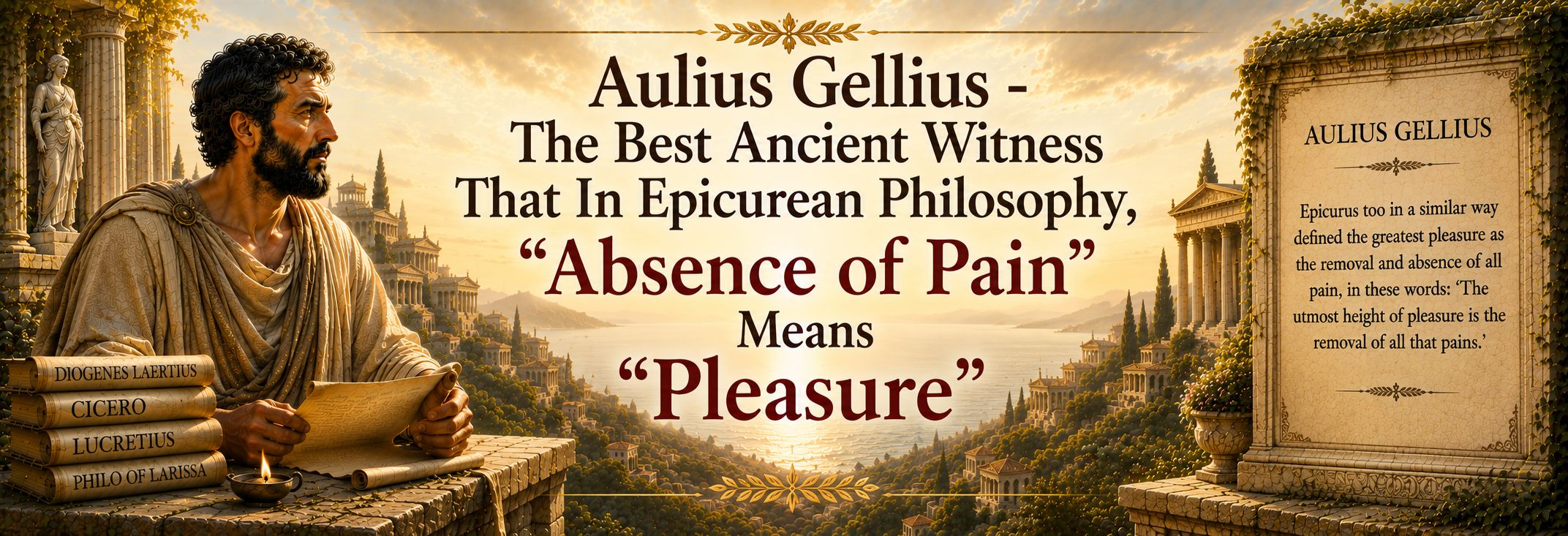
- The removal of all pain is the limit of the magnitude of pleasures. Wherever pleasure is present, as long as it is there, pain or distress or their combination is absent. (tr. Long & Sedley)
- Pain does not last continuously in the flesh: when acute it is there for a very short time, while the pain which just exceeds the pleasure in the flesh does not persist for many days; and chronic illnesses contain an excess of pleasure in the flesh over pain. (tr. Long & Sedley)
- It is impossible to live pleasantly without living prudently, honorably and justly; nor is it possible to live prudently, honorably and justly without living pleasantly. And whoever lacks this cannot live pleasantly. (tr. Long & Sedley)
- To secure protection from men anything is a natural good, by which you may be able to attain this end. (Bailey)
- Certain people wanted to become famous and admired, thinking that they would thus acquire security from other men. Consequently, if such people's life was secure, they did obtain nature's good; but if it was not secure, they are not in possession of the objective which they originally sought after on the basis of nature's affinity. (tr. Long & Sedley)
- No pleasure is something bad per se: but the causes of some pleasures produce stresses many times greater than the pleasures. (tr. Long & Sedley)
- If every pleasure were condensed in < location > and duration and distributed all over the structure or the dominant parts of our nature, pleasures would never differ from one another. (tr. Long & Sedley)
- If the causes of the pleasures of the dissipated released mental fears concerning celestial phenomena and death and distress, and in addition taught the limit of desires, we should never have any reason to reproach them [i. e. the dissipated], since they would be satisfying themselves with pleasures from all directions and would never have pain or distress, which constitutes the bad. (tr. Long & Sedley)
- Were we not upset by the worries that celestial phenomena and death might matter to us, and also by failure to appreciate the limits of pains and desires, we would have no need for natural philosophy. (tr. Long & Sedley)
- There is no way to dispel the fear about matters of supreme importance, for someone who does not know what the nature of the universe is but retains some of the fears based on mythology. Hence without natural philosophy there is no way of securing the purity of our pleasures. (tr. Long & Sedley)
- There is no benefit in creating security with respect to men while retaining worries about things up above, things beneath the earth, and generally things in the infinite. (tr. Long & Sedley)
- The most unalloyed source of protection from men, which is secured to some extent by a certain force of expulsion, is in fact the immunity which results from a quiet life and the retirement from the world. (Bailey)
- Nature's wealth is both limited and easy to achieve; but the wealth defined by groundless opinions falls into an infinite abyss. (tr. Long & Sedley)
- In but few things chance hinders a wise man, but the greatest and most important matters reason has ordained and throughout the whole period of life does and will ordain. (Bailey)
- The just < life > is most free from disturbance, but the unjust life is full of the greatest disturbance. (tr. Long & Sedley)
- The pleasure in the flesh does not increase when once the pain of need has been removed, but it is only varied. And the limit of pleasure in the mind is produced by rationalizing those very things and their congeners which used to present the mind with its greatest fears. (tr. Long & Sedley)
- Infinite time and finite time contain equal pleasure, if one measures the limits of pleasure by reasoning. (tr. Long & Sedley)
- The flesh places the limits of pleasure at infinity, and needs an infinite time to bring it about. But the intellect, by making a rational calculation of the end and the limit which govern the flesh, and by dispelling the fears about eternity, brings about the complete life, so that we no longer need the infinite time. But neither does it shun pleasure, nor even when circumstances bring about our departure from life does it suppose, as it perishes, that it has in any way fallen short of the best life. (tr. Long & Sedley)
- He who knows the limits of life knows how easy it is to obtain that which removes pain caused by want and that which makes the whole of life complete. He therefore has no need for competitive involvements. (tr. Long & Sedley)
- We must consider both the real purpose and all the evidence of direct perception, to which we always refer the conclusions of opinion; otherwise, all will be full of doubt and confusion. (Bailey)
- If you fight against all sensations, you will not have a standard against which to judge even those of them you say are mistaken. (tr. Long & Sedley)
- If you reject any single sensation and fail to distinguish between the conclusion of opinion as to the appearance awaiting confirmation and that which is actually given by the sensation or feeling, or each intuitive apprehension of the mind, you will confound all other sensations as well with the same groundless opinion, so that you will reject every standard of judgment. (Bailey)
- If on each occasion, instead of referring your actions to the end of nature, you turn to some other nearer standard when you are making a choice or an avoidance, your actions will not be consistent with your principles. (tr. Long & Sedley)
- Those desires which do not bring pain when unfulfilled are not necessary, and the longing for them is easily dispersed, when to achieve them seems difficult or when they seem likely to produce harm. (tr. Long & Sedley)
- Of the things wisdom acquires for the blessedness of life as a whole, far the greatest is the possession of friendship. (tr. Long & Sedley)
- Confidence that nothing terrible lasts for ever or even for a long time is produced by the same judgment that also achieves the insight that friendship's security within those very limitations is perfectly complete. (tr. Long & Sedley)
- Of desires, some are natural and necessary, others are natural and not necessary, and others are neither natural nor necessary but are due to idle imagination. (tr. Long & Sedley)
- Whenever intense passion is present in natural desires which do not lead to pain if they are unfulfilled, these have their origin in empty opinion; and the reason for their persistence is not their own nature but the empty opinion of the person. (tr. Long & Sedley)
- Nature's justice is a guarantee of utility with a view to not harming one another and not being harmed. (tr. Long & Sedley)
- Nothing is just or unjust in relation to those creatures which were unable to make contracts over not harming one another and not being harmed: so too with all peoples which were unable or unwilling to make contracts over not harming and not being harmed. (tr. Long & Sedley)
- Justice was never anything per se, but a contract, regularly arising at some place or other in people's dealings with one another, over not harming or being harmed. (tr. Long & Sedley)
- Injustice is something bad not per se but in the fear that arises from the suspicion that one will not escape the notice of those who have the authority to punish such things. (tr. Long & Sedley)
- No one who secretly infringes any of the terms of a mutual contract made with a view to not harming and not being harmed can be confident that he will escape detection even if he does so countless times. For right up to his death it is unclear whether he will actually escape. (tr. Long & Sedley)
- Taken generally, justice is the same for all, since it is something useful in people's social relationships. But in the light of what is peculiar to a region and to the whole range of determinants, the same thing does not turn out to be just for all. (tr. Long & Sedley)
- What is legally deemed to be just has its existence in the domain of justice when ever it is attested to be useful in the requirements of social relationships, whether or not it turns out to be the same for all. But if someone makes a law and it does not happen to accord with the utility of social relationships, it no longer has the nature of justice. And even if what is useful in the sphere of justice changes but fits the preconception for some time, it was no less just throughout that time for those who do not confuse themselves with empty utterances but simply look at the facts. (tr. Long & Sedley)
- Where, provided the circumstances have not been altered, actions which were considered just, have been shown not to accord with the general concept in actual practice, then they were not just actions. But where, when circumstances have changed, the same actions which were sanctioned as just no longer lead to advantage, there they were just at the time when they were of advantage for the dealings of fellow-citizens with one another; but subsequently they are no longer just, when no longer of advantage. (Bailey)
- The man who has best ordered the element of disquiet arising from external circumstances has made those things that he could akin to himself and the rest at least not alien: but with all to which he could not do even this he has refrained from mixing, and has expelled from his life all which it was of advantage to treat thus. (Bailey)
- 40] Those who had the power to eliminate all fear of their neighbors lived together accordingly in the most pleasurable way, through having the firmest pledge of security, and after enjoying the fullest intimacy, they did not grieve over someone's untimely death as if it called for commiseration. (tr. Long & Sedley)
- It is hard for an evil-doer to escape detection, but to obtain security for escaping is impossible. (Bailey)
- Remember that you are of mortal nature and have a limited time to live and have devoted yourself to discussions on nature for all time and eternity and have seen 'things that are now and are to come and have been.' (Bailey)
- For most men rest is stagnation and activity madness. (Bailey)
- We value our characters as something peculiar to ourselves, whether they are good and we are esteemed by men, or not; so ought we to value the characters of others, if they are well-disposed to us. (Bailey)
- No one when he sees evil deliberately chooses it, but is enticed by it as being good in comparison with a greater evil and so pursues it. (Bailey)
- Blessed is not the young man but the old one who has lived honourably. For the young man keeps changing his mind and veers about under the influence of fortune. But the old one has lowered his anchor in old age as though in harbor, and with secure gratitude has clamped the good things he hardly hoped for previously. (tr. Long & Sedley)
- Remove sight, association and contact, and the passion of love is at an end. (Bailey)
- Forgetting the good that has been he has become old this very day. (Bailey)
- One should not force nature but persuade it. And we will persuade it by fulfilling the necessary desires, and the natural ones too if they do not harm us, but sharply rejecting the harmful ones. (tr. Long & Sedley)
- All friendship is an intrinsic virtue, but it originates from benefiting. (tr. Long & Sedley)
- Dreams have no divine character nor any prophetic force, but they originate from the influx of images. (Bailey)
- Poverty, when measured by nature's end, is great wealth, but unlimited wealth is great poverty. (tr. Long & Sedley)
- You must understand that whether the discourse be long or short it tends to the same end. (Bailey)
- In other pursuits the reward comes at the end and is hard won. But in philosophy enjoyment keeps pace with knowledge. It is not learning followed by entertainment, but learning and entertainment at the same time. (tr. Long & Sedley)
- Neither those who are over-eager for friendship nor those who are hesitant should be approved, but it is also necessary to take risks for the sake of friendship. (tr. Long & Sedley)
- I would rather speak with the frankness of a natural philosopher, and reveal the things which are expedient to all mankind, even if no one is going to understand me, than assent to the received opinions and reap the adulation lavishly bestowed by the multitude. (tr. Long & Sedley)
- Against other things it is possible to obtain security. But when it comes to death we human beings all live in an unwalled city. (tr. Long & Sedley)
- The veneration of the Wise man is a great blessing to those who venerate him. (Bailey)
- The flesh's cry is not to be hungry or thirsty or cold. For one who is in these states and expects to remain so could rival even Zeus in happiness. (tr. Long & Sedley)
- It is not our friends' help that we need so much as the confidence of their help. (tr. Long & Sedley)
- One should not spoil what one has by wanting what one has not, but should remember that what one has was also wished for. (Bailey)
- Epicurus' life when compared to other men's in respect of gentleness and self-sufficiency might be thought a mere legend. (Bailey)
- Nature is weak towards evil, not towards good: because it is saved by pleasures, but destroyed by pains. (Bailey)
- He is a little man in all respects who has many good reasons for quitting life. (Bailey)
- One who is always looking for help is not a friend, nor is one who never associates help with friendship. For the former trades sentiment for recompense, while the latter cuts off confident expectation in regard to the future. (tr. Long & Sedley)
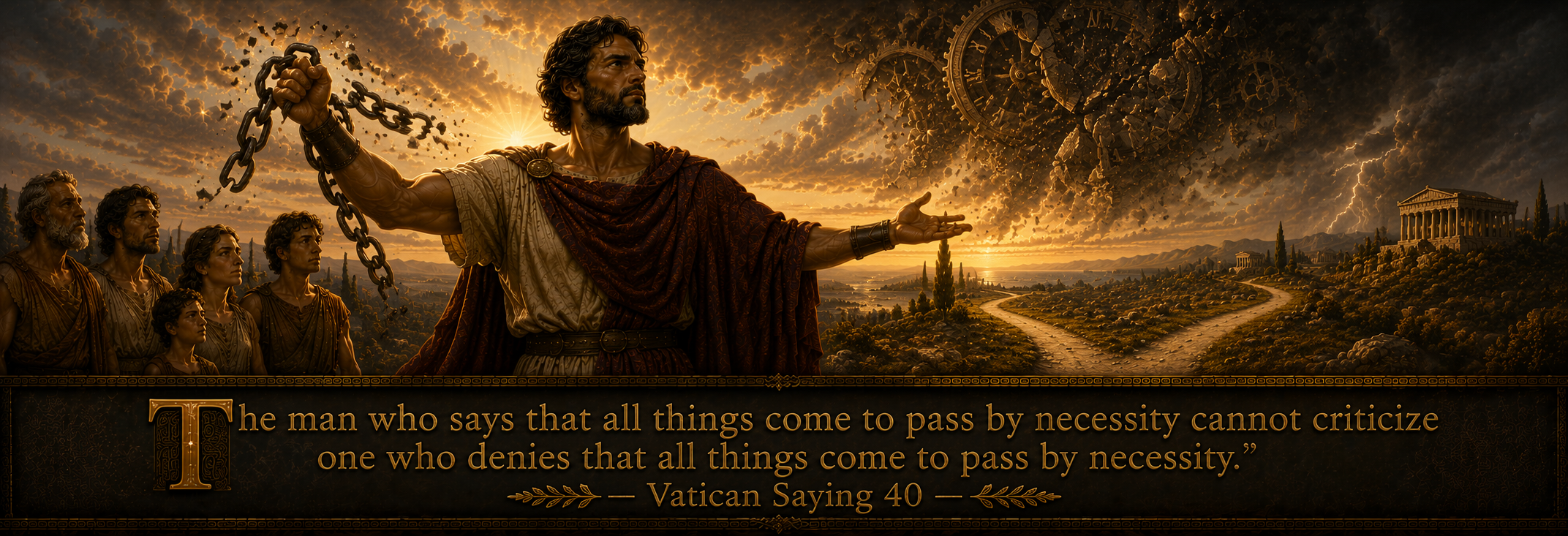
- The man who says that all events are necessitated has no ground for criticizing the man who says that not all events are necessitated. For according to him this is itself a necessitated event. (tr. Long & Sedley)
- We should laugh, philosophize, and handle our household affairs and other personal matters, all at the same time, and never cease making the utterances which stem from correct philosophy. (tr. Long & Sedley)
- It takes just the same time for the greatest good to be created and for it to be enjoyed. (tr. Long & Sedley)
- The love of money, if unjustly gained, is impious, and, if justly, shameful; for it is unseemly to be merely parsimonious even with justice on one's side. (Bailey)
- The wise man when he has accommodated himself to straits knows better how to give than to receive: so great is the treasure of self-sufficiency which he has discovered. (Bailey)
- Natural philosophy does not make people boastful and loud-mouthed, nor flaunters of culture, the thing so hotly competed for among the multitude, but modest and self-sufficient, and proud at their own goods, not at those of their circumstances. (tr. Long & Sedley)
- Let us completely rid ourselves of our bad habits as if they were evil men who have long done us great harm. (tr. Long & Sedley)
- I have anticipated thee, Fortune, and entrenched myself against all thy secret attacks. And we will not give ourselves up as captives to thee or to any other circumstance; but when it is time for us to go, spitting contempt on life and on those who here vainly cling to it, we will leave life crying aloud in a glorious triumph-song that we have lived well. (Bailey)
- We must try to make the end of the journey better than the beginning, as long as we are journeying, but when we come to the end, we must be happy and content. (Bailey)
- [Letter from Metrodorus to Pythocles] You tell me that the movement of your flesh is too inclined towards sexual intercourse. So long as you do not break the laws or disturb proper and established conventions or distress any of your neighbors or ravage your body or squander the necessities of life, act upon your inclination in anyway you like. Yet it is impossible not to be constrained by at least one of these. For sex is never advantageous, and one should be content if it does no harm. (tr. Long & Sedley)
- Friendship dances round the world announcing to us all that we should wake up and felicitate one another. (tr. Long & Sedley)
- We must envy no one: for the good do not deserve envy and the bad, the more they prosper, the more they injure themselves. (Bailey)
- One should not pretend to philosophize, but actually philosophize. For what we need is not the semblance of health, but real health. (tr. Long & Sedley)
- We must heal our misfortunes by the grateful recollection of what has been and by the recognition that it is impossible to make undone what has been done. (Bailey)
- We must liberate ourselves from the prison of routine business and politics. (tr. Long & Sedley)
- What is insatiable is not the stomach, as people say, but the false opinion concerning its unlimited filling. (tr. Long & Sedley)
- Most beautiful too is the sight of those near and dear to us, when our original kinship makes us of one mind; for such sight is a great incitement to this end. (Bailey)
- There can be refinement even on slender means, and one who fails to take account of it is in a similar position to someone who goes astray through ignoring limits. (tr. Long & Sedley)
- Let us feel for our friends not by mourning but by thinking of them. (tr. Long & Sedley)
- A free life cannot acquire great wealth, because this is not easy without servitude to mobs or monarchs; yet it possesses all things in unfailing abundance, and if it does achieve great wealth, this too it can share so as to win the goodwill of one's neighbors. (Bailey)
- Nothing is enough for the man to whom enough is too little. (Bailey)
- The ungrateful greed of the soul makes the creature everlastingly desire varieties of dainty food. (Bailey)
- Let nothing be done in your life which will bring you fear if it should be known to your neighbor. (tr. Long & Sedley)
- This question should be applied to all desires; what will happen to me if the object of my desire is achieved and what if it is not? (tr. Long & Sedley)
- The occurrence of certain bodily pains is a help to protecting oneself against similar ones. (tr. Long & Sedley)
- In a philosophical discussion he who is worsted gains more in proportion as he learns more. (Bailey)
- Ungrateful towards the blessings of the past is the saying, 'Wait till the end of a long life.' (Bailey)
- The greatest fruit of self-sufficiency is freedom. (Bailey)
- The man of noble character is chiefly concerned with wisdom and friendship. Of these the former is a mortal good, but the latter is immortal. (tr. Long & Sedley)
- The undisturbed man causes no stress to himself or to anyone else. (tr. Long & Sedley)
- The first measure of security is to watch over one's youth and to guard against what makes havoc of all by means of pestering desires. (Bailey)
- What releases the soul's disturbance and produces worthwhile joy is neither possessing the greatest wealth, nor public recognition and respect, nor anything else which is dependent on indeterminate causes. (tr. Long & Sedley)
Epicurean Philosophy
Physics + Canonics ⟶ Ethics
Core Texts: Diogenes Laertius | Lucretius | Torquatus | Velleius | Topical Outline
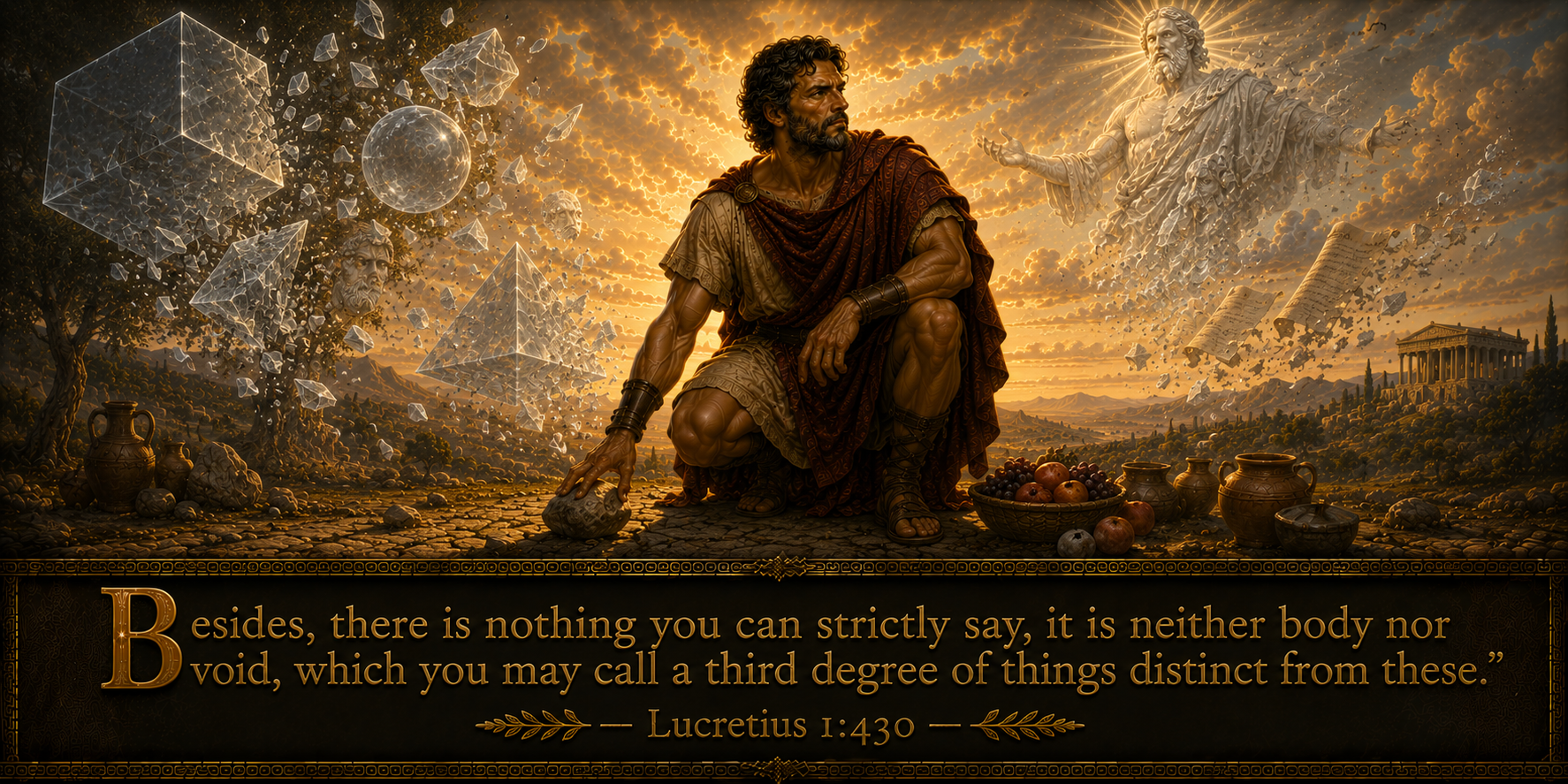
Physics: The Nature of the Universe
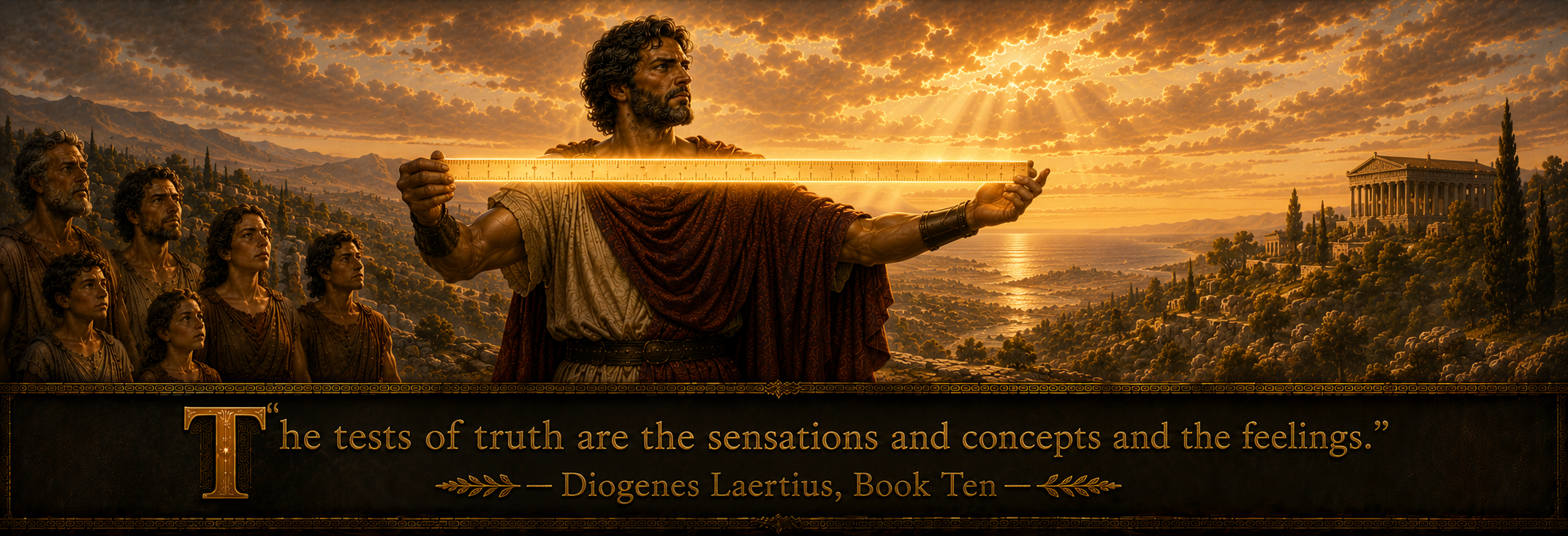
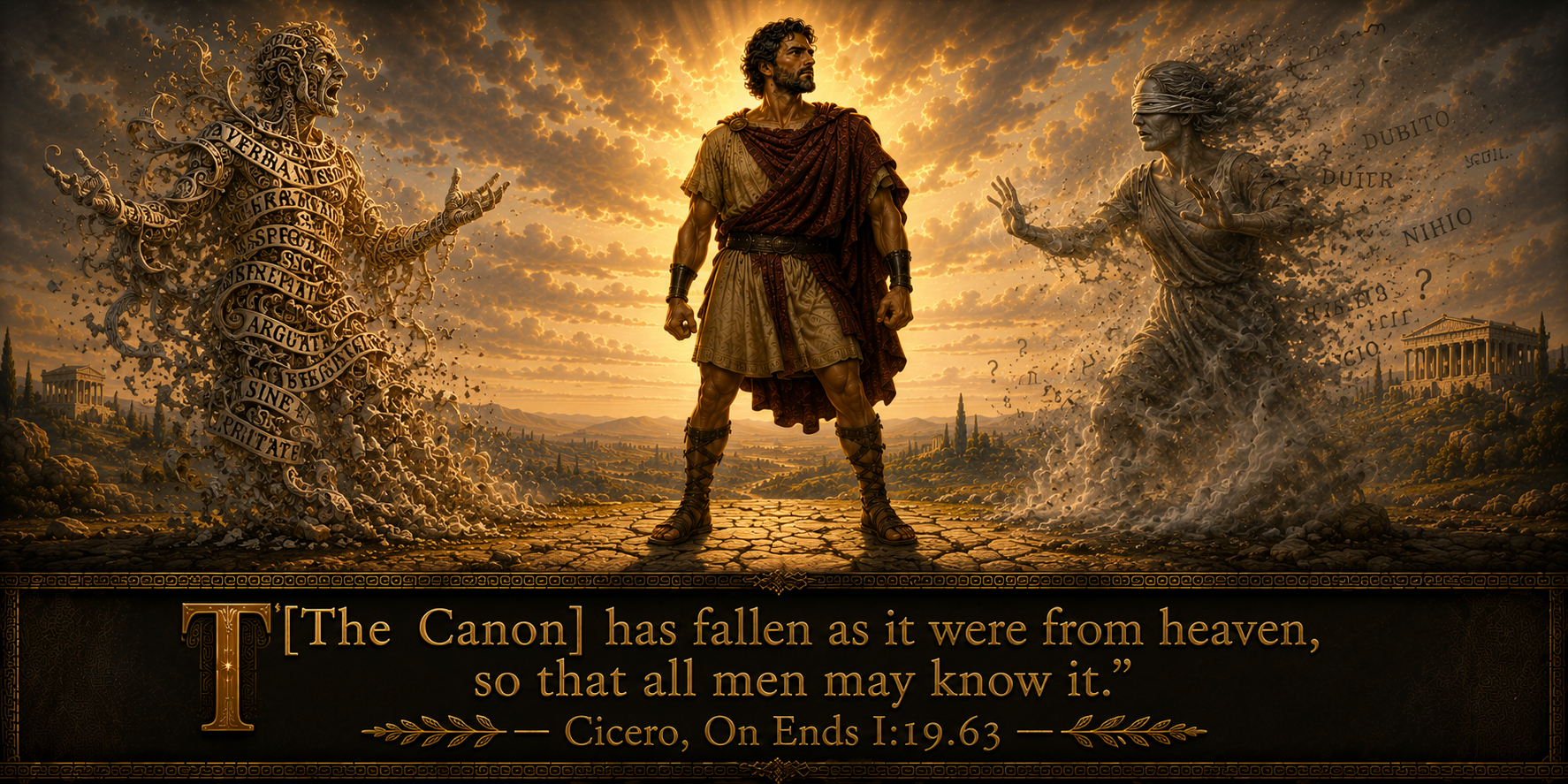
Canonics: How To Know What Is True
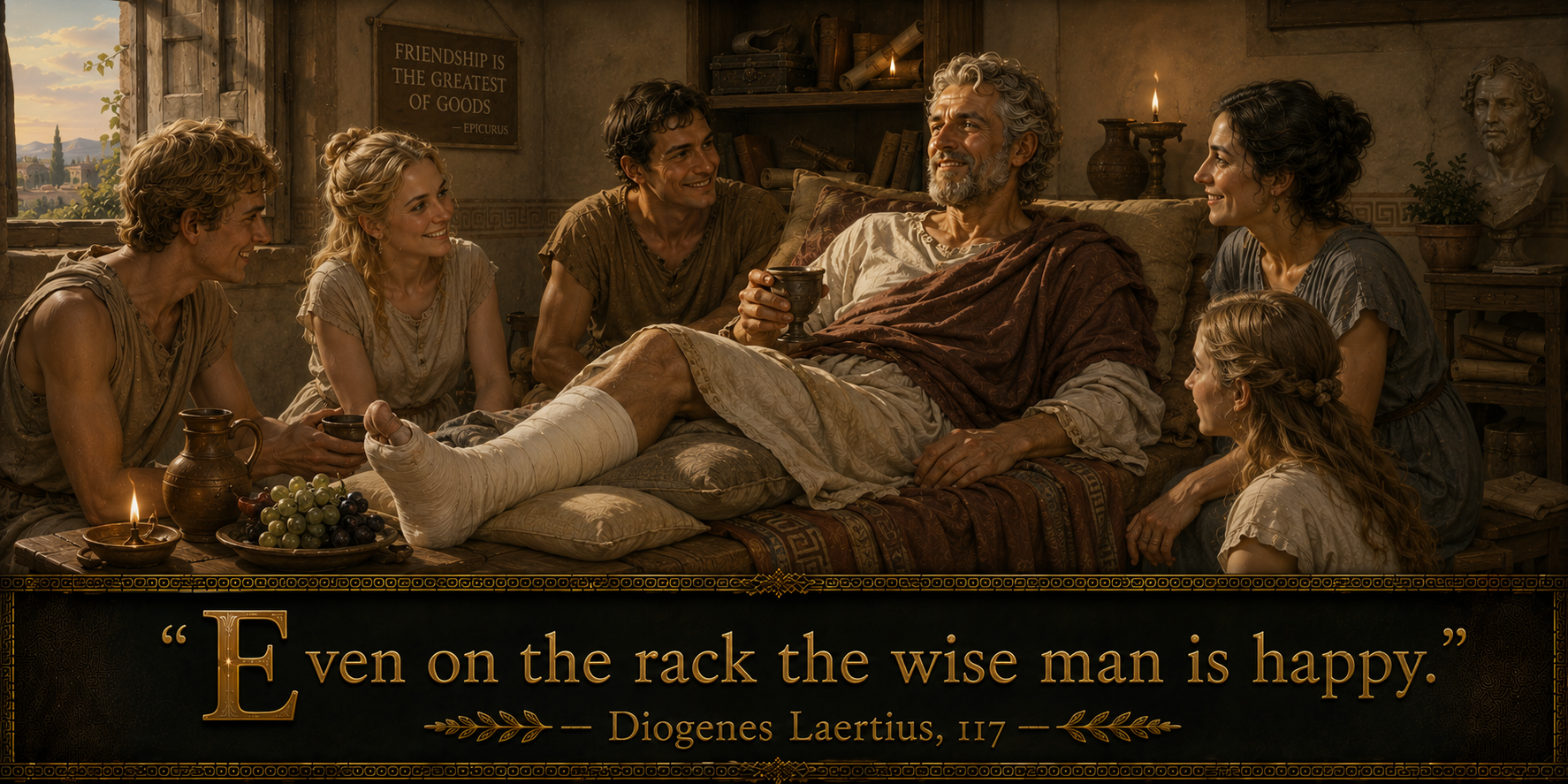
Ethics: How To Live









Featured Lucretius Today Podcasts
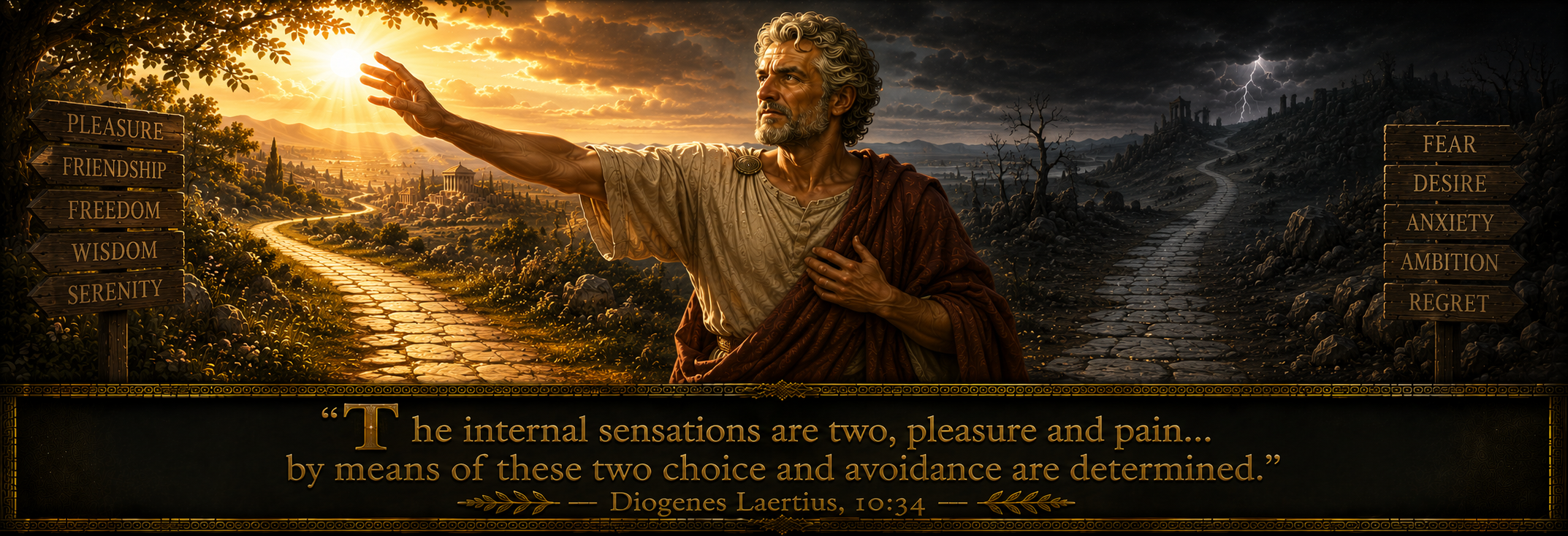
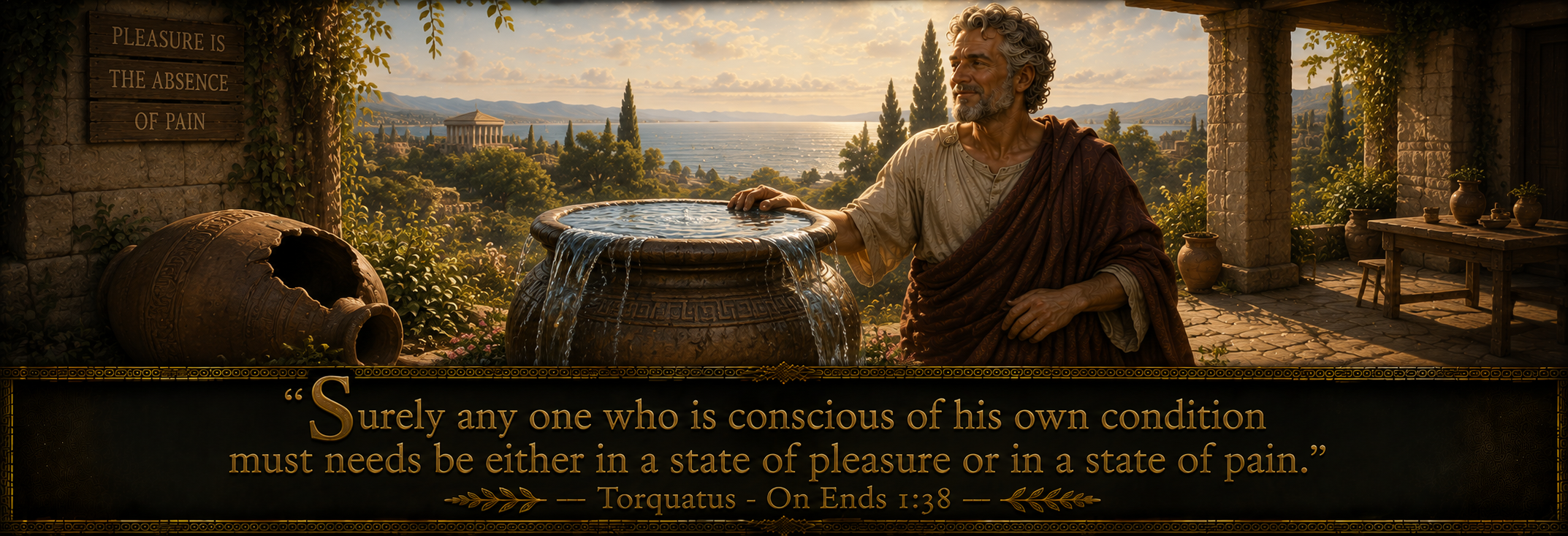
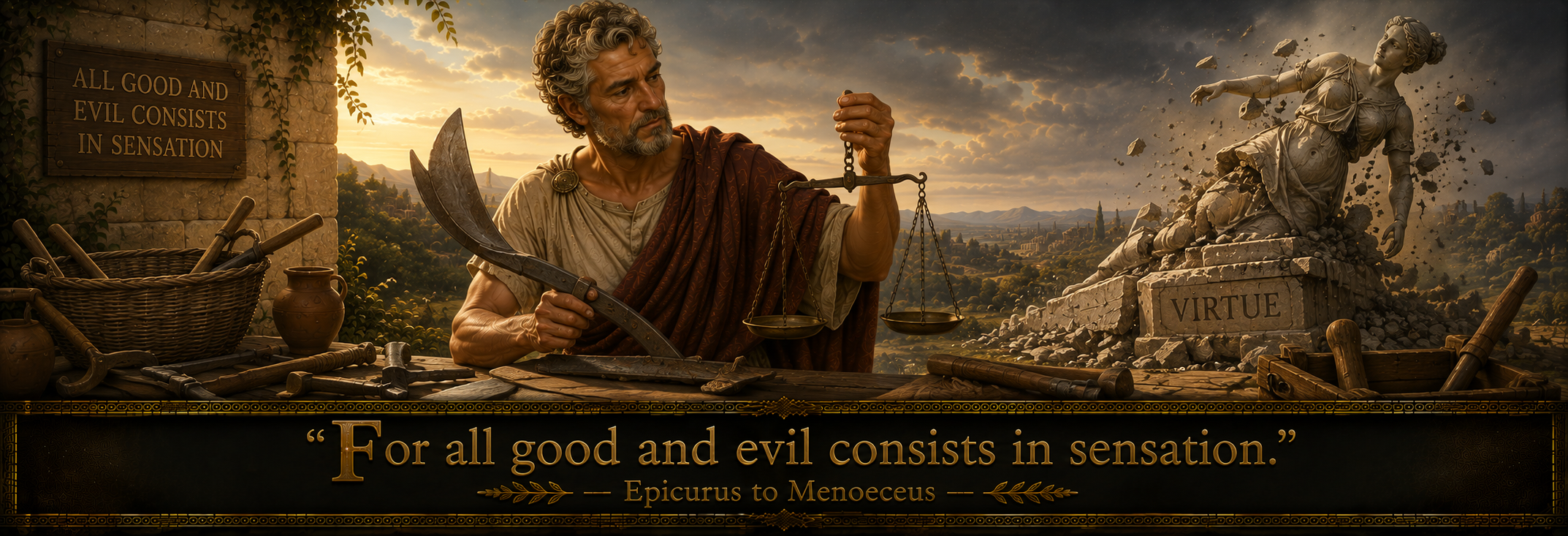
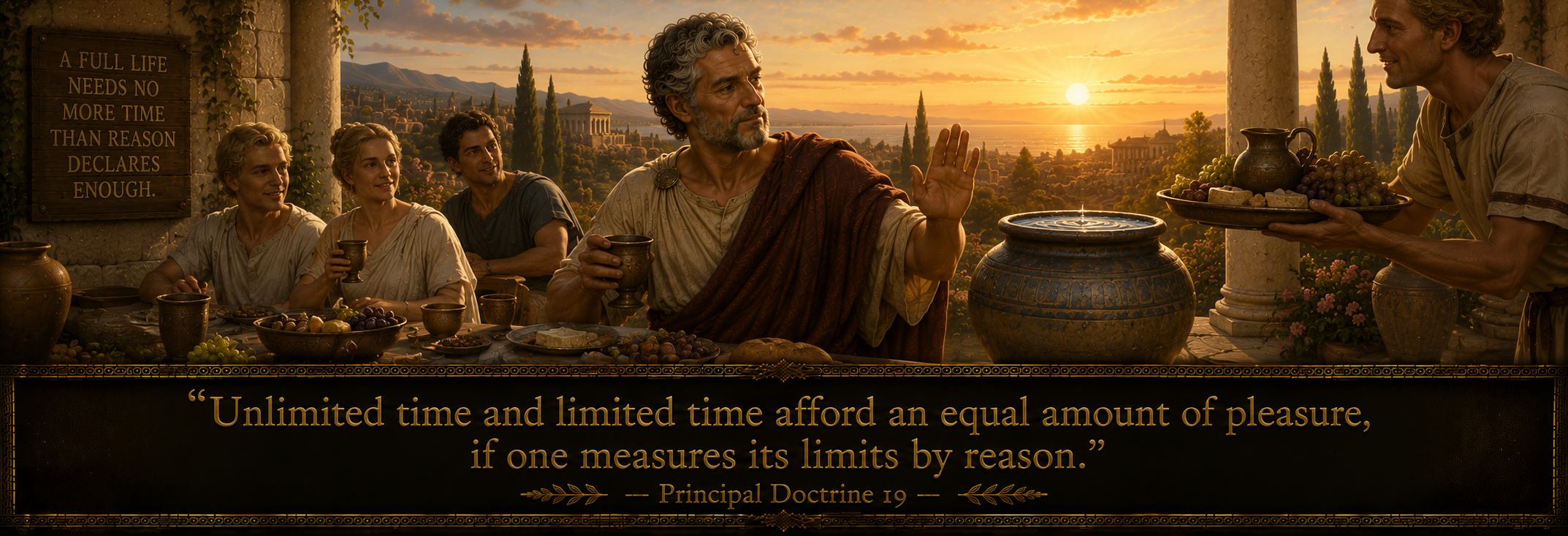
Featured Videos
An introduction to the core principles of Epicurean philosophy, exploring the ancient wisdom of Epicurus and its relevance to modern life.
Cicero's "Torquatus" explains and defends Epicurean philosophy.
Cicero's "Velleius" argues against supernatural gods and explains Epicurus' views of true divinity.
Essential concepts to understand when reading Epicurus for the first time. Learn about the paradigm shift in thinking that Epicurean philosophy represents.
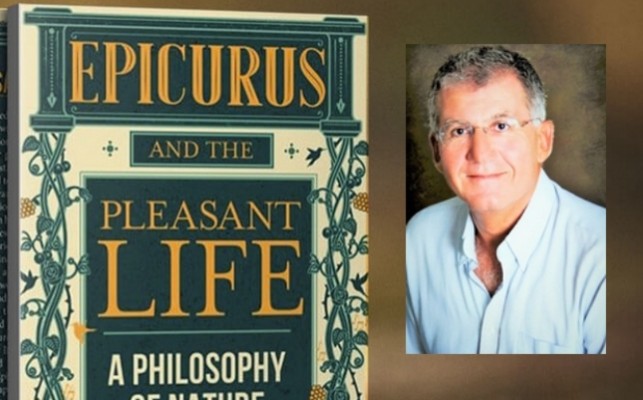
Lucretius Today interviews Dr. Emily Austin to discuss her recent book, which is one of the best introductions to Epicurus available anywhere.
Lucretius Today interviews Dr. Marcelo Boeri, co-author of a book on practical applications of Epicurean political theory.
Lucretius Today interviews Dr. David Glidden author of the article "Epicurean Prolepsis."
Examines a passage in Epicurus's Letter to Herodotus on the motion of images and atoms, where translators and commentators disagree about what "elementary fact" Epicurus was actually pointing to.
Things To Do To Get Started At EpicureanFriends
Trace The Major Concepts To The Key Documents
Physics -- The Nature of the Universe
- Nothing comes from nothing, and nothing passes into nothing — Herodotus §39, Lucretius I.146, Lucretius I.215
- The universe is composed of atoms and void — there is no third kind of thing — Herodotus §40-41, Lucretius I.329, Lucretius I.430
- Atoms are imperceptibly small and cannot be divided beyond a certain minimum — Herodotus §56-58, Lucretius I.265, Lucretius I.551
- A body's perceptible qualities — including color and sensation — emerge from how its atoms are arranged; the atoms themselves possess none of these qualities — Herodotus §69-70, Lucretius I.449, Lucretius II.730, Lucretius II.865
- The eternal, unchanging atoms account for the transmission of the stable continuity of nature over time — Lucretius I.584
- The universe is unbounded and infinite in extent, with no center — Herodotus §42, Lucretius I.921, Lucretius I.1052
- Atoms are in continuous motion, endlessly colliding — Herodotus §43, Lucretius II.62
- The swerve of the atom at no fixed time or place breaks the chain of strict causation — Lucretius II.216
- Atoms come in a great but not infinite variety of shapes — Lucretius II.333, Lucretius II.478
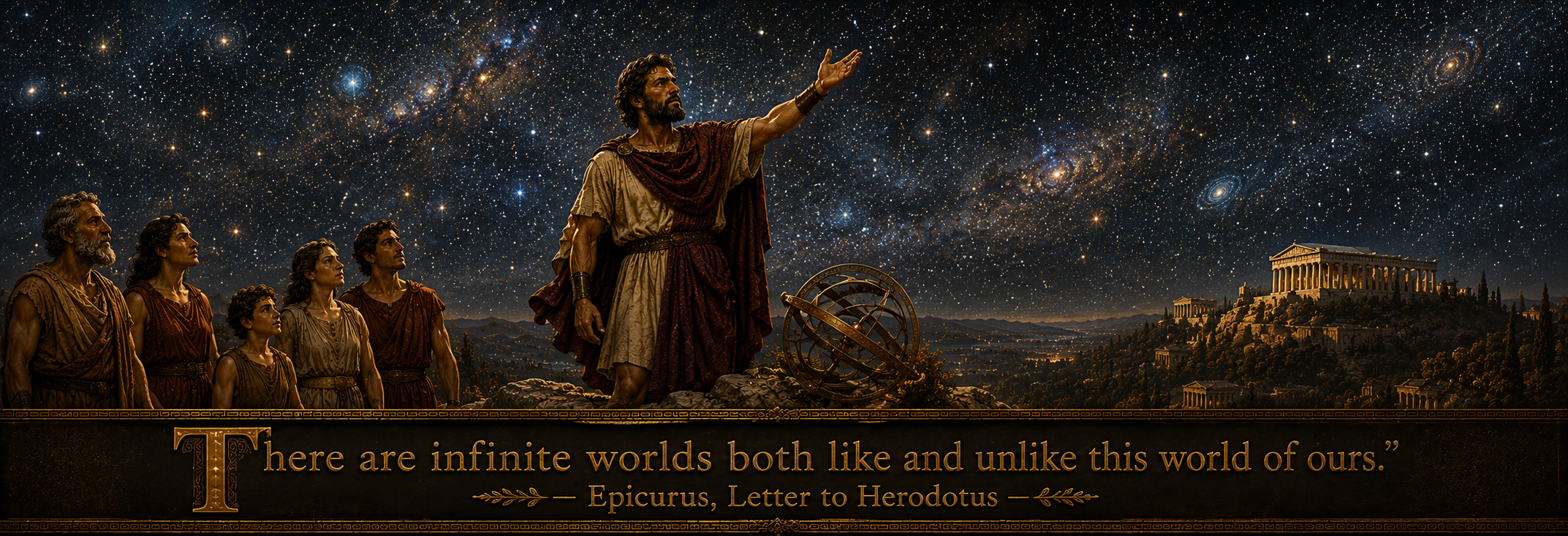
- Countless other worlds exist throughout the infinite universe, some with life in them like ours, some with life that is different — Herodotus §74, Pythocles §89, Lucretius II.1048
- The world was not made for men by the gods; it formed through the natural coming together of atoms — Velleius §XX, Lucretius V.156, Lucretius V.416
- The regular motions of the heavens have no divine governor — nature runs herself — Herodotus §77, Pythocles §97, Lucretius II.1090
- The divine "craftsman" argument for a created universe is false — Velleius §VIII-IX
- The world itself is not a living or spherical god — Velleius §X-XIII
- The Stoics' creator-gods are just as incoherent as any rival theory — Velleius §XIV
- We expect the gods to possess human form — Velleius §XVIII
- All things exist equably distributed: a corresponding immortal exists for every mortal kind — Velleius §XIX
- The mind and soul are material in nature — bodies of very fine particles — Herodotus §63-67, Lucretius III.161
- The "harmony" theory of the soul is false — Lucretius III.94
- The mind, soul, and body are born and grow and die together — Lucretius III.323
- The senses — sight, hearing, taste, touch, and smell — all work through physical flows and impacts of atoms — Lucretius IV.54, Lucretius IV.522, Lucretius IV.615, Lucretius IV.673
- The body's faculties were not created for our use, but existed before their use was discovered — Lucretius IV.823
- The mind directs the body — Lucretius IV.858
- Dreams occur because the mind processes images while asleep — Lucretius IV.907
- The world is not eternal — it is mortal, and will one day pass away — Lucretius V.55, Lucretius V.324
- The sun, moon, and stars are, for us, the size they appear to be, and move and shine by natural processes — Pythocles §91, Lucretius V.564, Lucretius V.614
- The earth is mother of living things — Lucretius V.783
- Early humans arose and progressed naturally — Lucretius V.945
- Language was developed naturally — Lucretius V.1028
- Religion arose from fear of the unexplained and misinterpretation of images — Lucretius V.1161
- Storms, tempests, thunder, and lightning have natural causes, not divine ones — Pythocles §104, Lucretius VI.43, Lucretius VI.96, Lucretius VI.397, Lucretius VI.423
- Magnetic attraction and repulsion have natural causes — Lucretius VI.906
- Plagues have natural causes — Lucretius VI.1090
Canonics -- The Science of Knowledge
- Epicurus' standard of truth was "The Canon that fell from heaven" — our one fixed standard of judgment — Torquatus Book I §63
- We must first fix clearly what each word means before we can discuss that which cannot be seen — Herodotus §37-38
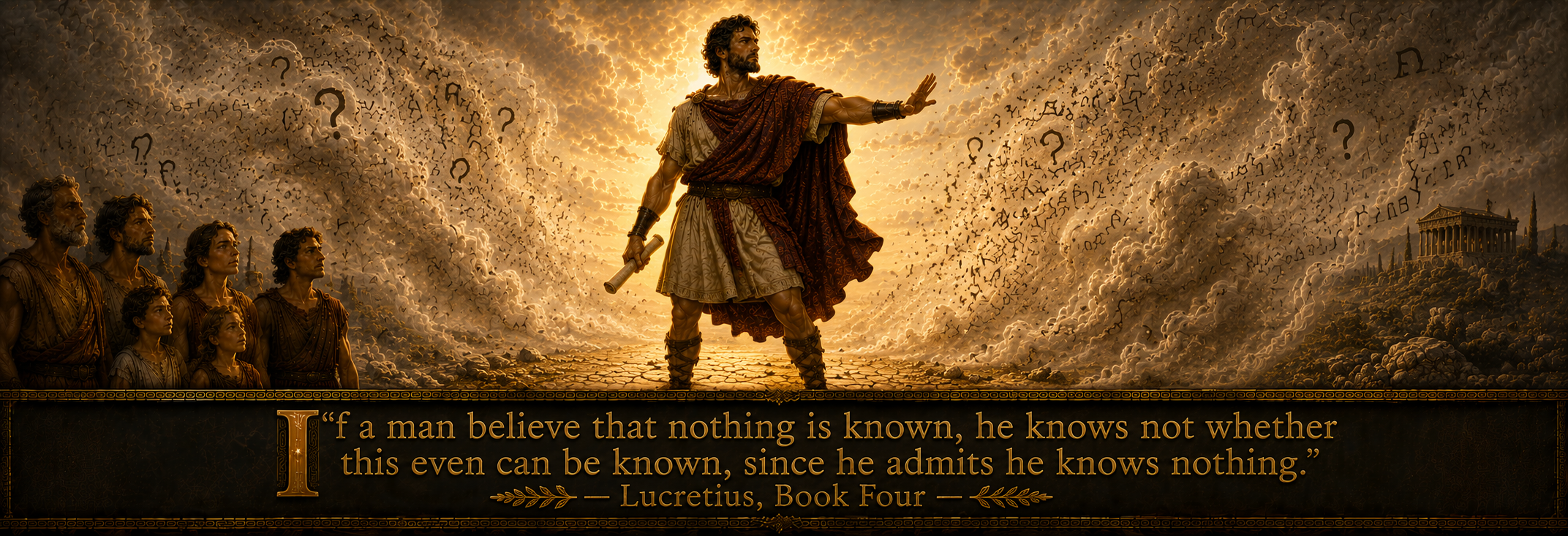
- The senses are the foundation of all knowledge — reasoning itself depends on them, and it is nonsense to claim nothing can be known — Lucretius IV.469, Lucretius IV.478, Lucretius IV.500
- Perception happens through movement of atoms (images) that strike the senses and mind directly — Herodotus §46-50, Lucretius IV.722
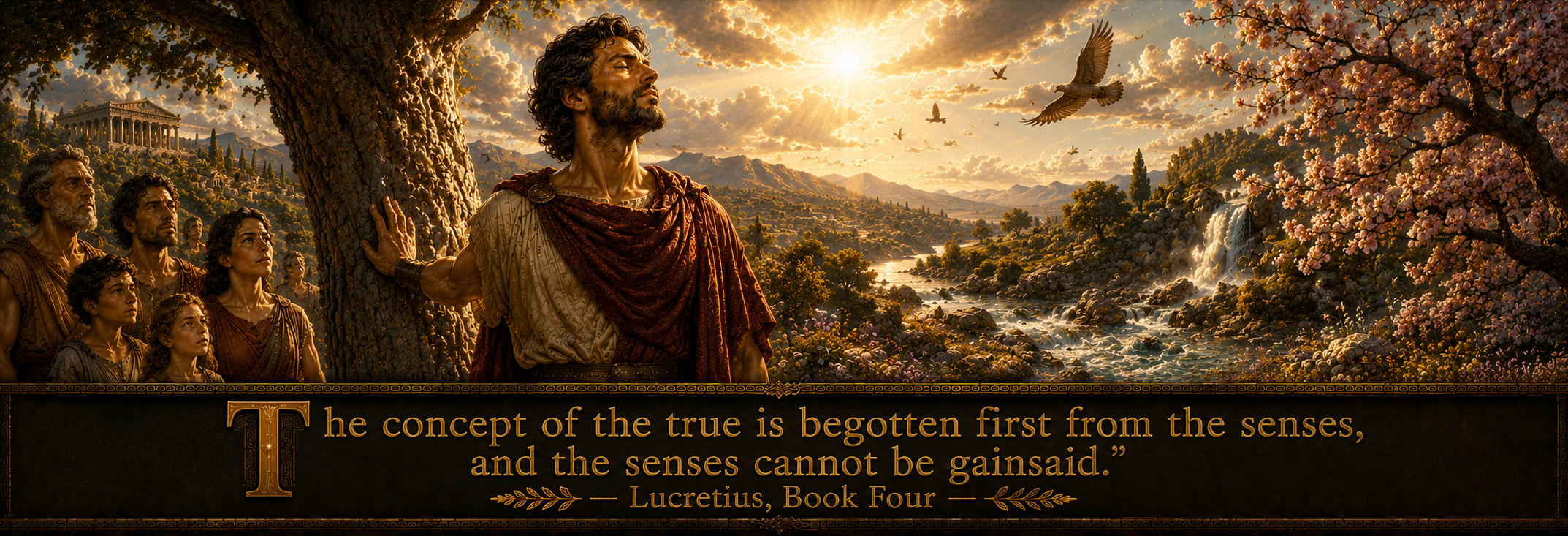
- The senses themselves never lie; illusions have natural physical explanations, and false judgments come from opinion added by the mind, not from the senses — Lucretius IV.353, Lucretius IV.462
- There are two kinds of claims: what's logically certain, and what's merely provisional — Pythocles §86-87
- Where more than one natural explanation fits the evidence equally well, all such explanations should be accepted as possible — Herodotus §79-80, Pythocles §95-96
- The preconception argument for our knowledge of gods: prolepsis provides an innate, untaught predisposition that gods exist — Velleius §XVII
Ethics -- Nature's Path To The Best Life
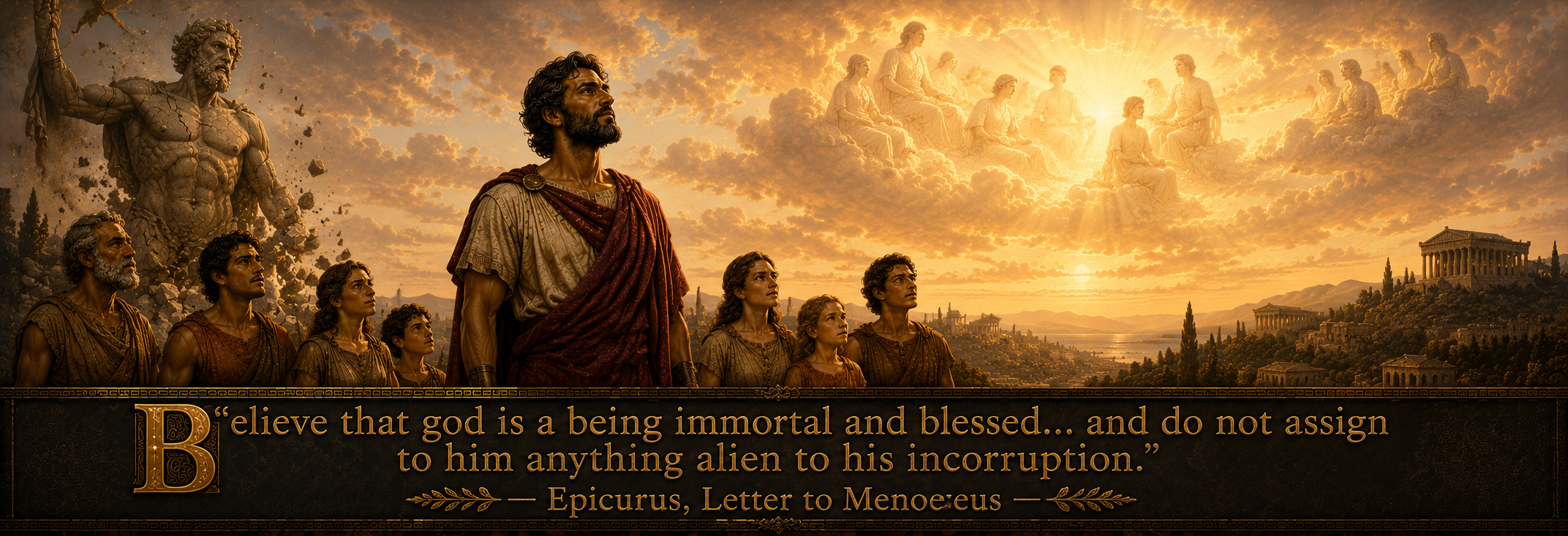
- The gods are blessed and immortal — Menoeceus §123
- Death is nothing to us; living well and dying well are the same training, and nature herself would rebuke us for complaining that life must end — Menoeceus §124, Menoeceus §126, Lucretius III.830, Lucretius III.931
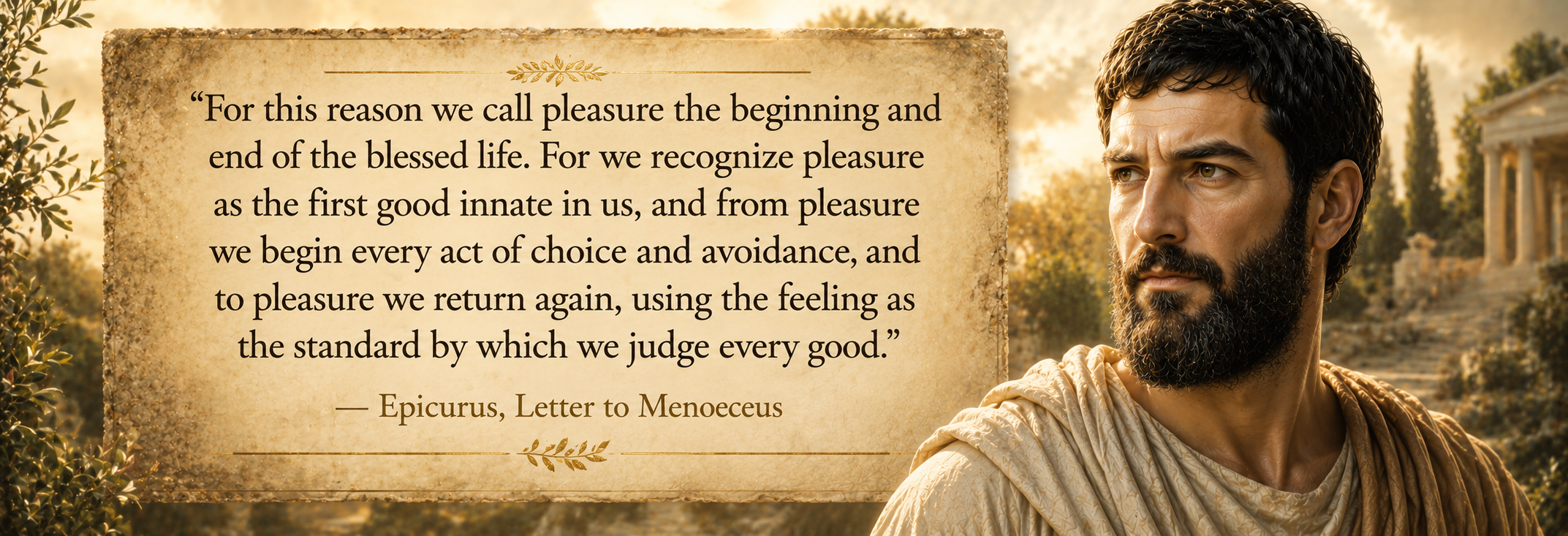
- Pleasure is the beginning and end of the blessed life — Menoeceus §129
- The cradle argument: every animal at birth seeks pleasure and shuns pain — Torquatus Book I §30
- Pleasure (Venus/Nature) is the leader and motivator of all life — Lucretius I.1
- The complete removal of pain is itself the limit of pleasure — absence of pain and pleasure are the same thing, not two different states — Torquatus Book I §37-39, Torquatus Book II §17
- A life of continuous, undisturbed pleasure is the most desirable state achievable — happiness is nothing else than a life of pleasure — Torquatus Book I §40, Torquatus Book I §54
- Cicero coins "static" and "kinetic" pleasure — Torquatus Book II §7-11
- The three-category classification of desires — Menoeceus §127
- Self-sufficiency increases enjoyment of luxury — Menoeceus §130-131
- Prudence is more precious than philosophy itself — Menoeceus §132
- Wisdom is valued because it produces pleasure — Torquatus Book I §43-46
- Temperance: self-control valued for the greater pleasure it secures — Torquatus Book I §47-48
- Courage: explained by its service to pleasure through elimination of fear and pain — Torquatus Book I §49
- Justice: wrongdoing is punished by anxiety, not owed for its own sake — Torquatus Book I §50-54
- "No one can live pleasantly without living wisely, honorably, and justly" — Torquatus Book I §58-61
- Friendship: "of all the means to happiness that wisdom has devised, none is greater" — Torquatus Book I §65-70
- The wise man is freed from fear of fate, divination, and a meddling god — neither blind necessity nor mere chance rules his life — Velleius §XX, Menoeceus §133-134
- Understanding nature philosophically is itself pleasurable, freeing the mind from needless fear and bringing it health — Lucretius II.1, Lucretius IV.1
- Epicurus was the liberating conqueror of false religion, the pioneer whose wisdom made him godlike, and the physician who diagnoses and cures the diseases caused by false ideas — Lucretius I.62, Lucretius III.1, Lucretius V.1, Lucretius VI.1
- Intoxicating romance can be very dangerous, but its hazards can be avoided — Lucretius IV.1037
- Humans gradually learned the benefits of society by trial and error, not divine guidance — Lucretius V.1105