

EpicureanFriends - Classical Epicurean Philosophy
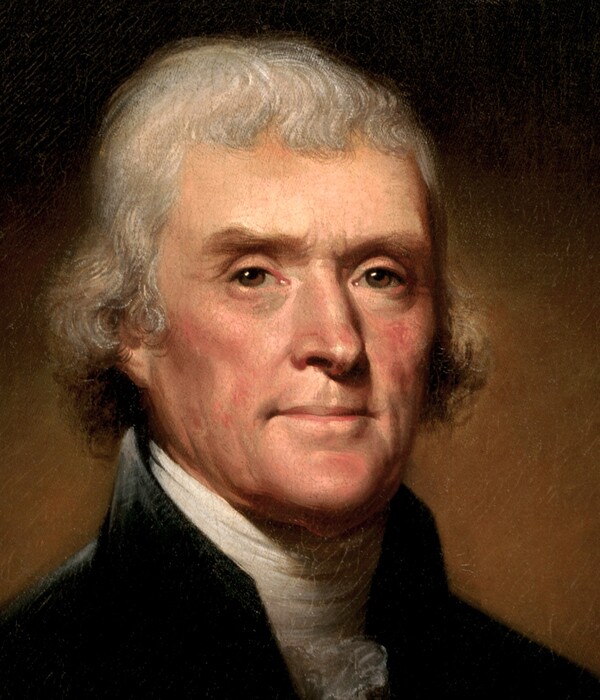 Thomas Jefferson, to William Short, October 31, 1819
I take the liberty of observing that you are not a true disciple of our master Epicurus, in indulging the indolence to which you say you are yielding. One of his canons, you know, was that “that indulgence which prevents a greater pleasure, or produces a greater pain, is to be avoided.” Your love of repose will lead, in its progress, to a suspension of healthy exercise, a relaxation of mind, an indifference to everything around you, and finally to a debility of body, and hebetude of mind, the farthest of all things from the happiness which the well-regulated indulgences of Epicurus ensure; fortitude, you know is one of his four cardinal virtues. That teaches us to meet and surmount difficulties; not to fly from them, like cowards; and to fly, too, in vain, for they will meet and arrest us at every turn of our road. Weigh this matter well; brace yourself up....
Welcome to EpicureanFriends.com
EpicureanFriends.com is an internet home for the study and promotion of Epicurean Philosophy. Guests are welcome to browse our public resources and ask questions about the philosophy of Epicurus. If you find yourself in agreement with the Epicurean worldview, please consider applying for a full account, which allows greater access and interaction with those of us who are working as a team for the rediscovery of Epicurean philosophy in the modern world. We have a firm set of rules that apply to all posting on this site, but we invite all who are sincerely inquiring about Epicurean philosophy to interact with us. If you have any questions about guest accounts just send us an email.
Who Was Epicurus and What Did He Really Teach?
Epicurus (341—270 BC) was a Greek philosopher who founded one of the most influential and enduring philosophical schools of the ancient world. After recruiting a network of like-minded friends and colleagues in the provincial areas of Greece, he moved his school to Athens itself, where he taught for decades in a school that came to be known as “the Garden.” Epicurus built his philosophy on three interlocking foundations:
- Physics: The universe is entirely natural, and as a whole it has always existed, not created or controlled by supernatural forces. Nothing is ever created from nothing, and there is no life after death or reason to be concerned about any supernatural forces governing our lives.
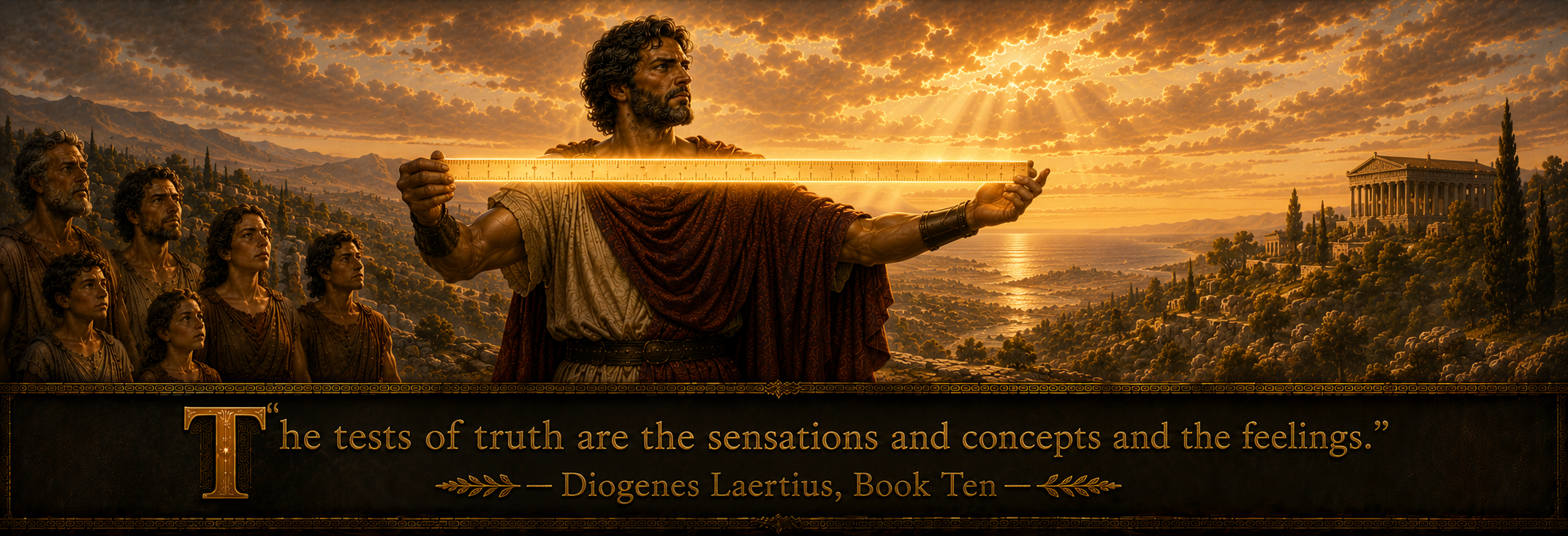
- Canonics: Reality and Truth are established by the faculties given to us by Nature, which are our five senses, our feelings of pleasure and pain, and our anticipations (a natural capacity to recognize patterns). Knowledge does not and cannot come from divine revelation or dialectical logic disconnected from the evidence we obtain through these natural faculties.
- Ethics: The guides of life are the feelings of Pleasure and Pain. While we are alive, everything we experience in life, whether mental or physical, is felt by us as either pleasing or painful. We do not always choose each immediate pleasure, or avoid every immediate pain, because our ultimate success in life is not judged by any single moment but by the predominance of pleasure over pain in our lives as a whole. It is the feeling of Pleasure - mental and physical and all positive feeling in all its forms - that gives meaning to life rather than Virtue, Piety, Logic, or any other man-made abstraction.
The Physics, Canonics, and Ethics of Epicurus are mutually-reinforcing. Epicurus was insistent that you cannot understand how to live well until you understand the nature of the universe, and you cannot understand the universe without the right tools for separating true from false. Epicurean philosophy stands as a whole or not at all.
How Has Epicurus Been Misread?
If you have encountered Epicurus before — in a philosophy class, an article, a popular book — there is a substantial chance that what you read was shaped by one of four traditions that have systematically distorted Epicurus' philosophy.
Stoicism was Epicurus’s most direct ancient rival. The Stoics held that virtue alone is the good, that pleasure is at best irrelevant and at worst corrupting, and that the wise man accepts fate with equanimity. Stoic writers — including Seneca, Plutarch, and Cicero in his own voice — wrote extensively about Epicurus, often in ways that portrayed him as essentially a failed Stoic: someone who used the word “pleasure” but really meant something very like Stoic tranquility. This portrait is dishonest to the texts.
Platonism taught that the highest realities are not the things we experience with our senses but abstract, eternal Forms accessible only through pure reason. Platonic philosophy elevates the abstract over the real, demotes the body as a prison of the soul, and treats sensory pleasure as philosophically unworthy. Scholars shaped by Platonic assumptions have consistently read Epicurean pleasure as something more abstract and less embodied than Epicurus actually described.
Supernatural religion — above all the Judeo-Christian tradition — treats pleasure as morally suspect, prizes self-denial as a virtue, and promises reward and punishment after death. The caricature of Epicurus as a crude hedonist was already being promoted by Christian apologists in the second century AD, and it has never fully gone away. Reading Epicurus through a framework that assumes bodily pleasure is base and that the highest good is spiritual produces a distorted picture at every point.
Humanism, in the broad modern sense, substitutes idealism, rational self-restraint, and service to others for pleasure as the foundational category of ethics. Humanist readings of Epicurus tend to emphasize moderation, civic duty, and the subordination of desire to idealism — importing assumptions that are foreign to Epicurean philosophy and transforming it into something closer to Kantian ethics than to what the texts actually say.
All four of these traditions share one structural feature: each posits a highest good that transcends the natural guidance of pleasure and pain. Whether that highest good is called Virtue, the Form of the Good, God’s Will, Rational Dignity, or Good Without God, it is always something other than the pleasure that Nature has actually provided as our guide. Epicurus rejected each of these frameworks completely, and understanding his philosophy requires being willing to examine them critically rather than importing them as unexamined assumptions.
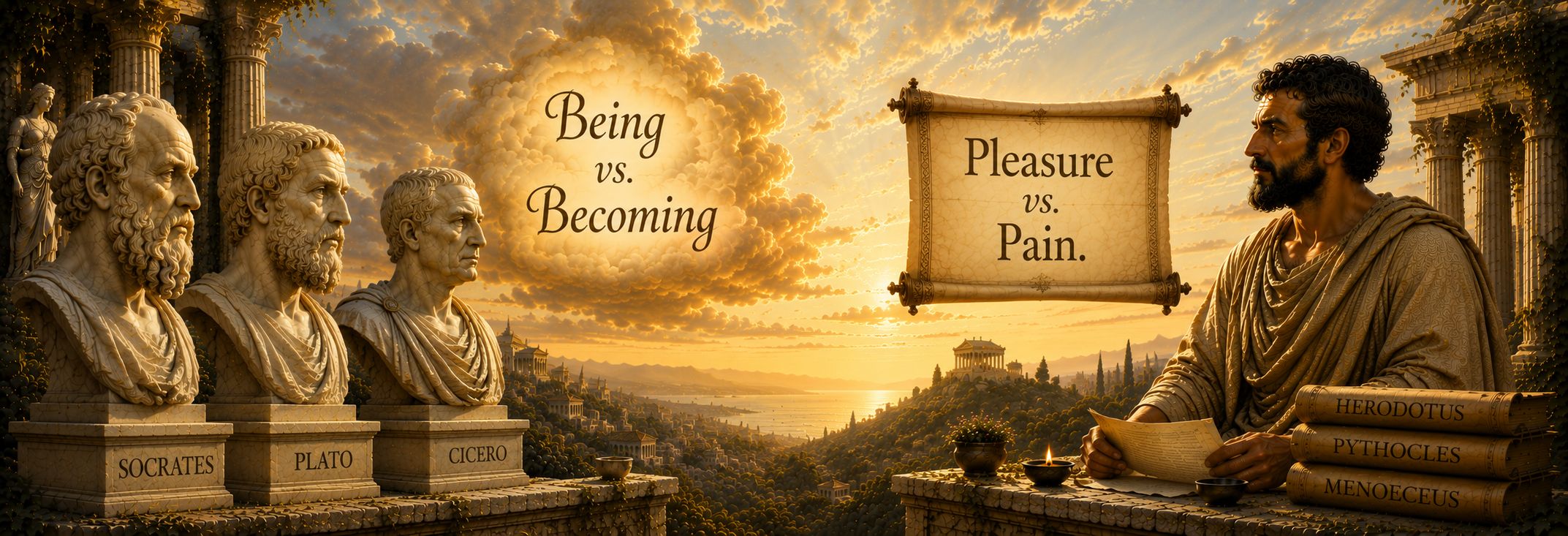
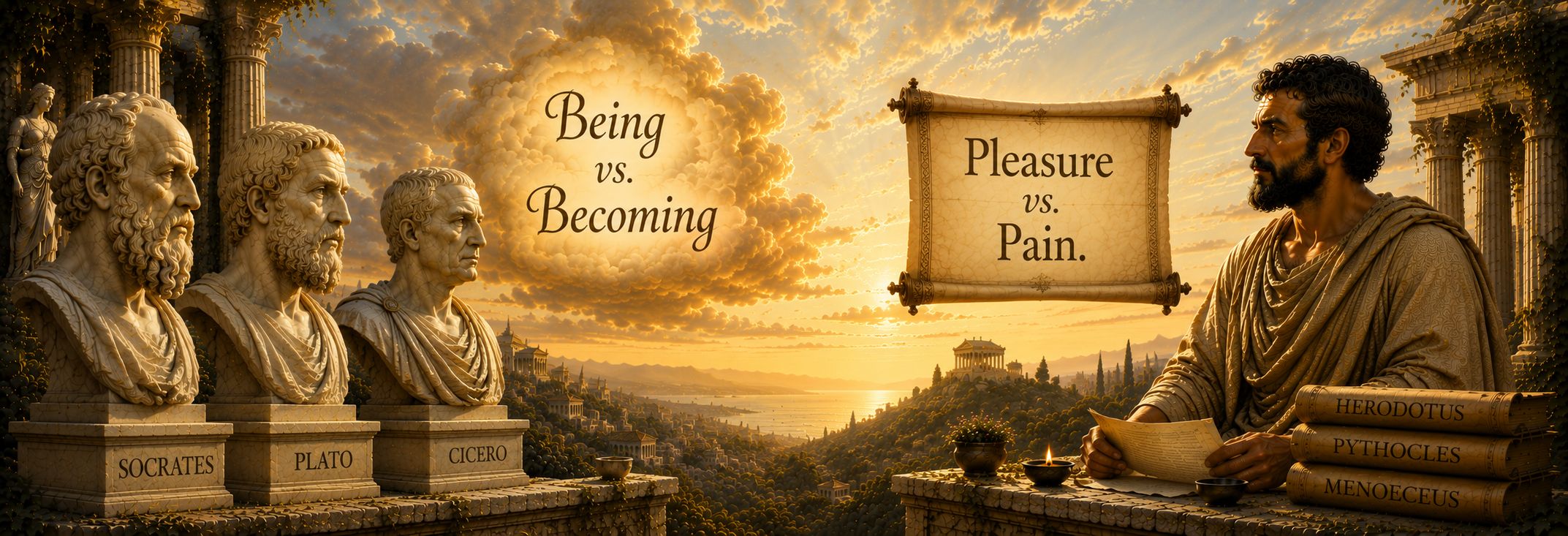
We pursue Epicurus' original teachings by prioritizing what he himself wrote to his friends Herodotus, Pythocles, and Menoeceus, and in his Principal Doctrines. We also prioritize the works of his primary followers such as Lucretius and Cicero's Epicurean spokesmen Torquatus and Velleius.
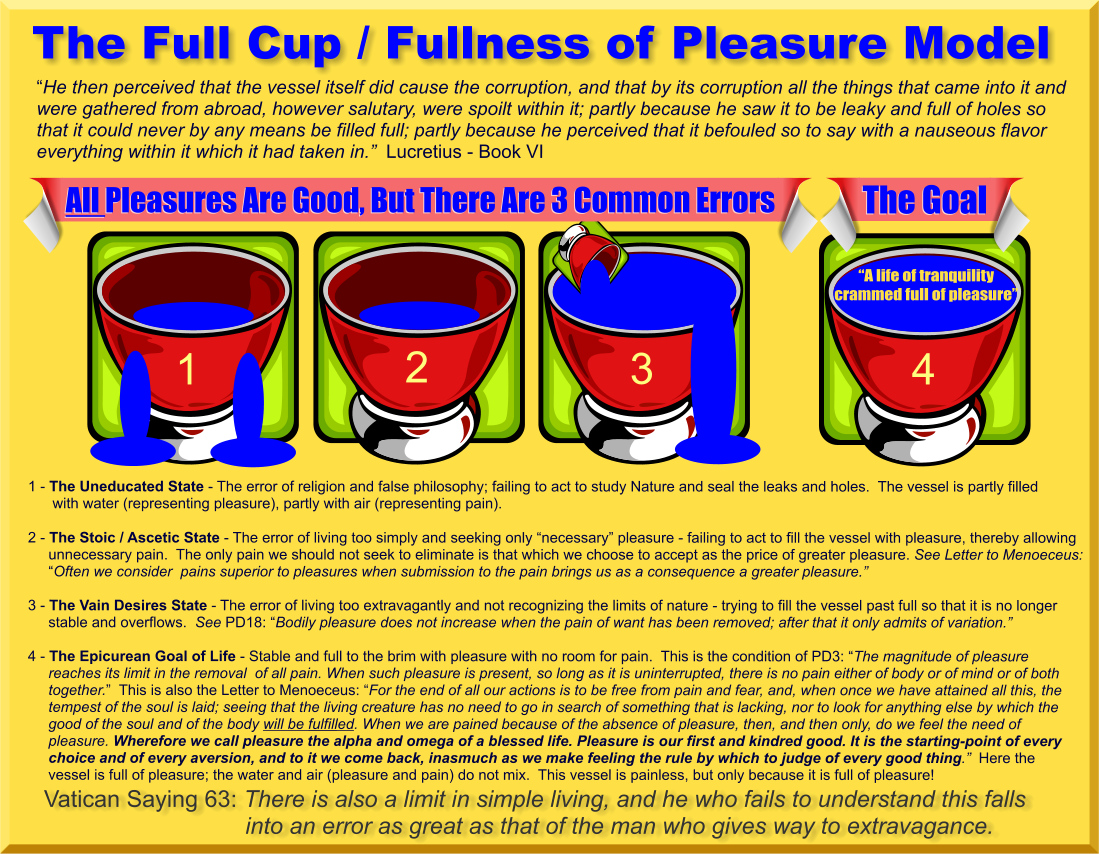
Keeping the focus on Pleasure answers the question of what is the highest good, but leaves unanswered the practical question of "Which pleasures?" Because Epicurus held that all mental and physical experiences in life fall within either pleasure or pain, the scope of choice is wide. Physical pleasures are necessary for life, but mental pleasures are necessary for happiness. The pleasures we choose to pursue will differ according to individual circumstances, but some circumstances are universal: All of us eventually die and cease to exist. There are no supernatural forces or rules. Under these universal conditions, Epicurus teaches that Nature tells us to pursue maximum net pleasure -- not minimum total pain. Some modern writers argue that Epicurus taught pursuit of minimum total pain as his overriding goal. This is false, as presented here on this site in articles such as Against Katastematic Supremacy: Pleasure Is a Unified Good, Not a House Divided Against Itself or others listed below. Epicurean happiness embraces active engagement with life and willing acceptance of pains that lead to greater net pleasure. It rejects retreat, resignation, and avoidance of all pain at every turn.
Think about how you will judge your life when it nears its end. If you are the type who will be happiest if you can say that you lived your life pursuing the maximum net pleasure that was possible to you, then you are in the right place here at EpicureanFriends. If you agree that pleasure is the highest good and you would like to join us and participate in our work, check here for our Rules, Policies, and Terms of Use and consider setting up an account.
Epicurean Philosophy
Physics + Canonics ⟶ Ethics
Core Texts: Diogenes Laertius | Lucretius | Torquatus | Velleius | Topical Outline
Physics: The Nature of the Universe
Canonics: How To Know What Is True
Ethics: How To Live








Featured Lucretius Today Podcasts
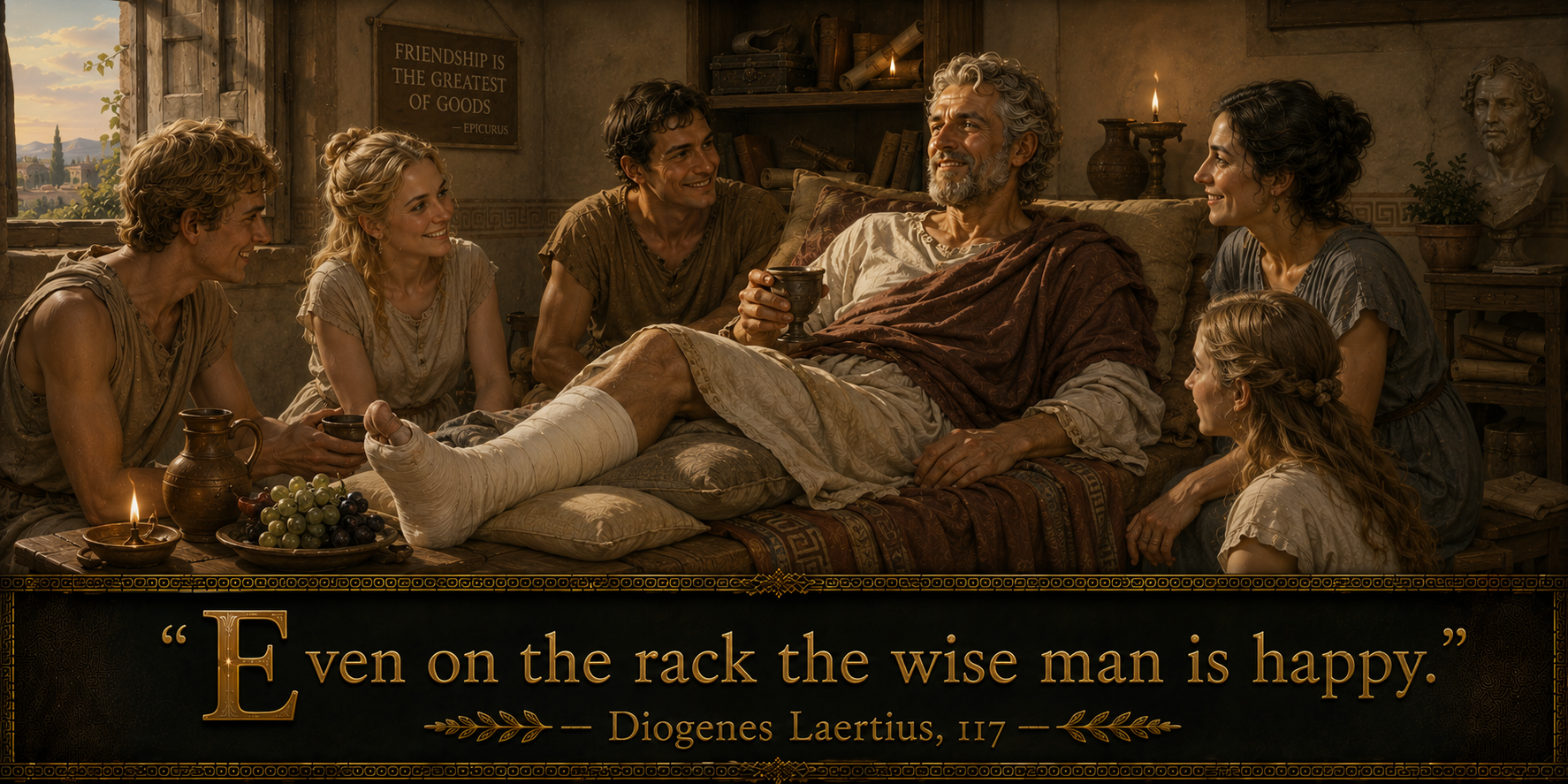
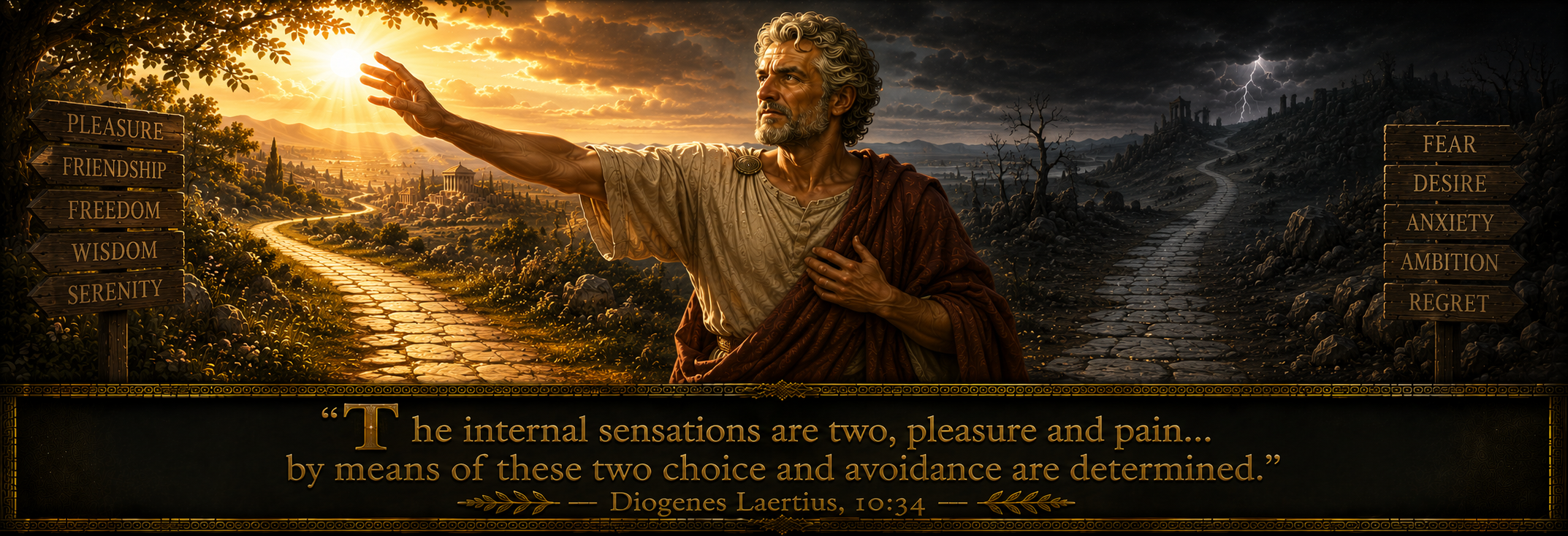
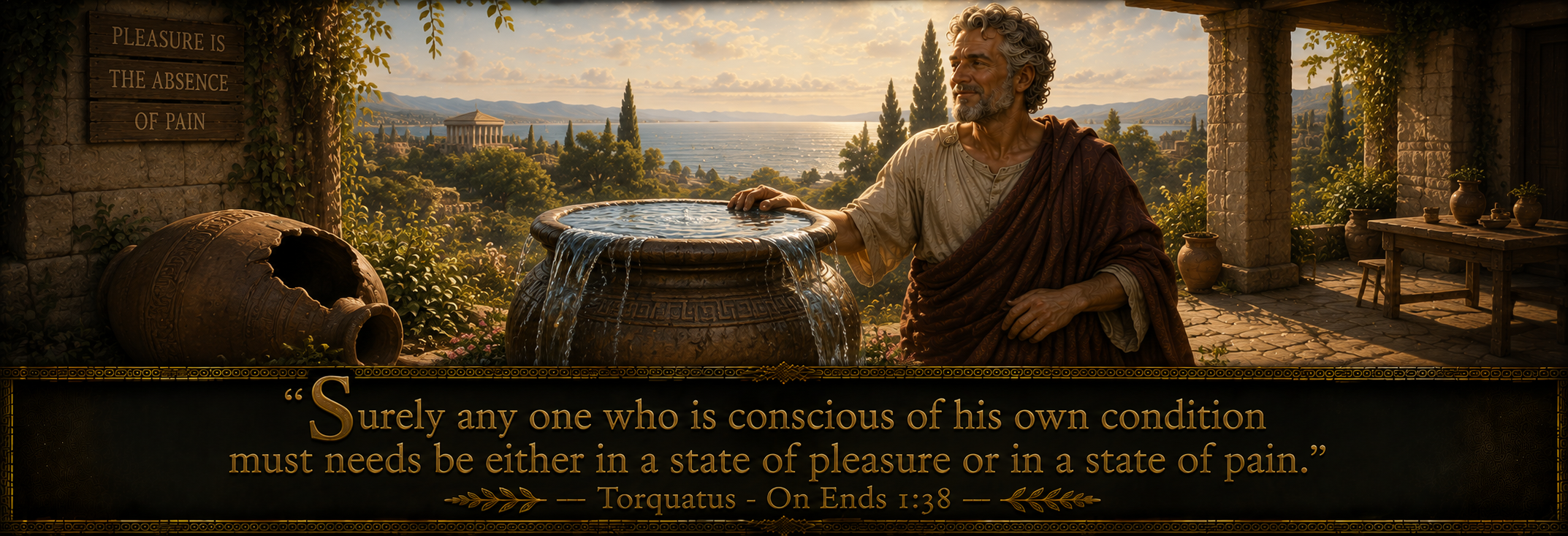
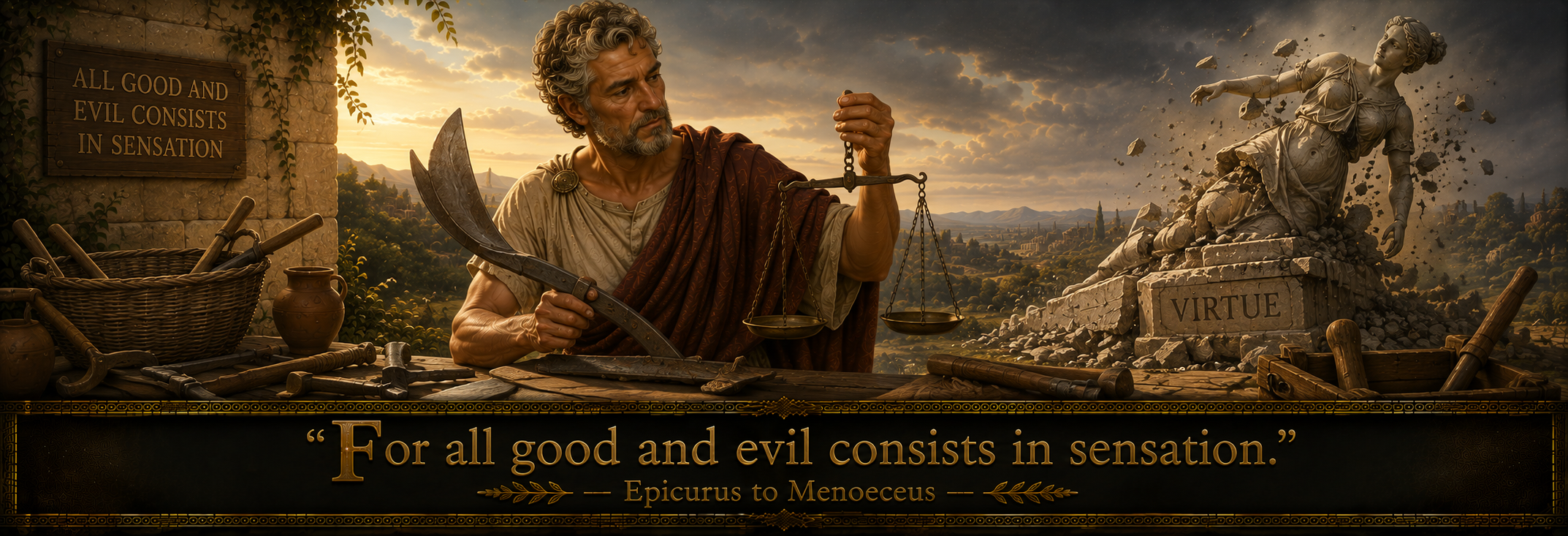
Featured Videos
An introduction to the core principles of Epicurean philosophy, exploring the ancient wisdom of Epicurus and its relevance to modern life.
Cicero's "Torquatus" explains and defends Epicurean philosophy.
Cicero's "Velleius" argues against supernatural gods and explains Epicurus' views of true divinity.
Essential concepts to understand when reading Epicurus for the first time. Learn about the paradigm shift in thinking that Epicurean philosophy represents.
Lucretius Today interviews Dr. Emily Austin to discuss her recent book, which is one of the best introductions to Epicurus available anywhere.
Lucretius Today interviews Dr. Marcelo Boeri, co-author of a book on practical applications of Epicurean political theory.
Lucretius Today interviews Dr. David Glidden author of the article "Epicurean Prolepsis."
Examines a passage in Epicurus's Letter to Herodotus on the motion of images and atoms, where translators and commentators disagree about what "elementary fact" Epicurus was actually pointing to.
Things To Do To Get Started At EpicureanFriends
Trace The Major Concepts To The Key Documents
Physics -- The Nature of the Universe
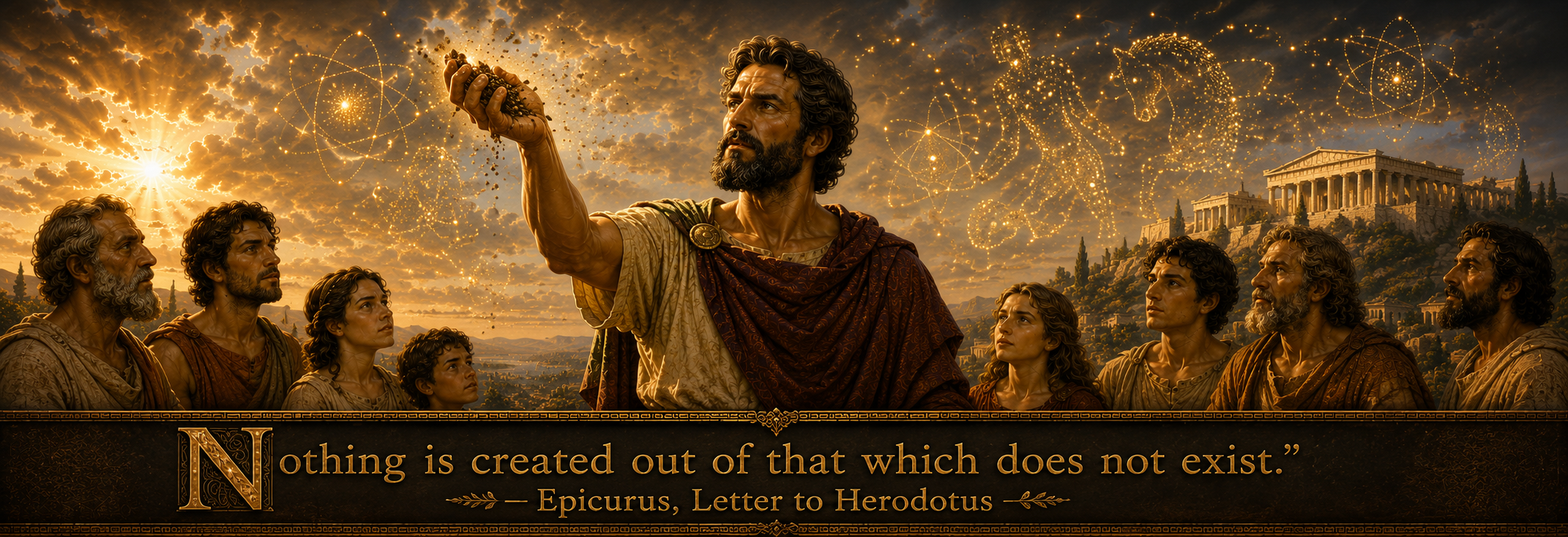
- Nothing comes from nothing, and nothing passes into nothing — Herodotus §39, Lucretius I.146, Lucretius I.215
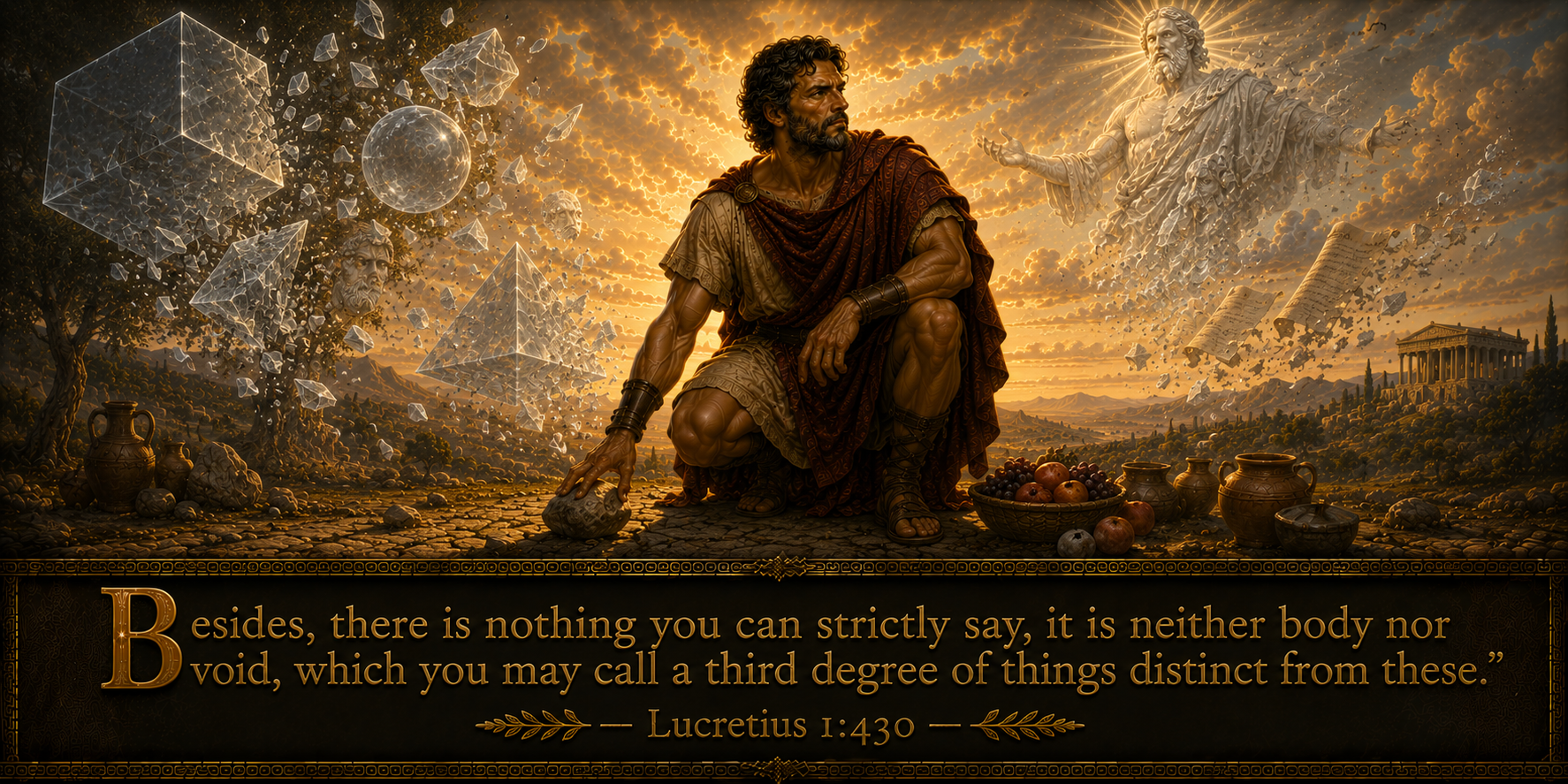
- The universe is composed of atoms and void — there is no third kind of thing — Herodotus §40-41, Lucretius I.329, Lucretius I.430
- Atoms are imperceptibly small and cannot be divided beyond a certain minimum — Herodotus §56-58, Lucretius I.265, Lucretius I.551
- A body's perceptible qualities — including color and sensation — emerge from how its atoms are arranged; the atoms themselves possess none of these qualities — Herodotus §69-70, Lucretius I.449, Lucretius II.730, Lucretius II.865
- The eternal, unchanging atoms account for the transmission of the stable continuity of nature over time — Lucretius I.584
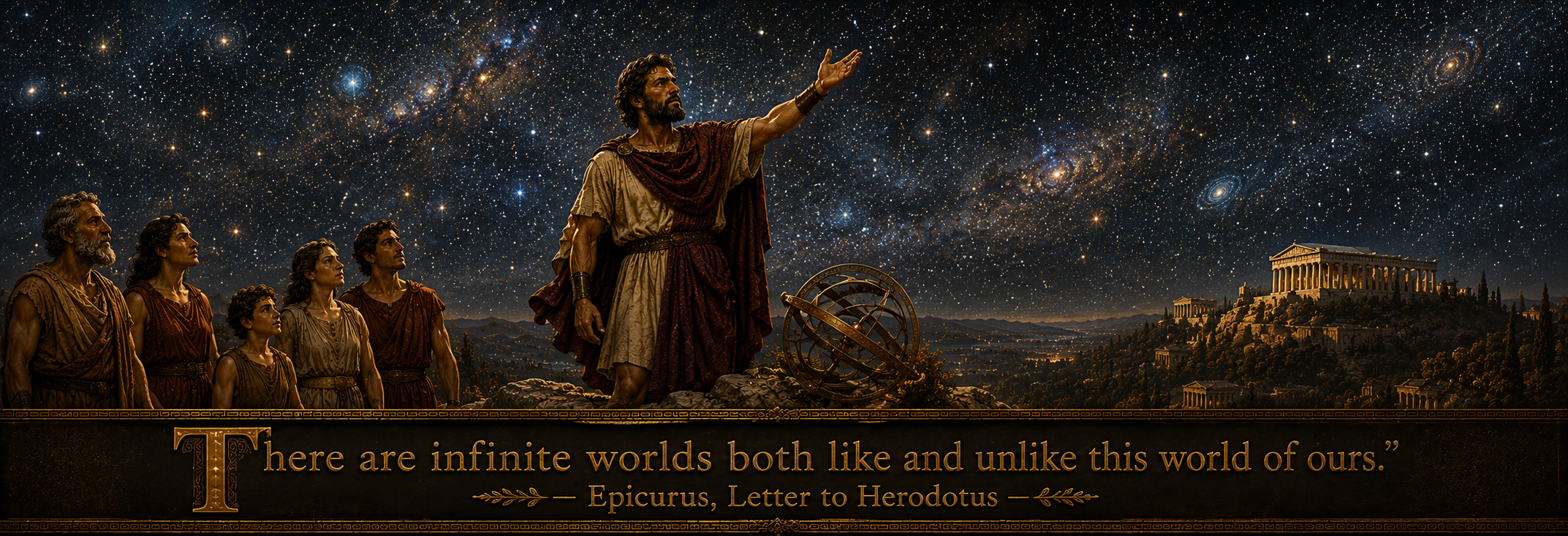
- The universe is unbounded and infinite in extent, with no center — Herodotus §42, Lucretius I.921, Lucretius I.1052
- Atoms are in continuous motion, endlessly colliding — Herodotus §43, Lucretius II.62
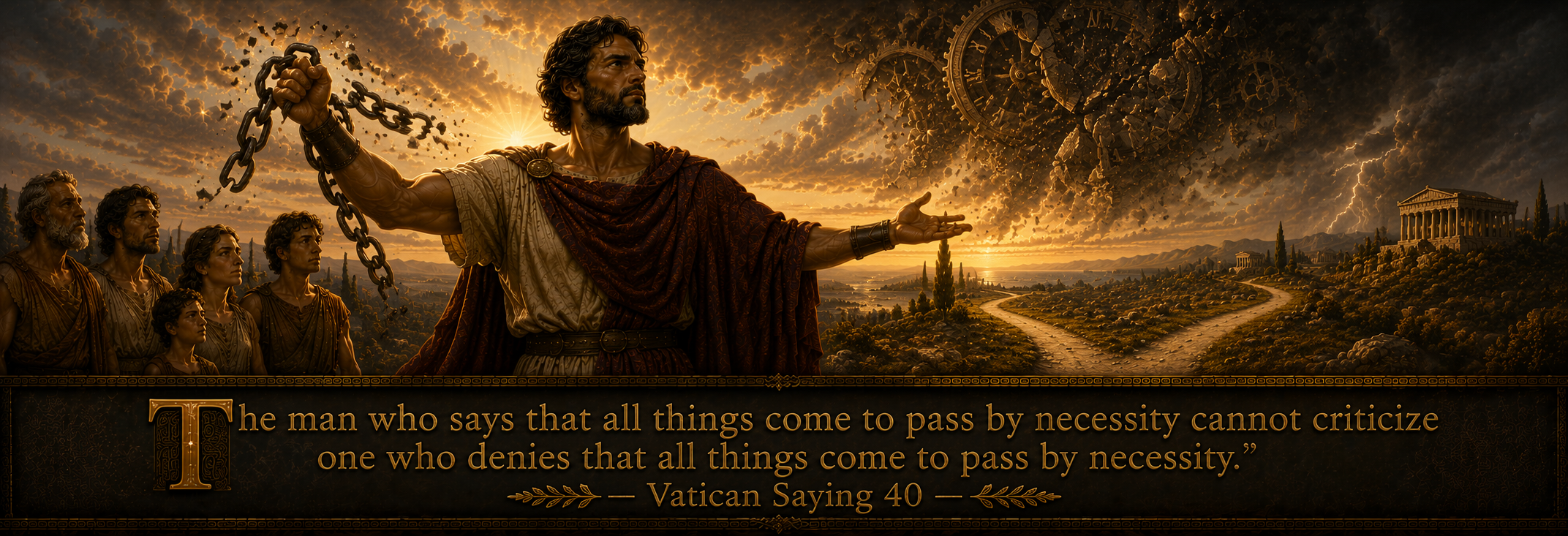
- The swerve of the atom at no fixed time or place breaks the chain of strict causation — Lucretius II.216
- Atoms come in a great but not infinite variety of shapes — Lucretius II.333, Lucretius II.478
- Countless other worlds exist throughout the infinite universe, some with life in them like ours, some with life that is different — Herodotus §74, Pythocles §89, Lucretius II.1048
- The world was not made for men by the gods; it formed through the natural coming together of atoms — Velleius §XX, Lucretius V.156, Lucretius V.416
- The regular motions of the heavens have no divine governor — nature runs herself — Herodotus §77, Pythocles §97, Lucretius II.1090
- The divine "craftsman" argument for a created universe is false — Velleius §VIII-IX
- The world itself is not a living or spherical god — Velleius §X-XIII
- The Stoics' creator-gods are just as incoherent as any rival theory — Velleius §XIV
- We expect the gods to possess human form — Velleius §XVIII
- All things exist equably distributed: a corresponding immortal exists for every mortal kind — Velleius §XIX
- The mind and soul are material in nature — bodies of very fine particles — Herodotus §63-67, Lucretius III.161
- The "harmony" theory of the soul is false — Lucretius III.94
- The mind, soul, and body are born and grow and die together — Lucretius III.323
- The senses — sight, hearing, taste, touch, and smell — all work through physical flows and impacts of atoms — Lucretius IV.54, Lucretius IV.522, Lucretius IV.615, Lucretius IV.673
- The body's faculties were not created for our use, but existed before their use was discovered — Lucretius IV.823
- The mind directs the body — Lucretius IV.858
- Dreams occur because the mind processes images while asleep — Lucretius IV.907
- The world is not eternal — it is mortal, and will one day pass away — Lucretius V.55, Lucretius V.324
- The sun, moon, and stars are, for us, the size they appear to be, and move and shine by natural processes — Pythocles §91, Lucretius V.564, Lucretius V.614
- The earth is mother of living things — Lucretius V.783
- Early humans arose and progressed naturally — Lucretius V.945
- Language was developed naturally — Lucretius V.1028
- Religion arose from fear of the unexplained and misinterpretation of images — Lucretius V.1161
- Storms, tempests, thunder, and lightning have natural causes, not divine ones — Pythocles §104, Lucretius VI.43, Lucretius VI.96, Lucretius VI.397, Lucretius VI.423
- Magnetic attraction and repulsion have natural causes — Lucretius VI.906
- Plagues have natural causes — Lucretius VI.1090
Canonics -- The Science of Knowledge
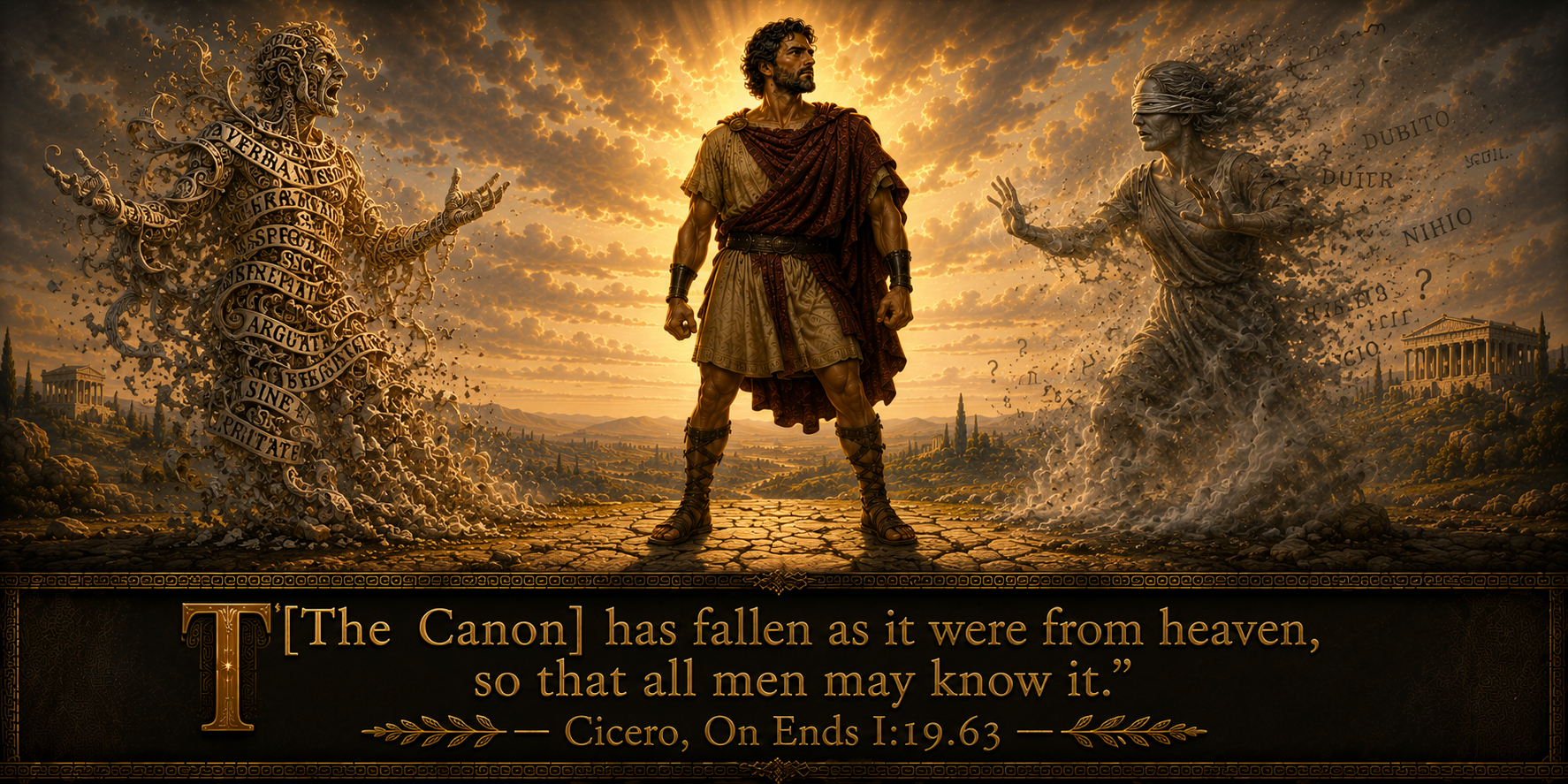
- Epicurus' standard of truth was "The Canon that fell from heaven" — our one fixed standard of judgment — Torquatus Book I §63
- We must first fix clearly what each word means before we can discuss that which cannot be seen — Herodotus §37-38
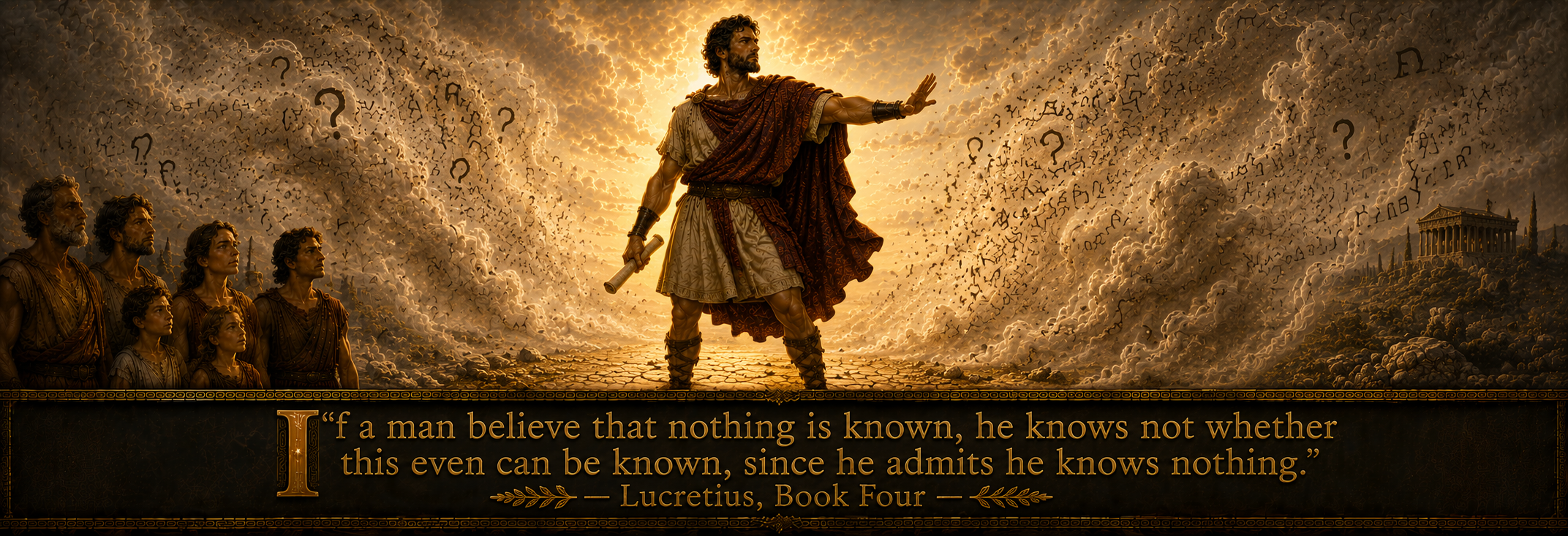
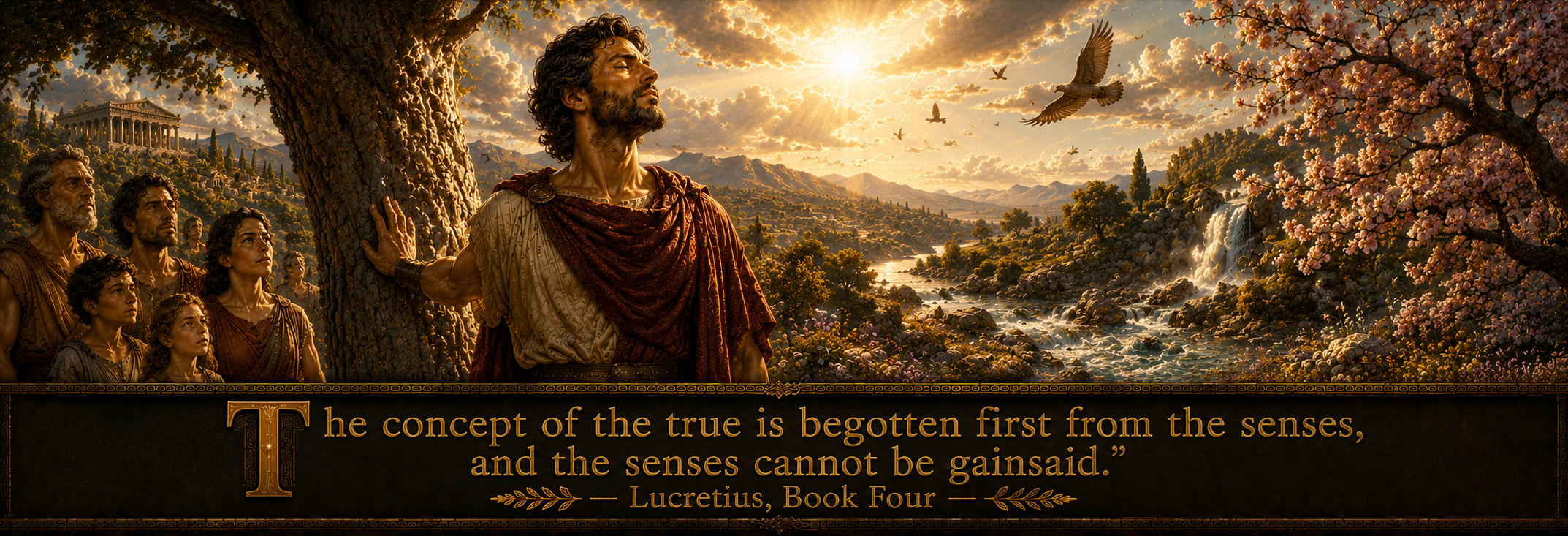
- The senses are the foundation of all knowledge — reasoning itself depends on them, and it is nonsense to claim nothing can be known — Lucretius IV.469, Lucretius IV.478, Lucretius IV.500
- Perception happens through movement of atoms (images) that strike the senses and mind directly — Herodotus §46-50, Lucretius IV.722
- The senses themselves never lie; illusions have natural physical explanations, and false judgments come from opinion added by the mind, not from the senses — Lucretius IV.353, Lucretius IV.462
- There are two kinds of claims: what's logically certain, and what's merely provisional — Pythocles §86-87
- Where more than one natural explanation fits the evidence equally well, all such explanations should be accepted as possible — Herodotus §79-80, Pythocles §95-96
- The preconception argument for our knowledge of gods: prolepsis provides an innate, untaught predisposition that gods exist — Velleius §XVII
Ethics -- Nature's Path To The Best Life
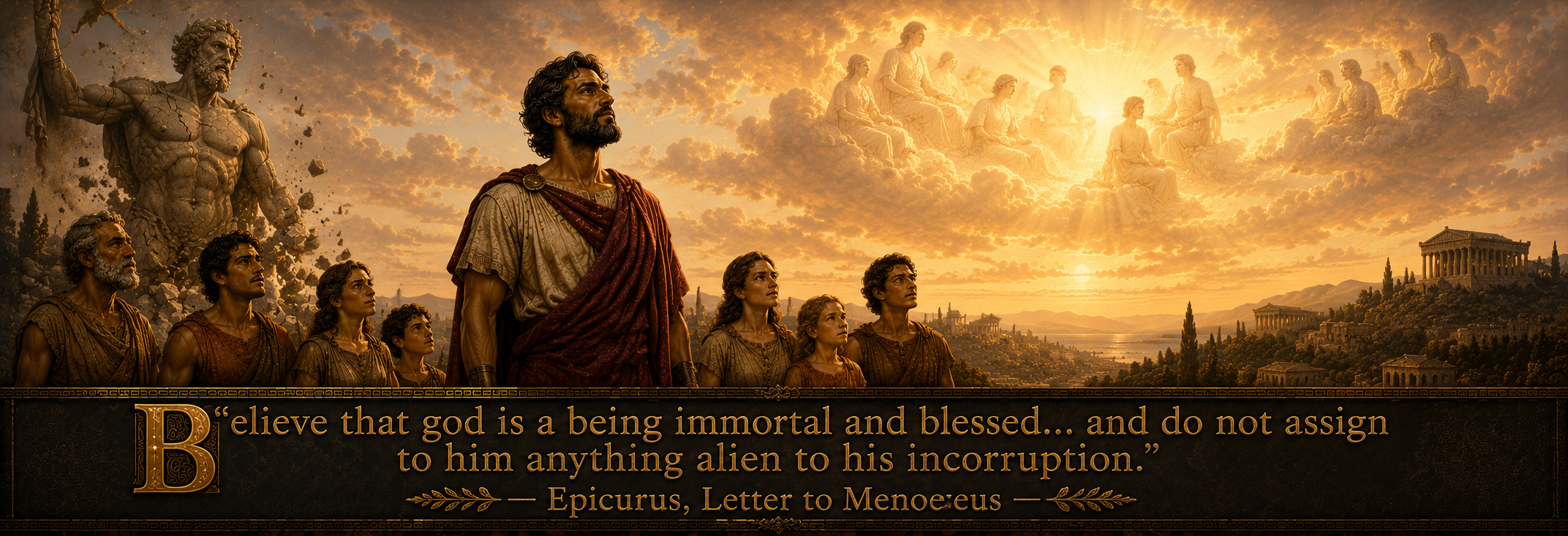
- The gods are blessed and immortal — Menoeceus §123
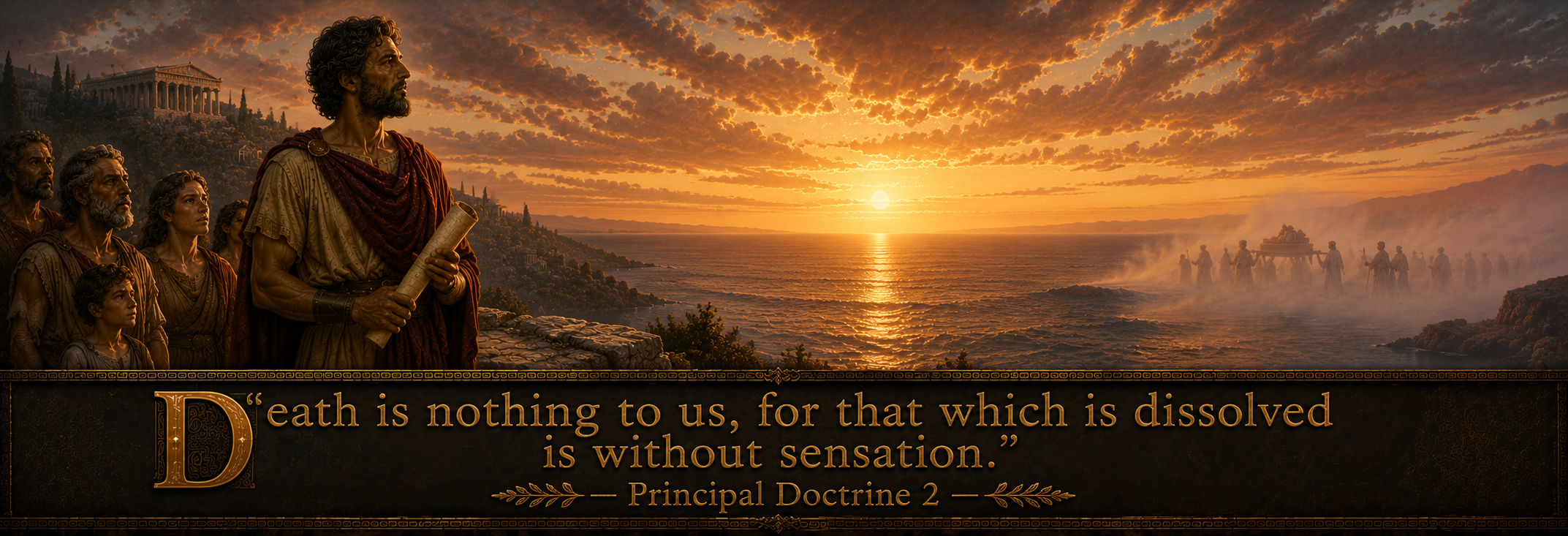
- Death is nothing to us; living well and dying well are the same training, and nature herself would rebuke us for complaining that life must end — Menoeceus §124, Menoeceus §126, Lucretius III.830, Lucretius III.931
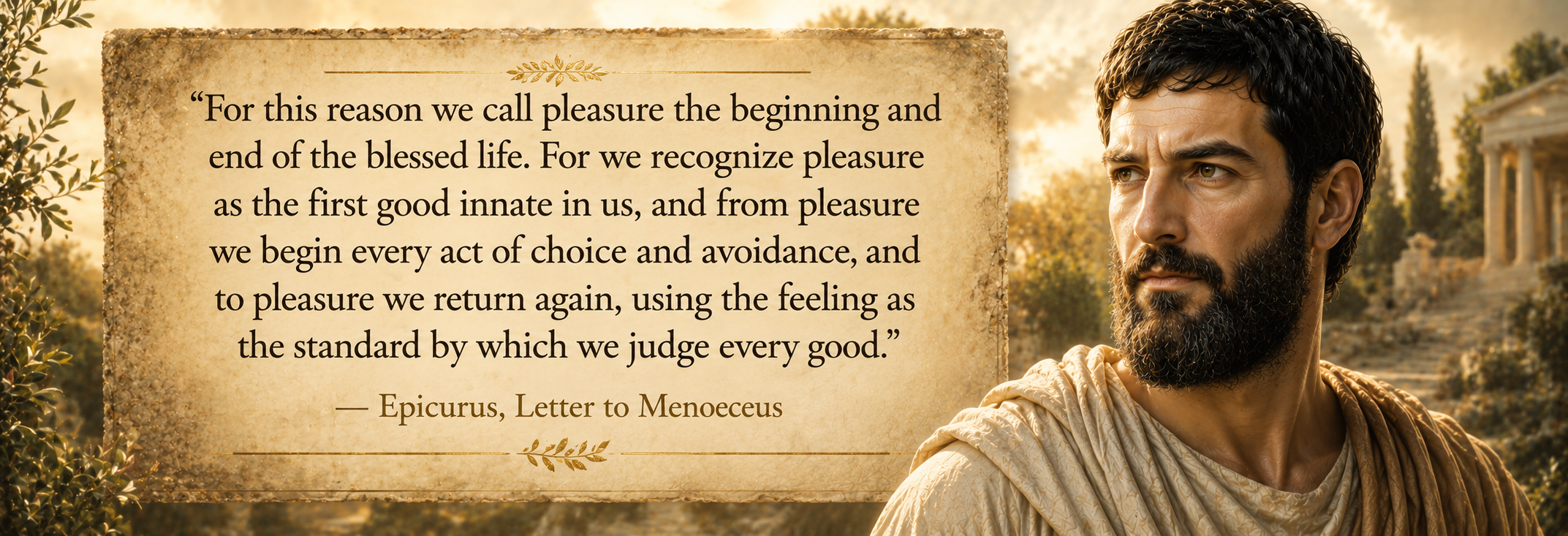
- Pleasure is the beginning and end of the blessed life — Menoeceus §129
- The cradle argument: every animal at birth seeks pleasure and shuns pain — Torquatus Book I §30
- Pleasure (Venus/Nature) is the leader and motivator of all life — Lucretius I.1
- The complete removal of pain is itself the limit of pleasure — absence of pain and pleasure are the same thing, not two different states — Torquatus Book I §37-39, Torquatus Book II §17
- A life of continuous, undisturbed pleasure is the most desirable state achievable — happiness is nothing else than a life of pleasure — Torquatus Book I §40, Torquatus Book I §54
- Cicero coins "static" and "kinetic" pleasure — Torquatus Book II §7-11
- The three-category classification of desires — Menoeceus §127
- Self-sufficiency increases enjoyment of luxury — Menoeceus §130-131
- Prudence is more precious than philosophy itself — Menoeceus §132
- Wisdom is valued because it produces pleasure — Torquatus Book I §43-46
- Temperance: self-control valued for the greater pleasure it secures — Torquatus Book I §47-48
- Courage: explained by its service to pleasure through elimination of fear and pain — Torquatus Book I §49
- Justice: wrongdoing is punished by anxiety, not owed for its own sake — Torquatus Book I §50-54
- "No one can live pleasantly without living wisely, honorably, and justly" — Torquatus Book I §58-61
- Friendship: "of all the means to happiness that wisdom has devised, none is greater" — Torquatus Book I §65-70
- The wise man is freed from fear of fate, divination, and a meddling god — neither blind necessity nor mere chance rules his life — Velleius §XX, Menoeceus §133-134
- Understanding nature philosophically is itself pleasurable, freeing the mind from needless fear and bringing it health — Lucretius II.1, Lucretius IV.1
- Epicurus was the liberating conqueror of false religion, the pioneer whose wisdom made him godlike, and the physician who diagnoses and cures the diseases caused by false ideas — Lucretius I.62, Lucretius III.1, Lucretius V.1, Lucretius VI.1
- Intoxicating romance can be very dangerous, but its hazards can be avoided — Lucretius IV.1037
- Humans gradually learned the benefits of society by trial and error, not divine guidance — Lucretius V.1105