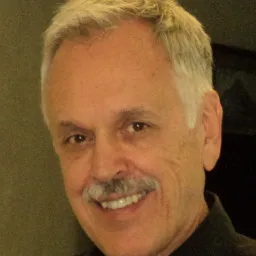

The following page contains a long explanation by the author Thomas Nail (Professor of Philosophy at the University of Denver) of his ideas regarding Lucretius, including his stance that Lucretius never used the word "atoms".
I've read about 2/3 of this and there is a lot to unpack. Since we are currently studying Lucretius at the weekly Sunday Zoom, then this may be of interest.
1. First Counter-Thesis: “Lucretius was not an Atomist”
The difference between Lucretius and the earlier Greek atomists is precisely that—the atom. For Leucippus, Democritus, and Epicurus atoms are always in motion, but the atom itself remains fundamentally unchanged, indivisible, and thus internally static—even as it moves. Instead of positing discrete atoms as ontologically primary as both ancient Greek and later modern theories do, one of Lucretius’ greatest novelties was to posit the movement or flow of matter as primary. I think Lucretius did not simply “translate Epicurus;” he transformed him.
For example, although Lucretius could have easily Latinized the Greek word atomos as atomus [smallest particle], as Cicero did, he intentionally did not, nor did he use the Latin word particula or particle to describe matter. The English translations of “atom,” “particle,” and others have all been added to the text based on a certain historical interpretation of it. The idea that Lucretius subscribed to a world of discrete particles called atoms is therefore both a projection of Epicureanism and a retroaction of modern scientific theories of mechanism onto De Rerum Natura. As such, Lucretitus’ writings have been crushed by the weight of his past and future at the same time.