

This thread is for discussion of the article:
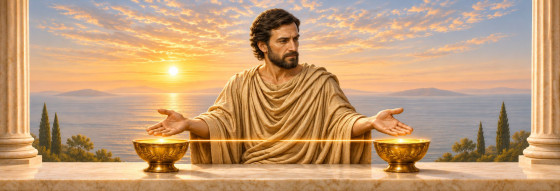
One Wise Man Is Not Wiser Than Another: What Epicurus' Saying Tells Us About Pleasure, Happiness, And How We Know What Is Real

This thread is for discussion of the article:
One Wise Man Is Not Wiser Than Another: What Epicurus' Saying Tells Us About Pleasure, Happiness, And How We Know What Is Real
From Facebook:
I don't get it
Cassius:
What part do you not get? As Cicero showed in On Ends, the Socrates and the Stoics argued that virtue (any good) is all or nothing. If you are not completely virtuous, you are not virtuous. They thought this was compelled by the argument that if something can be made better, then it isn't the best it can be, so it isn't fully and completely good. The good is all or nothing, ***therefore pleasure cannot be THE good because it can always be better, which means you don't have it all.*** Epicurus said no Socrates, you are wrong to think that pleasure cannot be complete. Because pleasure and pain are the only possible experiences, pleasure is complete when it is not accompanied in your experience by any pain. Therefore just like all wise men are equally wise (they are completely wise), all who are experiencing no pain are experiencing complete pleasure.
What does this get you? It allows you to see pleasure as your goal, because pleasure can be complete - all who reach complete pleasure are in the same state of pleasure, just as all wise men are equally wise. One many who is in complete pleasure is experiencing no more pleasure than another man who experiences complete pleasure, just as one wise man is no wiser than another.
This gives you a logical framework, but are two wise men completely the same in every respect? Are two people in complete pleasure necessarily experiencing exactly the same thing? The answer to both is "of course not." One many can no more or less than another, and one man can experience more or less pleasure than another too.
You navigate by goals, and this gives you a target to aim for. The Stoics and Socrates are trapped by "all or nothing" and said that no matter how close your goal you get it doesn't matter unless you get 100% of the way there. You can drown an inch below the surface as well as you can a mile below the surface. Epicurus is not trapped by that way of looking at things because he doesn't insist on all or nothing. Epicurus is still happy even though he is in severe pain of kidney disease. A wise man is still happy even while under torture. It DOES matter how much pleasure or pain you are experiencing at any moment because you are confident what the goal is, and you try your best to get as close as possible.
If you don't look at this problem the way Epicurus does, you are trapped by the Stoics and Socrates / Plato into thinking that Pleasure should not be your goal in the first place.
(Again on Facebook)
Also, in addition to what I just wrote - here 's another way of looking at it: My article suggests a way to interpret what Epicurus said by referring to statements made by Cicero and Plato. Suppose you had never read my article. Would the statement "one wise man is not wiser than another" have seemed right to you? How would you have interpreted it?