

https://www.tabedizioni.it/web/content/462840
FREE DOWNLOAD from Martin Ferguson Smith
https://www.tabedizioni.it/web/content/462840
FREE DOWNLOAD from Martin Ferguson Smith
Thank you Don!
If anyone sees any significant changes, additions, or whatever that deviate from the version at the Catalonia page, please let us know here in this thread. Up to now the version at the link below has been the best available to us:
FYI
"Fragments of Diogenes' work were discovered in 1884-1889. Further investigations were inaugurated by Martin Ferguson Smith in 1968-1973 and continued during British and German-led surveys (1974-2017). The number of known pieces of the inscription more than tripled, from 88 in the 19th century to 305. This translation, the first in English to include all the latest discoveries and research, is intended for all who are interested in philosophy, in the intellectual and cultural history of the Greek world under the Roman Empire, and in the story of an impressive and moving human document."

Up to now the version at the link below has been the best available to us:
That's what I like about this March 2026 publication. It's legit from MFS himself along with his notes and intro.
Thank you!
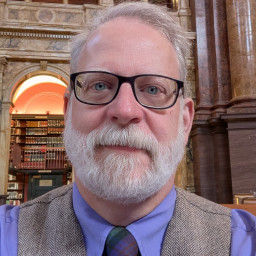
I did not realize that the island Smith lives on has a population of 15 to 30 people. Apparently, there is not even one store on the island. I wonder how he handles getting groceries.
I'm curious to compare the arrangement of the text in the book to this:
Thank you, Don
Aside from the introductory part where Diogenes declares his (noble) motifs, this is the section I personally like the most:
Let us first discuss states, keeping an eye on the point that, when the emotions which disturb the soul are removed, those which produce pleasure enter into it to take their place.
Well, what are the disturbing emotions? [They are] fears —of the gods, of death, and of [pains]— and, besides [these], desires that [outrun] the limits fixed by nature. These are the roots of all evils, and, [unless] we cut them off, [a multitude] of evils will grow [upon] us.
Yes, Titus . Agreed.
For the record, here's the Greek for that section emphasis added):
ἡμ[εῖς δὲ ζη]τ̣ῶ̣μεν ἤ̣δ̣η πῶς ὁ βίος ἡμεῖν ἡδὺς γένηται καὶ ἐν τοῖς κατασ̣τήμασι καὶ ἐν ταῖς πράξεσιν. περὶ δὲ τῶν καταστημάτων πρῶτον εἴπωμεν, ἐκεῖνο τηροῦντες, τὸ δὴ ὅτι τῶν ὀχλούντων τὴν ψυχὴν παθῶν ὑπεξαιρεθέντων τὰ ἥδοντα αὐτὴν ἀντιπαρέρχεται. vac. 1 τὰ οὖν ὀχλοῦντα τίνα [ἐστ]ί̣ν; vac. 1 φόβοι μέν̣ [εἰσιν] [ὁ] μ̣ὲν ἐκ θεῶν, vac. 1 ὁ [δ' ἀπὸ] [θ]α̣νάτου, vac. 1 ὁ δ' ἀπ' [ἀλγη-]...
I want to note that where Martin Ferguson Smith gives "states" in the translation, the Greek is κατασ̣τήμασι and καταστημάτων, that is katastēmasi and katastēmatōn. Diogenes is talking about the good old katastematic and kinetic pleasures here. He doesn't use kinetic but instead πράξεσιν praxesin from πρᾶξῐς (prâxĭs): "act; action; activity; deed; doing" The word used by Epicurus κίνησις kinēsis is motion, opposed to "rest" (στάσις). I would say opposed to "states."
This goes along with my contention that the katastematic pleasure of ataraxia and maybe aponia is achieved by rooting out these "fears —of the gods, of death, and of [pains]— and, besides [these], desires that [outrun] the limits fixed by nature." These are what gives humans dread and anxiety about the big picture of their life. Will they still have some anxiety about everyday things? Sure, I think so, but ripping out those fundamental existential disturbing fears provides a solid foundation upon which to build one's life.
I want to note that where Martin Ferguson Smith gives "states" in the translation, the Greek is κατασ̣τήμασι and καταστημάτων, that is katastēmasi and katastēmatōn.
Do you have a recommendation how to translate this section smoothly where Ferguson instead gives "states"? (Let us first discuss states...)

I want to note that where Martin Ferguson Smith gives "states" in the translation, the Greek is κατασ̣τήμασι and καταστημάτων, that is katastēmasi and katastēmatōn.
Do you have a recommendation how to translate this section smoothly where Ferguson instead gives "states"? (Let us first discuss states...)
"States" isn't a bad choice as it tries to convey a stable condition rather than something in flux, something moving. I will say I don't like "static" as that to me conveys ossification and rigidity. In the past, I've written "It comes from καθιστημι according to LSJ with connotations like restore, return, set in order, etc. So it's not a static state, it's a return to order (ataraxia and aponia) after the 'excitement' of euphrosyne and khara."
But you asked for a translation of the section. To be specific, κατασ̣τήμασι is a plural dative and τῶν καταστημάτων is the plural genitive of κατάστημα "state, condition; which is related to καθίστημι. Check out that link for the numerous connotations of that word, including bring down to a place; replace, restore; set in order, array, of soldiers; bring into a certain state; etc. This is why translation is so tricky. Words have semantic contexts to a speaker of that language that can be completely missed by simple substitutions from language A to B.
But that's never stopped me before  , so here's my crack at the first sentence of the Greek (Oh my! I am rusty!)...
ἡμ[εῖς δὲ ζη]τ̣ῶ̣μεν ἤ̣δ̣η πῶς ὁ βίος ἡμεῖν ἡδὺς γένηται καὶ ἐν τοῖς κατασ̣τήμασι καὶ ἐν ταῖς πράξεσιν.
So, let us now consider what stable conditions and what actions produce the sweet, pleasant life for us.
For anyone interested, MFS also has an autobiography – titled Martin the Epicurean – that was just released by Amazon on April 15th. Here is the link:
As I am reading MFS’s latest translation of Diogenes of Oinoanda (linked above by Don ) I was struck by this (pp. 47-48):
“ … and not least we did [this] for those who (II) are called foreigners, although they are not really so. For, while the various segments of the earth give different people a different country, the whole compass of this world gives all people a single country, the entire earth, and a single home, the world.” [My italics]
That is as strong a statement of cosmopolitanism as any Stoic. One might also be bold enough to say (perhaps with an eye to global environmental concerns): “a single Garden, the entire earth.”
“ … and not least we did [this] for those who (II) are called foreigners, although they are not really so. For, while the various segments of the earth give different people a different country, the whole compass of this world gives all people a single country, the entire earth, and a single home, the world.” [My italics]
For anyone interested... ...κ̣αλουμέν̣ους μὲν ξένους, ο̣ὐ μήν γε ὄντας. (vac. 1) καθ̣' ἑκάστην μὲν γὰρ ἀποτομὴν τῆς γῆς ἄλλων ἄλλη πατρίς ἐστιν, (vac. 1) κατὰ δὲ τὴν̣ ὅλην περιοχὴν το̣ῦ̣δε τοῦ κόσμου μία̣ ̣π̣άντων πατρίς ἐστ̣ιν ἡ πᾶσα γῆ καὶ εἷς ὁ κόσμος οἶκος.
I find it interesting that Diogenes distinguishes between the earth γης and the cosmos κοσμου.
foreigners = ξένους (xenous)
That also lends perhaps some semantic emphasis to the anti-xenophobic point of Diogenes.
And perhaps also his distinguishing between geography (γης) as determining the borders of one’s ancestral home (πατρίς) – and the whole world of humanity (κόσμος), which, according to Wiktionary and Liddell-Scott, κόσμος can also refer to.