


1. Home
    1. Start Here: Study Guide
    2. Community Standards And Posting Policies
    3. Terms of Use
    4. Moderator Team
    5. Website Overview
    6. Site Map
    7. Quizzes
    8. Articles
      1. Featured Articles
    9. All Blog Posts
      1. Elli's Blog / Articles
  2. Wiki
    1. Wiki Home
    2. FAQ
    3. Classical Epicureanism
    4. Files
    5. Search Assistance
    6. Not NeoEpicurean
    7. Foundations
    8. Navigation Outlines
    9. Reading List
    10. Key Pages
  3. Forum
    1. Full Forum List
    2. Welcome Threads
    3. Physics
    4. Canonics
    5. Ethics
    6. Forum Shortcuts
    7. Forum Navigation Map
    8. Featured
    9. Most Discussed
  4. Latest
    1. New Activity
    2. Latest Threads
    3. Dashboard
    4. Search By Tag
    5. Complete Tag List
  5. Podcast
    1. Lucretius Today Podcast
    2. Episode Guide
    3. Lucretius Today At Youtube
    4. EpicureanFriends Youtube Page
  6. Texts
    1. Overview
    2. Diogenes Laertius
    3. Principal Doctrines
    4. Vatican Collection
    5. Lucretius
    6. Herodotus
    7. Pythocles
    8. Menoeceus
    9. Fragments - Usener Collection
    10. Torquatus On Ethics
    11. Velleius On Gods
    12. Greek/Latin Help
  7. Gallery
    1. Featured images
    2. Albums
    3. Latest Images
    4. Latest Comments
  8. More
    1. Featured Content
    2. Calendar
      1. Upcoming Events List
      2. Zooms - General Info
      3. Fourth Sunday Meet-&-Greet
      4. Sunday Weekly Zoom
      5. Wednesday Zoom Meeting
    3. Logbook
    4. EF ToDo List
    5. Link-Database
  • Login
  • Register
  • Search
This Thread
  • Everywhere
  • This Thread
  • This Forum
  • Forum
  • Articles
  • Blog Articles
  • Files
  • Gallery
  • Events
  • Pages
  • Wiki
  • Help
  • FAQ
  • More Options

Welcome To EpicureanFriends.com!

"Remember that you are mortal, and you have a limited time to live, and in devoting yourself to discussion of the nature of time and eternity you have seen things that have been, are now, and are to come."

Sign In Now
or
Register a new account
  1. Home
    1. Start Here: Study Guide
    2. Community Standards And Posting Policies
    3. Terms of Use
    4. Moderator Team
    5. Website Overview
    6. Site Map
    7. Quizzes
    8. Articles
      1. Featured Articles
    9. All Blog Posts
      1. Elli's Blog / Articles
  2. Wiki
    1. Wiki Home
    2. FAQ
    3. Classical Epicureanism
    4. Files
    5. Search Assistance
    6. Not NeoEpicurean
    7. Foundations
    8. Navigation Outlines
    9. Reading List
    10. Key Pages
  3. Forum
    1. Full Forum List
    2. Welcome Threads
    3. Physics
    4. Canonics
    5. Ethics
    6. Forum Shortcuts
    7. Forum Navigation Map
    8. Featured
    9. Most Discussed
  4. Latest
    1. New Activity
    2. Latest Threads
    3. Dashboard
    4. Search By Tag
    5. Complete Tag List
  5. Podcast
    1. Lucretius Today Podcast
    2. Episode Guide
    3. Lucretius Today At Youtube
    4. EpicureanFriends Youtube Page
  6. Texts
    1. Overview
    2. Diogenes Laertius
    3. Principal Doctrines
    4. Vatican Collection
    5. Lucretius
    6. Herodotus
    7. Pythocles
    8. Menoeceus
    9. Fragments - Usener Collection
    10. Torquatus On Ethics
    11. Velleius On Gods
    12. Greek/Latin Help
  7. Gallery
    1. Featured images
    2. Albums
    3. Latest Images
    4. Latest Comments
  8. More
    1. Featured Content
    2. Calendar
      1. Upcoming Events List
      2. Zooms - General Info
      3. Fourth Sunday Meet-&-Greet
      4. Sunday Weekly Zoom
      5. Wednesday Zoom Meeting
    3. Logbook
    4. EF ToDo List
    5. Link-Database
  1. Home
    1. Start Here: Study Guide
    2. Community Standards And Posting Policies
    3. Terms of Use
    4. Moderator Team
    5. Website Overview
    6. Site Map
    7. Quizzes
    8. Articles
      1. Featured Articles
    9. All Blog Posts
      1. Elli's Blog / Articles
  2. Wiki
    1. Wiki Home
    2. FAQ
    3. Classical Epicureanism
    4. Files
    5. Search Assistance
    6. Not NeoEpicurean
    7. Foundations
    8. Navigation Outlines
    9. Reading List
    10. Key Pages
  3. Forum
    1. Full Forum List
    2. Welcome Threads
    3. Physics
    4. Canonics
    5. Ethics
    6. Forum Shortcuts
    7. Forum Navigation Map
    8. Featured
    9. Most Discussed
  4. Latest
    1. New Activity
    2. Latest Threads
    3. Dashboard
    4. Search By Tag
    5. Complete Tag List
  5. Podcast
    1. Lucretius Today Podcast
    2. Episode Guide
    3. Lucretius Today At Youtube
    4. EpicureanFriends Youtube Page
  6. Texts
    1. Overview
    2. Diogenes Laertius
    3. Principal Doctrines
    4. Vatican Collection
    5. Lucretius
    6. Herodotus
    7. Pythocles
    8. Menoeceus
    9. Fragments - Usener Collection
    10. Torquatus On Ethics
    11. Velleius On Gods
    12. Greek/Latin Help
  7. Gallery
    1. Featured images
    2. Albums
    3. Latest Images
    4. Latest Comments
  8. More
    1. Featured Content
    2. Calendar
      1. Upcoming Events List
      2. Zooms - General Info
      3. Fourth Sunday Meet-&-Greet
      4. Sunday Weekly Zoom
      5. Wednesday Zoom Meeting
    3. Logbook
    4. EF ToDo List
    5. Link-Database
  1. EpicureanFriends - Classical Epicurean Philosophy
  2. Forum
  3. The Lucretius Today Podcast and EpicureanFriends Videos
  4. The Lucretius Today Podcast
  • Sidebar
  • Sidebar

Summarizing Epicurean Answers to Tusculan Questions

  • Cassius
  • January 30, 2026 at 10:15 AM
  • Go to last post
  • Online
    Cassius
    05 - Administrator
    Points
    109,703
    Posts
    15,070
    Quizzes
    9
    Quiz rate
    100.0 %
    • January 30, 2026 at 10:15 AM
    • New
    • #1

    As I write this on January 30 we are planning to proceed with Episode 319 as an opening introduction to Cicero's Academic Questions. I note however that in Episode 318 we read and commented to the end of Tusculan Disputations, but we did not attempt to provide an overview of the full book. We'll need some time to put together notes and thoughts before we devote an episode to that, and the purpose of this thread is to make some notes to get us ready. As a start, here is an outline of what we need to summarize in one final Tusculan Disputations episode. Everyone should feel free to make comments in this thread as the following outline is a pretty good summary of some very major issues:

    Epicurean Answers To Tusculan Questions

    I. Book One: On Death

    A. The basic question posed by the student: Is death an evil?

    B. Cicero's proposed answer from the Academic Skeptic/Stoic perspective: Death is not an evil because either the soul survives death and continues to exist (perhaps in a better state), or death brings complete annihilation of consciousness, in which case there is no sensation and therefore no capacity for misery.

    1. Major points cited by Cicero in favor of this position:

    • If the soul is immortal, death liberates it to contemplate truth and ascend to celestial regions
    • If death brings total extinction, there is no feeling or consciousness remaining to experience evil
    • The insignificance of earthly pleasures we lose makes death less fearful
    • Many historical figures would have been better off dying earlier, avoiding greater evils
    • Fear of death stems from superstition about underworld punishments, which are merely myths

    C. The answer to the question as provided by Epicurus as Cicero presents it: "When we exist, death is not present; when death is present, we do not exist." Therefore death is nothing to us, since when death arrives we no longer have any sensation or existence to be affected by it.

    1. Major points cited by Cicero in opposition to Epicurus:

    • If death is truly nothing, why does Epicurus spend so much effort discussing and preparing for it?
    • The Epicurean position seems to make the preparation for death unnecessary
    • Epicurus's emphasis on pleasure makes his dismissal of death as "nothing" seem inconsistent
    • The teaching appears to trivialize death rather than addressing it philosophically
    • Epicurus relies too heavily on the annihilation view without considering soul immortality

    D. The Correct Epicurean response to this question:

    1. Death ends all sensation, so there is literally nothing to fear about the state of being dead
    2. The "symmetry argument": we didn't suffer before birth, so why fear non-existence after death?
    3. Fearing death interferes with present happiness, which is the actual evil
    4. Understanding the nature of the soul (as atomic and mortal) eliminates superstitious fears
    5. A life well-lived according to nature's limits makes death acceptable whenever it comes

    II. Book Two: On Physical Pain

    A. The basic question posed by the student: Is pain the greatest of all evils?

    B. Cicero's proposed answer from the Academic Skeptic/Stoic perspective: Pain is not the greatest evil (infamy is worse) and can be overcome through fortitude, patience, and mental strength. The wise person's virtue enables them to endure physical suffering without losing happiness.

    1. Major points cited by Cicero in favor of this position:

    • Avoiding infamy is more important than avoiding pain (student admits this)
    • Historical examples show brave individuals enduring extreme pain for noble causes
    • Mental attitude significantly affects how pain is experienced
    • Training in virtue builds capacity to resist pain
    • If pain were the greatest evil, no one could be happy, since anyone might experience it

    C. The answer to the question as provided by Epicurus (as Cicero presents it): Epicurus claims the wise person under torture can say "How little I regard it!" and be happy even while being burned or tortured. Pain is managed by the maxims: "If severe, it is short; if long-lasting, it is bearable."

    1. Major points cited by Cicero in opposition to Epicurus:

    • This seems absurd coming from one who calls pain the greatest evil
    • It's inconsistent to define good as pleasure yet claim happiness under torture
    • If pain is the supreme evil, the wise person should do anything to avoid it, including shameful acts
    • Epicurus's position makes happiness impossible since anyone can experience pain
    • The claim that severe pain is always brief is empirically false

    D. The Correct Epicurean response to this question:

    1. Mental pleasures can be used to counterbalance physical pains - memory of past and anticipation of future goods
    2. The wise person's understanding of nature provides mental pleasure that outweighs bodily distress
    3. Severe pains are typically brief; chronic pains are usually bearable and allow for happiness
    4. There are many other sources of pleasure - including friendship, philosophical inquiry, and other pleasures that are generally readily available, which can provide pleasures that sustain happiness through pain
    5. There are many practical paths for making sure that our actions generate more pleasure than pain

    III. Book Three: On Mental Pain

    A. The basic question posed by the student: How can mental distress and grief be alleviated?

    B. Cicero's proposed answer from the Academic Skeptic/Stoic perspective: Grief is an irrational "disease of the soul" caused by false judgment that something bad has occurred. It should be eliminated entirely through reason, recognition that misfortunes are common to humanity, and understanding that grieving accomplishes nothing.

    1. Major points cited by Cicero in favor of this position:

    • Grief can be postponed in times of danger, showing it's under rational control
    • Grief is often performed for social expectations rather than genuine feeling
    • Understanding that misfortune is universal helps put personal loss in perspective
    • Anticipating possible calamities prepares the mind and reduces their impact
    • The truly wise person recognizes that only vice is worth grieving over

    C. The answer to the question as provided by Epicurus (as Cicero presents it): The cure for grief is to call the mind away from dwelling on troubles and redirect it toward contemplating pleasures and good things.

    1. Major points cited by Cicero in opposition to Epicurus:

    • This is mere distraction therapy, not genuine philosophical cure
    • It doesn't address the root causes of grief in false judgments
    • The approach is inconsistent with Epicurean hedonism if we can't agree on what is truly good
    • It treats symptoms rather than correcting underlying beliefs
    • The Epicurean therapy lacks the systematic rigor of Stoic approaches

    D. The Correct Epicurean response to this question:

    1. Grief arises mostly from false opinions about goods and evils - correcting these false opinions greatly reduces suffering
    2. Memory of past pleasures and anticipation of future goods counterbalances mental pain
    3. Learning to pursue pleasure rationally reduces occasions for grief
    4. Friendship is generally readily available and provides both immediate comfort and long-term resilience against grief
    5. Recognizing that many supposed goods (wealth, status) are not what is important in life liberates us from grief over the times they are not available.

    IV. Book Four: On Strong Emotions

    A. The basic question posed by the student: How should we understand and manage all the perturbations of the soul (emotions/passions)?

    B. Cicero's proposed answer from the Academic Skeptic/Stoic perspective: All passions are diseases of the soul arising from false judgments about good and evil. They fall into four categories: grief, fear, excessive joy, and immoderate desire. All should be eliminated entirely through recognizing that only virtue is good and only vice is evil.

    1. Major points cited by Cicero in favor of this position:

    • Emotions are based on false beliefs about what constitutes good and evil
    • Systematic classification reveals the cognitive structure underlying all passions
    • Complete elimination of passions leads to true tranquility (apatheia)
    • The passionless state allows reason to guide all actions
    • Only by viewing virtue as the sole good can one achieve immunity from emotional disturbance

    C. The answer to the question as provided by Epicurus (as Cicero presents it): Some emotions and desires are natural and necessary, others natural but unnecessary, still others neither natural nor necessary. Only the vain and empty desires should be eliminated.

    1. Major points in opposition to Epicurus:

    • This doesn't go far enough in controlling the passions
    • The distinction between types of desires is unclear and subjective
    • Allowing "natural" emotions still leaves one vulnerable to disturbance
    • The Epicurean approach is too permissive and insufficiently rigorous
    • Their emphasis on pleasure actually encourages certain passions

    D. The Correct Epicurean response to this question:

    1. Mental pleasure and pain are not false beliefs but are provided by Nature as guidance for how to live.
    2. Limitless and unnecessary pleasures are not required for happiness and in fact produce more pain than plesaure
    3. The pursuit of desires without limit (such as for unlimited wealth, power, fame) will bring more pain pleasure and can easily be eliminated
    4. Proper understanding of nature's limits allows us to eliminate excessive fear and desire while still pursuing pleasure and avoiding pain rationally toward the true goal of pleasure.
    5. The goal of life is happiness through a predominance of pleasure over pain, not complete elimination of all disturbance and feeling, which are in fact provided by Nature and required for happy living.

    V. Book Five: Is Virtue Sufficient for Happiness?

    A. The basic question posed by the student: Is virtue the only true good, and alone sufficient to produce a happy life, or are there other goods (health, wealth, etc.) which are also necessary?

    B. Cicero's proposed answer from the Academic Skeptic/Stoic perspective: Virtue is entirely sufficient for happiness under all circumstances. The wise person is happy even in poverty, exile, blindness, pain, and torture. Happiness depends solely on character, not external circumstances, and virtue is the only true good.

    1. Major points cited by Cicero in favor of this position:

    • If happiness required external goods, virtue would be discredited as insufficient
    • Historical examples show virtuous people happy despite terrible circumstances
    • Vice produces misery; therefore virtue (its opposite) must produce happiness
    • External goods are indifferent - neither truly good nor evil
    • The wise person's happiness is invulnerable to fortune's changes

    C. The answer to the question as provided by Epicurus (as Cicero presents it): Pleasure is the supreme good and the goal of life. The wise person is nearly always happy because they can maintain mental pleasure even under adversity, but in this Epicurus is inconsistent because he claims the wise person is always happy while making pleasure depend on circumstances.

    1. Major points cited by Cicero in opposition to Epicurus:

    • Epicurus makes happiness too dependent on external circumstances and fortune
    • How can one be happy under torture if pleasure is the good?
    • The claim contradicts Epicurus's own definition of good as pleasure
    • It's inconsistent to say pain is the greatest evil yet the wise person is happy in pain
    • The Epicurean position lacks the logical rigor of the Stoic view

    D. The Correct Epicurean response to this question:

    1. Prudence (practical wisdom) is the greatest virtue and enables the wise person to be happy in nearly all circumstances
    2. Mental/spiritual pleasures (friendship, philosophy, memory) far outweigh bodily pleasures or pains
    3. The wise person's happiness is secure because he can be confident that he will always be able to obtain pleasures that will outweigh pains, and in the event that pain becomes overwhelming, such pain can be ended by death.
    4. A true understanding of the nature of things allows us to see that many of our worst fears (such as about death of capricious gods) are false suppositions, that it is readily possible to secure a life of happiness in which pleasure predominates over pain, and that we need not live forever to experience a happy life.
    5. Understanding that the goal of life is happiness through pleasure allows us to see that virtue is necessary for happiness, but that understanding what virtue means is essential, in that virtue is not a set of absolute that is the same for all people in all places and at all times, but that virtue is contextual and is in fact whatever conduct that in practice leads to living happily.

  • Cassius January 30, 2026 at 10:29 AM

    Changed the title of the thread from “Future Episode - Summarizing Epicurean Answers to Tusculan Questions” to “Summarizing Epicurean Answers to Tusculan Questions”.
  • DaveT
    03 - Level Three
    Points
    624
    Posts
    91
    • January 30, 2026 at 2:20 PM
    • New
    • #2

    Cassius This closing item in the post seems so important to me. I'd like to pose questions on it BUT since you asked for comments on your summary, perhaps my reply ought to be somewhere else. Please move it if you think appropriate

    Quote from Cassius

    Understanding that the goal of life is happiness through pleasure allows us to see that virtue is necessary for happiness, but that understanding what virtue means is essential, in that virtue is not a set of absolute that is the same for all people in all places and at all times, but that virtue is contextual and is in fact whatever conduct that in practice leads to living happily.


    Understanding that the goal of life is happiness through pleasure allows us to see that virtue is necessary for happiness, but that understanding what virtue means is essential, in that virtue is not a set of absolute that is the same for all people in all places and at all times, but that virtue is contextual and is in fact whatever conduct that in practice leads to living happily.
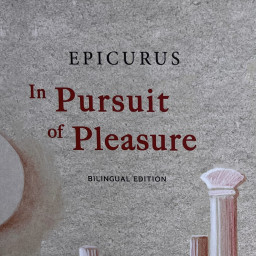
    As I read the Summary, I looked for some sort of amalgam or a way to build Cicero’s Virtues into the above quote. For example, let me pose this question: What were Academic/Stoic Virtues? The Internet tells me they were Wisdom (prudence), Courage, Temperance, and Justice. I agree these virtues can change with cultures. Yet, in our school, we certainly must look to the culture we are actually living in for the definition of OUR virtues. A person won’t get far using deeply personal antisocial interpretations of virtues for himself and still find happiness via acquiring pleasure. More likely that person will end up incarcerated by the larger community.

    So, given our Western Industrialized Educated Rich Democratic culture, which sets the guidelines for our behavior, assume that the four virtues are uniformly agreed upon. Now, can we not agree that those four virtues are the necessary, and I mean necessary, virtues we each need to pursue in order to find happiness as Epicurus defined it?

    This gives us each an indispensable mechanism to pursue pleasure. It uses the virtues to help us define and use to acquisition of pleasure. Epicurus, as far as I understand him, has no problem acknowledging the usefulness of the virtue of Prudence to achieve his definition of happiness. So would he not object to the following statement?

    As a practical matter, the Epicurean pursuit of pleasure DEPENDS on each of us gaining some measure of the four virtues in our private lives in order to experience pleasure.

    Dave Tamanini

    Harrisburg, PA, USA

  • Online
    Cassius
    05 - Administrator
    Points
    109,703
    Posts
    15,070
    Quizzes
    9
    Quiz rate
    100.0 %
    • January 30, 2026 at 2:33 PM
    • New
    • #3

    This is exactly the kind of conversation I'd like to have here to help us prepare for when we record the summary, so this is a fine place for it. I may need to ask you to be a little more clear as to what you are saying however. I picked out this sentence as potentially the focus (?)

    Quote from DaveT

    Now, can we not agree that those four virtues are the necessary, and I mean necessary, virtues we each need to pursue in order to find happiness as Epicurus defined it?

    When you say "those" are you saying that when you are living in a particular culture that defines virtue in a particular way, that it is necessary for happiness to comply with that culture's view of the virtues? I can certainly see the likelihood that "When in Rome Do As The Romans Do" is a good idea to "keep the peace" with your neighbors. On the other hand if someone objects to the culture strongly enough it's generally possible to go somewhere else.

    So that's why it might be good to clarify what you are saying. I think most of us agree that Epicurus clearly held that virtue is a requirement for happy living, and that the real issue is what is meant by "virtue." Complying with the majority's definition is clearly one method of defining virtue, but of course Epicurus himself moved several times and I don't get the impression at all that Epicurus simply deferred to the majority on the key issues of life on which he considered clarity was essential to happiness (such as to death or as to the gods).

    So I apologize that perhaps i am overlooking the obvious intent of what you are saying, but could you restate your ultimate conclusion or question?

  • Kalosyni
    Student of the Kepos
    Points
    20,106
    Posts
    2,460
    Quizzes
    2
    Quiz rate
    90.9 %
    • January 30, 2026 at 7:45 PM
    • New
    • #4
    Quote from DaveT

    Wisdom (prudence), Courage, Temperance, and Justice.

    I don't think that even in the US there is just one absolute definition of what these are. And these labels are only understood in contrast to their opposites, as well as requiring an examination of specific actions and specific situations. For an "absolute" understanding we would have to be able to consistently describe what perfect prudence would look like, and what would perfect courage look like...etc.

    PD05 - "It is not possible to live pleasantly without living prudently, honorably, and justly, [nor again to live a life of prudence, honor, and justice] without living pleasantly. And the man who does not possess the pleasant life is not living prudently, honorably, and justly, [and the man who does not possess the virtuous life] cannot possibly live pleasantly."

    And PD17 - "The just man is most free from trouble; the unjust most full of trouble."

  • DaveT
    03 - Level Three
    Points
    624
    Posts
    91
    • January 31, 2026 at 9:26 AM
    • New
    • #5

    Cassius  Kalosyni I'm glad for the questions since it helps me clarify my own thinking.

    Quote from Cassius

    could you restate your ultimate conclusion or question?

    I guess it is my inclination to look for clarity for modernity’s application of the ancient wisdoms that engendered my post. My tentative conclusion/question is: Why can’t we clearly state and attribute Epicurus’ teaching to his synthesis of the Greek culture he was raised in with his process of taking that culture of the ancient Virtues to the next level of WHY and HOW we attain happiness via minimizing pain and maximizing pleasure?

    As Kalosyni pointed out in the Principal Doctrine she cited, there is no conflict in recognizing the Virtues of the ancients (and any virtues recognized by ourselves) and adhering to the Epicurean WHYs and HOWs to be happy.

    You both do a wonderful job of clarifying the distinctions between the schools, full stop! Your work on the podcasts with Joshua illuminates so much for me and most likely many others. There’s so much there to learn about.

    It bothers me somewhat to hear criticism of the other schools with a broad brush in response to their attacks on Epicurean thought. It might sound odd coming from a retired lawyer, but resolving one dispute needn’t solely focus on the misstatements and accusations of the opponents. That leads to arguments that never end (except in courtrooms where judgements can be final!)

    So, my conclusion/question is the hope that we can sharpen the incorporation of virtues as described by the ancient Greeks with Epicurus’ concepts; how he took their ideas to the next step in the universally shared search for happiness for mankind. This, I hope, can happen by acknowledging how we simply can’t fully pursue pleasure unless we learn and incorporate the virtues of the society we choose to live in (or adapt for ourselves).

    Wisdom (Prudence), Courage, Temperance, and Justice are ESSENTIAL root-tools for us to regulate our desires. We can recognize this and reject that they are eternal forms existing outside of the material world. That recognition is the genius of Epicurus, as he synthesized the earlier schools, taking what he agreed with and discarding the rest.

    Dave Tamanini

    Harrisburg, PA, USA

  • Kalosyni
    Student of the Kepos
    Points
    20,106
    Posts
    2,460
    Quizzes
    2
    Quiz rate
    90.9 %
    • January 31, 2026 at 11:46 AM
    • New
    • #6
    Quote from DaveT

    You both do a wonderful job of clarifying the distinctions between the schools, full stop! Your work on the podcasts with Joshua illuminates so much for me and most likely many others. There’s so much there to learn about.

    It bothers me somewhat to hear criticism of the other schools with a broad brush in response to their attacks on Epicurean thought. It might sound odd coming from a retired lawyer, but resolving one dispute needn’t solely focus on the misstatements and accusations of the opponents. That leads to arguments that never end (except in courtrooms where judgements can be final!)

    I think that comparing and contrasting between ancient schools provides a lens for learning about Epicurean philosophy and there are still aspects of Platonism/Aristotelian thinking in the modern world -- and by thinking through things at the abstract level we can avoid delving into current events or current politics.

  • Kalosyni
    Student of the Kepos
    Points
    20,106
    Posts
    2,460
    Quizzes
    2
    Quiz rate
    90.9 %
    • January 31, 2026 at 12:22 PM
    • New
    • #7
    Quote from Kalosyni

    and there are still aspects of Platonism/Aristotelian thinking in the modern world

    Perfectionism and black-and-white thinking (and other problems).

  • Godfrey
    Epicurist
    Points
    12,384
    Posts
    1,736
    Quizzes
    3
    Quiz rate
    85.0 %
    Bookmarks
    1
    • January 31, 2026 at 12:49 PM
    • New
    • #8

    My understanding is that it's essential not to separate virtues from living pleasantly, and that in PD05 Epicurus spells out the key virtues. We all agree that EP is a philosophy of personal responsibility and not of absolutes, and this must be kept in mind for a full understanding of his view of virtues.

    If I'm attempting to live "prudently, honorably and justly" yet find myself angry and miserable in doing so, that is an instance of my Feelings telling me to pause and look deeper. If I'm living a life of pleasure but feel something missing, it might be constructive for me to examine whether and/or how I'm living prudently, honorably and justly. You might say that the Feelings and the stated virtues are checks and balances for each other.

    Each of these central virtues obviously means different things to different people and cultures, and they don't preclude additional virtues. The ultimate arbiter is inside each of us and not in a government, a political party, a social group or in an absolute something-or-other.

Finding Things At EpicureanFriends.com

Here is a list of suggested search strategies:

  • Website Overview page - clickable links arrranged by cards.
  • Forum Main Page - list of forums and subforums arranged by topic. Threads are posted according to relevant topics. The "Uncategorized subforum" contains threads which do not fall into any existing topic (also contains older "unfiled" threads which will soon be moved).
  • Search Tool - icon is located on the top right of every page. Note that the search box asks you what section of the forum you'd like to search. If you don't know, select "Everywhere."
  • Search By Key Tags - curated to show frequently-searched topics.
  • Full Tag List - an alphabetical list of all tags.

Resources

  1. Getting Started At EpicureanFriends
  2. Community Standards And Posting Policies
  3. The Major Doctrines of Classical Epicurean Philosophy
  4. Introductory Videos
  5. Wiki
  6. Lucretius Today Podcast
    1. Podcast Episode Guide
  7. Key Epicurean Texts
    1. Side-By-Side Diogenes Laertius X (Bio And All Key Writings of Epicurus)
    2. Side-By-Side Lucretius - On The Nature Of Things
    3. Side-By-Side Torquatus On Ethics
    4. Side-By-Side Velleius on Divinity
    5. Lucretius Topical Outline
    6. Usener Fragment Collection
  8. Frequently Asked Questions
    1. FAQ Discussions
  9. Full List of Forums
    1. Physics Discussions
    2. Canonics Discussions
    3. Ethics Discussions
    4. All Recent Forum Activities
  10. Image Gallery
  11. Featured Articles
  12. Featured Blog Posts
  13. Quiz Section
  14. Activities Calendar
  15. Special Resource Pages
  16. File Database
  17. Site Map
    1. Home

Frequently Used Forums

  • Frequently Asked / Introductory Questions
  • News And Announcements
  • Lucretius Today Podcast
  • Physics (The Nature of the Universe)
  • Canonics (The Tests Of Truth)
  • Ethics (How To Live)
  • Against Determinism
  • Against Skepticism
  • The "Meaning of Life" Question
  • Uncategorized Discussion
  • Comparisons With Other Philosophies
  • Historical Figures
  • Ancient Texts
  • Decline of The Ancient Epicurean Age
  • Unsolved Questions of Epicurean History
  • Welcome New Participants
  • Events - Activism - Outreach
  • Full Forum List

Latest Posts

  • Summarizing Epicurean Answers to Tusculan Questions

    Godfrey January 31, 2026 at 12:49 PM
  • Happy Birthday General Thread

    DaveT January 31, 2026 at 9:32 AM
  • Episode 318 - TD44 - In the End It Is Pleasure - Not Virtue - That Gives Meaning To A Happy Life

    Cassius January 31, 2026 at 8:30 AM
  • Episode 319 - EATAQ1 - Epicurean Answers To Academic Questions - Not Yet Recorded

    Cassius January 30, 2026 at 1:56 PM
  • Thomas Nail - Returning to Lucretius

    Cassius January 30, 2026 at 4:52 AM
  • The "Suggested Further Reading" in "Living for Pleasure"

    Cleveland Okie January 28, 2026 at 11:51 PM
  • Would It Be Fair To Say That Epicurus Taught "Lower Your Expectations And You'll Never Be Disappointed"?

    Onenski January 28, 2026 at 8:03 PM
  • What kinds of goals do Epicureans set for themselves?

    Cassius January 27, 2026 at 2:59 PM
  • First-Beginnings in Lucretius Compared to Buddhist Dependent Origination

    Kalosyni January 27, 2026 at 2:14 PM
  • Cicero's "Academic Questions"

    Cassius January 27, 2026 at 11:53 AM

Frequently Used Tags

In addition to posting in the appropriate forums, participants are encouraged to reference the following tags in their posts:

  • #Physics
    • #Atomism
    • #Gods
    • #Images
    • #Infinity
    • #Eternity
    • #Life
    • #Death
  • #Canonics
    • #Knowledge
    • #Scepticism
  • #Ethics

    • #Pleasure
    • #Pain
    • #Engagement
    • #EpicureanLiving
    • #Happiness
    • #Virtue
      • #Wisdom
      • #Temperance
      • #Courage
      • #Justice
      • #Honesty
      • #Faith (Confidence)
      • #Suavity
      • #Consideration
      • #Hope
      • #Gratitude
      • #Friendship


Click Here To Search All Tags

To Suggest Additions To This List Click Here

EpicureanFriends - Classical Epicurean Philosophy

  1. Home
    1. About Us
    2. Classical Epicurean Philosophy
  2. Wiki
    1. Getting Started
  3. Frequently Asked Questions
    1. Site Map
  4. Forum
    1. Latest Threads
    2. Featured Threads
    3. Unread Posts
  5. Texts
    1. Core Texts
    2. Biography of Epicurus
    3. Lucretius
  6. Articles
    1. Latest Articles
  7. Gallery
    1. Featured Images
  8. Calendar
    1. This Month At EpicureanFriends
Powered by WoltLab Suite™ 6.0.22
Style: Inspire by cls-design
Stylename
Inspire
Manufacturer
cls-design
Licence
Commercial styles
Help
Supportforum
Visit cls-design