

This thread is for discussion of the article linked below.
The issue of completeness and perfection was of great concern to the ancient Greeks, and we aren't going to understand what Epicurus had to say about pleasure as the supreme good unless we understand how Epicurus met the Platonic objection that pleasure is never complete. Here's an article with key citations from Plato, Seneca, and Cicero to illustrate what their objection was, and how Epicurus met it. In sum, the issue comes down to whether you think only "complete" things are good, or whether you acknowledge the goodness both of things that are complete and the things that make up complete things. Just as in physics both the atoms and the things made of atoms are real, in ethics both pleasure as a concept and pleasure as individual experiences are good.
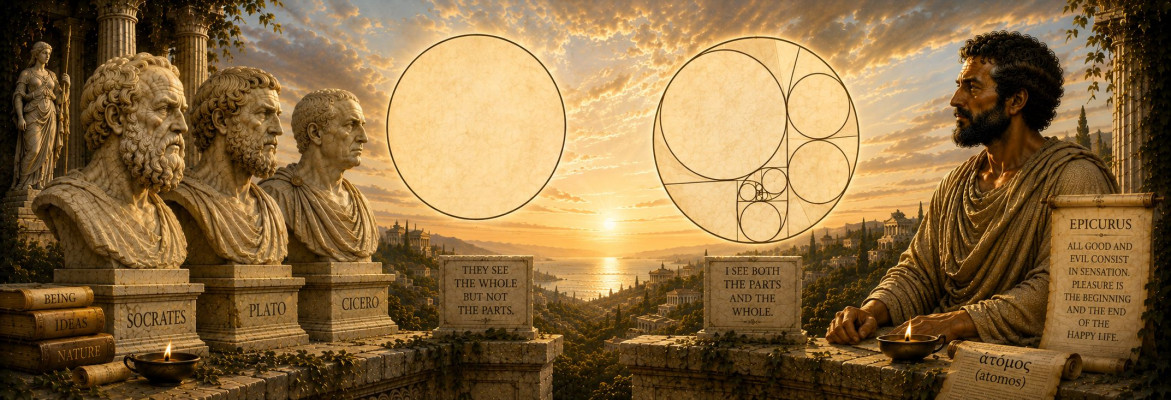
The Completeness Argument, Cicero's Knowledge Of It, And The Epicurean Response
This entry has been superseded. Please read the current version here.
[/legend]
The Completeness Argument
One of the oldest objections to placing the highest good in anything other than virtue runs like this: the good must be complete — whole, finished, lacking nothing — and cannot be a process, a becoming, or anything that admits of growth or degree. A thing that is still developing toward some end is not yet that end; it is only on the way to it. Plato gives this…