

Political Division In The Promotion of Epicurean Philosophy: A Prescription For Disaster
-
Cassius -
September 27, 2019 at 4:05 PM -
- Ethics - General
-
151 Views -
6 Replies

[Cassius: I write the following article clearly stating that it is my own personal opinion, without representation that it is or should be "the Epicurean position." I do not believe that I or anyone else has the ability to say what political positions every person applying Epicurean principles will take, and indeed that is the point of this article. I am writing this mainly to those of us who consider ourselves to be actively promoting Epicurean philosophy. I believe strongly that everyone, including activist Epicureans, should be engaged and involved in issues around them. Epicureans will take political positions and become actively involved in pursuing what they see as their own security and happiness. What I am concerned about are the ramifications of representing that our own personal political conclusions are those that every Epicurean should themselves endorse. "Political Division" is something that is to be expected according to differing circumstances, but the promotion - as Epicurean - of views that imply that "there will not be different laws at Rome and at Athens, or different laws now and in the future, but one eternal and unchangeable law will be valid for all nations and at all times" was Platonic-Stoic fantasy when Cicero stated it in the third book of his "Republic," and such views remain just as thoroughly anti-Epicurean today.]
Bailey, Epicurean Fragment 87. "We must say how best a man will maintain the natural end of life, and how no one will willingly at first aim at public office."
Lucretius Book 3: And while men driven on by an unreal dread wish to escape far away from these and keep them far from them, they amass wealth by civil bloodshed and greedily double their riches piling up murder on murder; cruelly triumph in the sad death of a brother and hate and fear the tables of kinsfolk.
Lucretius Book 3: In life, too, we have a Sisyphus before our eyes who is bent on asking from the people the rods and cruel axes, and always retires defeated and disappointed. For to ask for power, which empty as it is, is never given, and always in the chase of it to undergo severe toil, this is forcing uphill with much effort a stone which after all rolls back again from the summit and seeks in headlong haste the levels of the plain.
THESE quotations support the general "understanding" that the ancient Epicureans advised against pursuing a life of politics. I personally think that this "understanding" is overblown, and that it applied far more expansively than the ancient Epicureans intended. Epicurus devoted many of his Authorized Doctrines, among them the last ten on "justice," to principals which have direct social and even political implications. We have examples such as Horace and Virgil who were personally involved in the Roman civil wars, and we have the example of Cassius Longinus, whose words of devotion to Epicurus were preserved by Cicero, as a primary leader in that civil war. We have the example of Titus Pomponius Atticus, who - while not taking sides - maintained a close friendship with both of the warring factions throughout the struggle. And if we flash forward to nearer the present, we have the example of Thomas Jefferson, who studied Epicurus closely, and stated his Epicurean allegiance privately, and who sought and obtained the presidency of the United States. I have no doubt that each of these men thought that they were applying Epicurean principles in their actions.
There are those who will say that these ancient examples of involvement in political affairs showed themselves to be "bad Epicureans," but for purposes of this article I am going to pass over those accusations and dismiss them for what I think they are: "nonsense." I will not devote much space that argument, aside from noting that the numerous doctrines on "justice" carry clear political implications. If we presume, as we should, that Epicurus was nothing if not practical in his understanding of the world, then we should expect that Epicurus understood the necessity of social institutions which secured his friends and colleagues against both internal crime and external attack.
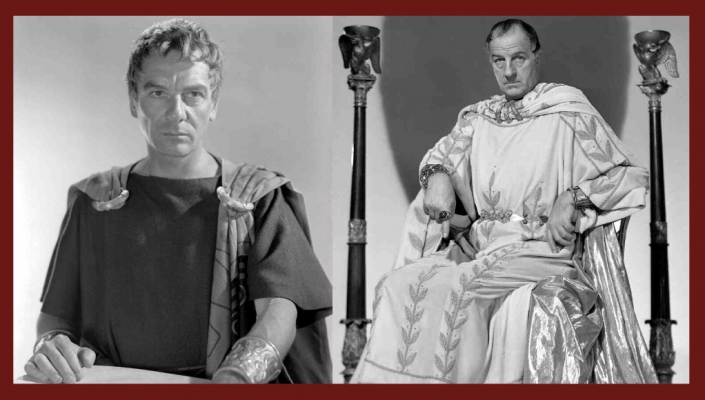
The purpose of this article is to address a larger issue, and that is question of whether those of us who consider ourselves to be Epicurean are justified in concluding that there is a single correct Epicurean position on day-to-day political issues. As far as I am concerned, no one today has the information to make an intelligent judgment on the decisions made by Cassius Longinus and Julius Caesar during the Roman Civil War to choose to become enemies to the death. We know that Cassius clearly stated his Epicurean conversion, and while I am not aware that there is direct evidence that Caesar was an overt Epicurean, a number of indications point in the direction of Epicurean influence, of which I will list three: (1) Caesar's father-in-law was a dedicated Epicurean and the owner of the villa at Pompeii where the Epicurean library was ultimately preserved by the eruption of Vesuvius. (2) Caesar himself was accused, during the Cataline Conspiracy, of holding the Epicurean belief that life ends at death, and thus that imprisonment was a punishment more harsh than capital punishment, and (3) Caesar's disregard of the established laws of the Republic, including his famous "crossing of the Rubicon" with his legion, indicate that he agreed with Epicurus that what is "just" changes with circumstance.
So for current purposes I want to suggest that we today should carefully consider how the world might have turned out differently had Cassius and Caesar found a way to unite on their core Epicurean viewpoints. How the world might be different today if Cassius and Caesar had avoided the civil war that led to their own destruction, and built instead on the Epicurean wave that Cicero complained had "taken Italy as if by storm."
We have no way of knowing today whether the Civil War could have been avoided if the Senatorial and the Caesarian factions had put aside their economic and political interests for the sake of areas of wider concern about the health of their civilization and its view of the nature of life itself. But what we do know is that only a relatively short time after both sides had expended so much life and effort on fighting each other, a foreign plague in the form of eastern Judeo-Christian religious thought had implanted itself in the heart of the Republic / Empire. How many of those who were totally devoted to the Senatorial or the Imperial factions then would look today at the ruined remains of the forum, or the Parthenon in Athens, laying at the feet of Christian Churches, Jewish synagogues, and Mythraic assembly-halls, and be satisfied that they had held their own priorities in order?
And in comparison to the ruins of the buildings, what is the state of the ancient Epicurean philosophy today? Apart from the biography of Diogenes Laertius and the poem of Lucretius, both of which are little known and even lesser read, almost every reference to Epicurus has been expunged from the public record. What public acknowledgement of Epicurus remains is warped beyond recognition, and warped more thoroughly as the years go by. An ancient Epicurean surveying the scene might well say, "Oh, but for the good old days when Epicurus was considered guilty of pursuing wine women and song!" At least that perspective of Epicurus preserved some understanding of Epicurus' focus on Pleasure as the goal of living.
Today's scene has descended further than even Epicurus' most aggressive detractors would have thought possible, but in a way they did not anticipate. Epicurus' traditional detractors considered it sufficient to brand him as a helion and a playboy as a means of making sure that respectable people kept their distance. These are the days of the reign of "Virtue" from all directions, either in the form of traditional Stoicism or its Religion varieties, from the Evangelicals to the Secular Humanists. The victory of "Virtue Ethics" is so complete that the discussion of "Pleasure" can no longer be tolerated, and so Epicurus has been rewritten as an expert of in word-play gamesmanship -- for it is no longer necessary to discuss "pleasure" when you take the position that what Epicurus really sought was "tranquility," and that when Epicurus said "pleasure" he really meant "absence of pain."
One of the many modern sayings that have taken the place of older insights is the phrase "consistency is the hobgoblin of little minds," and so it is no longer perceived to be necessary to explain Epicurean philosophy as a consistent whole. How could Epicurus have been so emphatic about the primacy of sensation over logic, and the primary of pleasure over virtue, and the primary of clarity over all other aspects of communication, and yet at one and the same time redefine "pleasure" into a phrase ("absence of pain") that no one has been able to make head nor tails of in the course of two thousand years? Consistency of the whole is no concern of most commentators today; all that is important is that Epicurus supposedly held that pleasure = absence of pain = asceticism as the best life.
But that is not the point of this essay - that point is discussed elsewhere.
The point here is that the Epicurean philosophical tradition is in shambles - far more unrecognizable that the ruins of the ancient monuments in Rome and Athens - while those who say they are devoted to Epicurus are writing about economics, day-to-day politics, global warming, and "getting along."
To repeat, all of those topics are legitimate subjects of concern, and all of them are areas in which an Epicurean - who ought to be among the most intelligent of all people, is going to engage with a well thought out position. But these day-to-day issues do not exist in a vacuum, and they are not the primary problems confronting those of us who promote Epicurean philosophy. What ought to be of most concern to those of us promoting Epicurean philosophy, in the time we devote to Epicurus, is the recovery and application of true Epicurean doctrine in our own lives, and its promotion within our circles of friends who desperately need it.
I have an example of a recent book that I want to use an example of just the type of "prescription for disaster" with which I titled this article. But before citing it, I would ask this question: "How, in an Epicurean universe in which there is no center point of observation, no creating supernatural god, no Platonic realm of ideal forms, but only boundlessly variable personal circumstances, how could anyone think it is possible that all Epicureans would arrive at the same political conclusions?" I submit that anyone who argues that there is a single "Epicurean position" on capitalism, or socialism, or political party, or social / political controversy of any kind has failed to appreciate the nature of an Epicurean universe at a very fundamental level. I have never seen anyone assert, nor do I believe it to be true, that all the Epicureans in Rome were on the side of Cassius and Brutus, and all the non-Epicureans were on the side of Caesar. Despite their access to presumably all of the Epicurean texts, and to competent Epicurean instructors of a living Epicurean educational movement, the warring sides of in the Roman civil war came to opposite conclusions as to which side would most ensure their own pursuit of pleasure. And if they, with all of their available Epicurean resources, could not find their way to a single political position to prevent them from slaughtering each other, how can an Epicurean today expect to proclaim a single "correct" Epicurean position on the issues that divide us? Especially in light of the explicit doctrines of Epicurus stating that there is no such thing as absolute justice which is the same for all people? Recall:
PD 33. There never was such a thing as absolute justice, but only agreements made in mutual dealings among men in whatever places at various times providing against the infliction or suffering of harm.
PD 34. Injustice is not an evil in itself, but only in consequence of the fear which is associated with the apprehension of being discovered by those appointed to punish such actions.
PD 36. In general justice is the same for all, for it is something found mutually beneficial in men's dealings, but in its application to particular places or other circumstances the same thing is not necessarily just for everyone.
PD 37. Among the things held to be just by law, whatever is proved to be of advantage in men's dealings has the stamp of justice, whether or not it be the same for all; but if a man makes a law and it does not prove to be mutually advantageous, then this is no longer just. And if what is mutually advantageous varies and only for a time corresponds to our concept of justice, nevertheless for that time it is just for those who do not trouble themselves about empty words, but look simply at the facts.
PD 38. Where without any change in circumstances the things held to be just by law are seen not to correspond with the concept of justice in actual practice, such laws are not really just; but wherever the laws have ceased to be advantageous because of a change in circumstances, in that case the laws were for that time just when they were advantageous for the mutual dealings of the citizens, and subsequently ceased to be just when they were no longer advantageous.
In what follows I am going to include some clips from the public preview of Catherine Wilson's "How To Be An Epicurean" just recently released at Amazon.com. The underlining is my own:
I have underlined some of the most outrageously narrow political pronouncements in the first two clips, but by third no outlining is necessary. It is all pure political advocacy, plain and simple, first and foremost. It enlists the name and philosophy of Epicurus toward the goal of promoting political conclusions, but with no more intellectual integrity than a Republican politician wrapping himself in an American flag. Let me stress again: I write this not to disagree with the political positions taken, but to strongly object to the notion that every good Epicurean is going to subscribe to any single set of political positions. If I were to go through the list and itemize these according to whether I agree or disagree with them, I would be making the same mistake, and inflicting the same damage to the Epicurean movement, as is the writer in suggesting that every Epicurean will see these issues the same way she does.
Here is a clip that comes from this link, which I gather to be written by the author, and probably from the book:
I read that for the first time several days ago, and I am still trying to wrap my mind about this: "Sam could quickly relieve his minor headache by taking a powerful opiate he buys on the street, but he doesn't want to get involved with dealers."
I suppose the only appropriate way to express my response to that is "OMG" but I know that this trivial expression trivializes the problem that must exist in being able to write a sentence like that in a casual way. But it remains my best response - O M G !
I could comment in much greater detail on how outrageous I consider it to be to turn Epicurean philosophy into a partisan political toy. But the reader who understands the point I am making has probably had more than enough, and the reader who fails to understand would not be persuaded by reams more material.
The original and final point is this: Epicurean philosophy is far bigger and more important than day to day politics. Wrapping one's own personal political position in an Epicurean dress poisons the philosophy for those who are perceptive enough to understand the inconsistency in such argument, and destroys the credibility of the writer as a fair interpreter of Epicurus. While I am convinced that most people will see through the poor reasoning and dismiss it, the problem is that at the same time they will dismiss Epicurus as a potential source of wisdom. We who promote Epicurus and believe him to be worthy of study can ill afford to send away potential allies, no matter what their day-to-day politics (formed in most cases years before they were exposed to Epicurus) might be.
The world of today is far less safe and welcoming to Epicurean philosophy than it was in 44 BC. We can ill afford to divide our resources and pick fights with each other over immaterial ideas, among people who could be our allies on the deeper issues that would ultimately lead us to closer cooperation. The Epicurean medicine for the life and death problems of eternal significance are languishing, like the broken ruins of the Parthenon in Athens, still visible, but with who should be working to reassemble it fighting each other over the broken stones.
________
PLEASE POST COMMENTS AND DISCUSSION OF THIS ARTICLE HERE:


Replies 6