


Elli's comments on Procedure:
I would like to know what are the main issues that they will be discussed there to participate. However, to be frank I did not read this english book with details yet, but I have already read with details the known book to the greek epicureans by the Late proffesor of philosophy Charalambos Theodoridis. Since the procedure in the Garden of Thessaloniki was going like this : to participate in the discussions that were among old and new members and to have the right for asking any of my questions, I had to read the whole of the book by Charalabos Theodoridis firstly by myself. And in the personal meetings that were and still are each week, when one of the old members wrote his work presentation, I had a general picture of the EP what were the main points that I heard and as they being dissussed from the old member's work presentation.
In addition I would like to say my opinion, and please correct me if I am wrong : there is a danger of a failure in the discussion i.e a missunderstanding or a complexity on the issues concerning EP IF the book or any other book would be discussed with this procedure. The Epicurean Philosophy is a whole philosophical cosmotheory and can't be discussed without the new member had not read the whole of the book by himself yet. This goes like the methodology of the Canon : we start to have an idea for the general picture and then we examine each part. Cassius my friend what do you say about that ?
The procedure that is based on my experiences from the two greek gardens is : A text of one or two pages of a presentation work (with personal thoughts) on any epicurean issue, by an old or a new member that has the knowledge of the general picture of EP. Epicurus enriched the ability of the self- judgement on issues and things, the self innovative, and the self creativity in general, and not to read books and discussing chapters one by one. The books are the sources that have to be written below in a work presentation by someone that had already read some books concerning the epicurean philosophy. And when that someone finished his reading, then the others are making some corrections on that work presentation, adding something more or to answer to some questions. This is a kind of procedure that is based on the two way process, as in the same time the teachers become students and the students become teachers.
Meanwhile it would be better to know something for someone who takes so quickly such kind of initiatives of what issue could be discussed in any chat room without doing any presentation work for this book by himself. This is my opinion my friends and it is based on my experiences with the purpose to prevent a mess in any discussion. Thanks.
Cassius Amicus All of these are excellent points Elli and I think we need to work toward implementing them all. In the context in which we are working now, I think we can implement them on a step by step basis, with trial and error, and work toward a smoother implementation over time. I suspect that only a few of us will attend the first online sessions, and that this will be all hard-core people who are friendly and understanding. Lots of time will be spent on understanding how the software works, and working out a protocol for speaking (so we don't talk over each other), etc.
And I also see the online initial meetings as very informal and not requiring too much investment in time by people who can pop in and out instantly. this is not the same as people traveling to a formal meeting who you really need to be careful about making sure the meeting is efficiently staged. In our case, in initial trial meetings, we can just work through the procedure together, but with the goals you stated in mind, and then over time we can develop a set procedure that fits the environment.
To me, what we are doing here is not a one-off deal where we are making a presentation to the world. We are still in the process of developing the best ways to do this, and as long as we are courteous and friendly then if we throw up our hands at the end of the first meeting and say "we're going to start all over next week" then that is fine. Also, once we get a routine down once, it would be preferable and ideal to do these on a continuing basis, with different sessions for people who are at different levels.
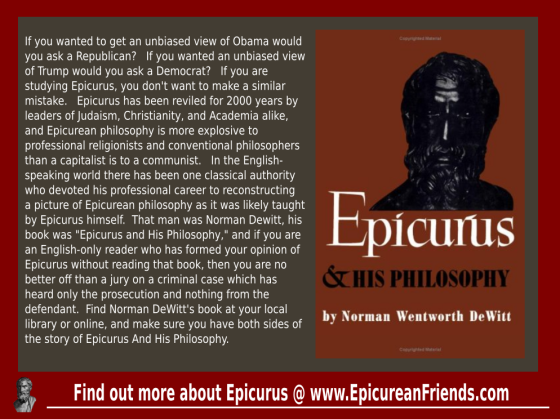
Brett wants to do a book club approach on DeWitt, and I am fine with that even if it is just me and him. I think that would be valuable for any of us too, but what I really want to see us work on is our own discussion plan which is the purpose of this thread below. All of this must come together over time and by trial and error, and then when we have worked through the kinks we can restart the series and go over and over and over again, getting better all the time. So two tracks: (1) a book club approach, and we can do more than just dewitt over time, and (2) a general "meetup style" lecture/discussion based on general outlines
And to specifically address the issue of your not having read the Dewitt book I see no problem with that - the first chapter is a very general summary of the philosophy, and you know that very well already. And even as the book proceeds we would be coming from the point of view of "DeWitt says this" but then throwing every point up to discussion to agree or disagree, and you are fully able to do that. I think you too would get a lot out of Dewitt's book, but you already know the points he is talking about. I wish I had access to an English translation of the Greek book you are talking about, and then I would know how much to push you to read DeWitt. If your own views are reflected in the Greek book, then as I know your views, I know you are already close to DeWitt on most points. But if your Greek book is like the English "junk" that is so dominant today, then you would really get good new ideas from DeWitt. Of course DeWitt is NOT the end-all authority on anything. He just attempts to present Epicurus without demeaning him and undercutting him every other paragraph.
 and they have a tendency to write important technical information in a language I can't understand