

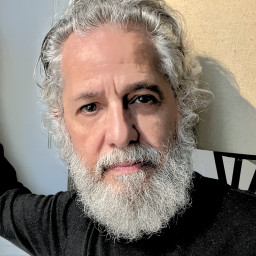
Cassius, when I lived in Paris in the 1980s studying at L'Académie des Beaux, I went to Rome many times and had the opportunity to dig at the Roman Forum with an archaeological expedition through the American Academy in Rome. These and many other wonderful memories I have are from exactly 40 years ago, and they are clearer than what I did last Tuesday. So, yes, go to Rome, visit Venice, live in Paris if you can. If you can't, enjoy what you have: a walk on a soft summer night, a game of chess with a friend, dinner with your elderly mother.
Posts by Raphael Raul
New Graphics: Are You On Team Epicurus? | Comparison Chart: Epicurus vs. Other Philosophies | Chart Of Key Epicurean Quotations | Accelerating Study Of Canonics Through Philodemus' "On Methods Of Inference" | Note to all users: If you have a problem posting in any forum, please message Cassius
-
-
Cassius
"Of all this, the beginning and the greatest good is prudence.Wherefore prudence is a more precious thing even than philosophy;
from it spring all the other virtues…”
Letter to Menoeceus, Bailey’s section 132.
So, Cassius, you ask how many zeroes, how much money is needed for the wedding, the gamble involved, and the pledge of land and money for marriage?
So, let's start here: a poor man can marry and have 5 children, but most likely he and his children will live hand to mouth, hungry and illiterate, and that is not good, not pleasurable. Also, it is not healthy for his wife to give birth to 5 children, and it is not good for the children to live in poverty. Better for a poor man to marry and have a child, maybe two, that he can properly feed and educate, and give his wife a healthier, longer life, than to have 5, 6 children and live in misery (pain).
I see from the writings of Epicurus that he was a prudent, rational, reasonable, and realistic man with “an ideal”, who not only developed a life-affirming philosophy based on how life could be lived but also on a scientific-materialist view of nature. As well, he built a school based on that ideal, which needed to be managed structurally and socially and administered financially. This required a practical man, a realist who could navigate the socio-political realities of life in the turbulent Athens of the time, such as securing funds for his school for living, and the discipline of sitting down day in and day out to write circa 300 books of his philosophy. And so marriage and children are also endeavors rooted in reality, responsibility, virtue (strength), and the discipline needed to manage a married life reasonably and properly.
This is how marriage was structured for centuries, till the idea of romance really took sway in the Western world, perpetrated by, you know, those delusional artists (such as yours truly), painting pictures, and those unemployed poets and troubadors singing of true love and making up stories of handsome knights sweeping young maidens off their feet, saving them from a fire-breathing dragon which till this day there is a lucrative book publishing industry on updated version of these fantasies for adolescent girls. Today, with social media and dating apps, women and men have unrealistic ideas of finding a partner. Women are either looking for a male multi-millionaire with movie-star looks, or men are looking for a voluptuous, insatiable sex goddess. The young women are not looking for the young man next door, who is an apprentice plumber or high school teacher. Or the men for the girl down the street, who is plain but loyal and would make a good wife. The social media fantasy is another reason marriages are declining: the illusion is infinite, and few are satisfied with the reality of just everyday human beings..... So, yes, let's wake up and smell the coffee, young people, to the reality and business of marriage.
Marriage is a contract, a business agreement between a man and a woman, who “wed,” from the Old English “weddian,” to pledge, to take a wager, to take a gamble, to put up a pledge of money & land. It is an investment in a partnership. This is why we sign a marriage contract and why divorce lawyers are hired and paid very well to sort out the finances between disgruntled ex-partners, which, Cassius and Dave know so well.
I find some posts here have overly emphasized pleasure. Yes, pleasure, pleasure, I love pleasure. In my younger years I was very much a hedonist. But, some years back I discovered Epicureanism and toned down my pleasure seeking, which is a good thing. Yes, we all want pleasure, but also we need common sense (prudence) both in life and in a marriage. The greatest pleasure, as Epicurus states, is the absence of physical pain (aponia) and mental disturbance (ataraxia), which are the Katastematic, not the kinetic pleasures, which are fleeting.
Yes, if one has the means, one can take the risk of investing, and that is what the “wedding” is about. The groom's family and the bride’s family are taking a gamble on the couple living a good, productive, and happy life within their means.
But a young man in Medieval and Renaissance Europe (as well as today) who had no money, no land, not even a cow to his name, and had nothing to pledge, to wed, to stake, would definetley not have the parents’ approval to marry their daughter, because he brought nothing to the table, nothing to secure their daughter’s future well-being, and also, worse, even become a financial liability to thier family; and thus that is not good nor pleasurable.
So, yes, Cassius, some zeroes are needed, at least to live well enough to ensure the basics and, over time, the married couple, through hard work and prudently saving their money, can have as many children as they can properly feed, clothe, and educate, and thus live pleasurably.
And finally, there is great pleasure in a good, loving marriage and in raising children well, and living with common sense, because, as you know, Cassius: “Prudence is a more precious thing even than philosophy.”
-
Marriage and children seem less and less pleasurable today, burdened by financial worry, relational problems, and high rates of divorce. Is it worth the pain, given the tarakhē (τᾰραχή) it entails for young men and women?
We as humans are drawn to pleasure, to what is pleasing and enjoyable, and having children in today's modern society is becoming too expensive, bringing monetary pressure and acute anxiety. As a result, in Europe, Japan, Korea, and other industrialized countries, many young people are shying away from it. Raising a child costs a middle-class couple somewhere between $300,000 and $900,000, covering everything from birth to college graduation. If you double that, for replacement purposes, to stabilize population numbers, the figure jumps to $600,000 to $1,800,000.
So, then, what do we do? We humans, like all animals, instinctively move away from pain and toward pleasure or comfort. It is obvious that a high percentage of the last and present generations have chosen pleasure, as is consistent with human nature, but not in marriage or in raising children.
Italy, Spain, the UK, and most European countries are facing a replacement problem, which, say the globalists and the World Economic Forum, necessitates mass immigration. Japan and Korea face this problem more seriously, and robots are now being manufactured to do the jobs that human workers once did, due to a shortage of native workers.
Some of the stated reasons for this are that, once countries reach a certain level of industrialization, modernization, and technology, children are no longer needed as they were in pre-industrialized and agricultural societies, where children were important for farm work.
Another factor could be that there seems to be a rupture, a gulf between men and women today, between two opposing forces: the feminist movement and the recent “Men Go Their Own Way" (MGTOW) movement. So we have women seeking independence, empowerment, and pleasure through corporate & business success and financial independence. Preferring not to be housewives and mothers. Also, today’s women are putting marriage and children off so late that by the time they are 35, they are not fertile or not eligible for men their age who are looking for younger women in their 20s to have children.
The men of the “MGTOW” movement also emphasize enjoying their own lives without marriage or children. Focused on their health and on building wealth through their careers or intellectual or artistic pursuits, as many women also pursue. Some would say their philosophical hero of the MGTOW movement is the German 19th century Philosopher Arthur Schopenhauer, who wrote that romantic love is nature’s ruse to entrap men into marriage for the sake of species reproduction, diverting men from realizing their full potential and turning them into a tool, a function for providing; and imprisoning them in obligations and expectations that leave them little, if any, time to relax, recharge, think and create. They call this realization "unveiling nature’s romantic illusion" or "getting red-pilled". So, could this be considered life-denying or life-affirming? Men and Women are freely choosing their own pleasure, and consciously rejecting nature's and society’s demands.
So, men and women are seeking the same goal, “pleasure,” just no longer the pleasure of forming a couple in marriage for having children. Marriage and children thus seem less pleasurable and not worth the worry, stress, anxiety, and sacrifice it entails…So, what to do, if anything?
Well, Augustus Caesar faced the same problem with the descendants of the Patrician class, who were not having children, and by the time of Augustus, the Patrician class had too few descendants to fulfill their political obligations. Did they stop having children because they saw them as a burden to their pleasurable life, even though they had all the wealth and slaves to care for them? Some women of that class would take potent herbal potions to abort, possibly to avoid the altering effects of birthing on their body, their beauty, and their pleasure. Ultimately, Augustus Caesar enacted legislation to encourage them to resume reproduction. There were many regulations to this legislation, but below are the two main laws:
Lex Iulia de maritandis ordinibus (18 BCE): regulated marriage and aimed to make it compulsory for citizens of certain ages and orders.Lex Papia Poppaea (9 CE): supplemented and tightened the earlier law, again focusing on discouraging celibacy and childlessness. (Historical Encyclopedia)
In our own day, should we do the same, making marriage and having children more affordable, and, as a result, more pleasurable by not taxing married couples with two or more children and by giving them extra benefits and opportunities, as Augustus did in his legislation?
Many, of course, will oppose such laws as discrimination, which penalizes those who choose to live unmarried and childless. Others would argue that this kind of social legislation is life-affirming, while the other path is life-denying. There are great historical figures who did not marry or have children and made significant contributions to humanity in art and philosophy, such as Leonardo Da Vinci, Plato, Johannes Vermeer, Baruch Spinoza, Giorgione, Immanuel Kant, Raphael (Il Divino), and our sage Epicurus, and many, many more.
If nothing is done, will we simply give over our civilization and humanity to robots run by AI? Or be replaced by a mass migration that may not embrace our values and our Western heritage and thus erase it? So, what is at stake? Many would say their country's sovereignty and the pleasure of their own way of life, as the Japanese have vehemently stated in their electoral campaign and successfully voted for in their 2025 election.
What do you think? What do we do as a society? How can too much pleasure, such as that of the descendants of the Patrician class derisively called by some the “Otiosi,” lead to decadence…a kind of pleasurable nihilism?
Nietzsche warned of the decline of the West, anticipating a world of relativistic values that would replace the religious moral system that had unified Western civilization for 1,500 years after the fall of the Roman Empire. Maybe, as one member of the Epicurean Friends and a semi-master chess player himself stated:
“All civilizations in history have come and gone….It’s just our turn now”Yes, that is true; civilizations do come and go. ...But I am not so sure that it's our turn yet!
In response to the great political upheavals resulting in riots, assassinations, massacres, and wars following the death of Alexander the Great, Epicurus created a quiet community with a walled garden, a refuge, a sanctuary, to escape the chaos, where peace, freedom from anxiety, ἀταραξία (ataraxia), and a philosophy of simple pleasures were taught and shared with all who came. ...And which, circa 2,333 years later, is still being taught and lived.
…So, yes, indeed, Epicurus, our sage, was an unmarried and childless man,
yet he fathered a life-affirming Philosophy for the Ages. -
Thanks for the information you gathered, Kalosyni.
All those suggestions I try to follow. They are all important and work together organically.I also printed out what you posted on "On Epicurean Text Study and Contemplation," which I will begin reading this weekend on a favorite sunny bench in a nearby leafy park... Spend Time in Nature: Getting fresh air and stepping outside have been shown by psychologists to increase happiness and lower stress.

-
Also, I would like to add that, as you know, Schopenhauer had a great influence on Sigmund Freud through the idea of "The Will," which, in turn, led to Freud's discovery of the unconscious forces beneath consciousness. So, in a way, Freud somewhat confirmed the existence of an unseen force that compels our actions, which psychotherapy tries to unravel from a patient. As you mentioned, Schopenhauer influenced Nietzsche, even though he departed from him by affirming life rather than denying it. And Schopenhauer had a great influence on a whole list of artists, including Richard Wagner and Thomas Mann.
...I will watch the videos tonight with my usual hot chocolate with Irish cream....have a good night. -
The following is a reply to Eikadistes, who replies to Cassius:
Above is an illustration I painted in a "naive" style using pastel on canvas paper titled "A Simple Meal", depicting a quote that scholars, for the most part, agree is from Epicurus or a paraphrase. I think this quote captures the most fundamental endeavor of human existence: our hunt for nourishment, for survival. Everything else is second or third to this, even philosophy and art ("Even wisdom and culture must be referred to this.") All philosophy and art crumble into ash once there is nothing to eat, when hunger in the stomach begins to growl. This topic is largely overlooked in philosophy, as if it were unimportant or uninteresting. How gripping does this subject become once severe hunger or worse starvation rears its ugly head? In extreme cases, even supposedly civilized persons lost in the wild will eat each other once the skeleton of starvation arrives. Nothing else matters, but survival, and the stomach knows this instinctively without the need of science, philosophy, or art... No wonder that the craft of cooking is said to be the "Necessary Art" not only for Survival, but also for...Pleasure.
...."fames optimum condimentum"...(...Hunger is the best seasoning...)... Cicero. -
-
Hello, Cassius, I came upon this thread you just posted. Schopenhauer is a philosopher who intrigues me with his main idea of the blind force of "The Will", a force that is outside of the phenomenal world of matter, a noumenal realm outside of our understanding. I actually brought him up in the Sunday meeting about six weeks ago. Yes, there are a few ideas in Schopenhauer that align with Epicureanism, although certainly not the one I mentioned above. I will view the video and leave a comment at some point...
-
...In the last few years, I have been exploring consciouness research to understand the phenomenon that makes our philosophical and artistic creations possible.
What do you think consciouness is?Below is a link to an interesting discussion between eminent scientists on this most obvious, but most mysterious phenomenon of life…consciousness.
To view an interesting short segment, view from… 30:46 to 34:16
-
The evolution of the universe and that of life on Earth has brought consciousness to fruition in all life forms, especially in us Humans, who think and reflect on our place in the universe. Thus, consciousness, I believe, is the fragrant flower of the evolution of the universe and of life on earth. In the illustration below, I have attempted to show how we, as humans, have evolved to an awareness of our atomic origins through the rigors of science.Video-Poem, below...
“Our Journey Through the Universe,”
Raphael-Raúl Sebaszco / 1980.About 9 years ago, I made a video poem based on the text of my poem (below), set to original music by professional composer, Rich Fuchs.
It was selected by NASA for the Benu asteroid launch 9 years ago, with the work of other artists.
The poem has appeared in various publications and has been broadcast via satellite to 250 radio stations under a 1980 Arts and Science grant from National Public Radio.It has been recited, accompanied by jazz bands and electronic music composers, at many poetry readings.
Since then, much in science has evolved. The Universe, when I wrote the poem, was estimated to be 15 billion years old in 1980. Between 1995 and the 2000s, with more powerful space-based measurements, scientists slowly revised the age of the Universe to 13.8 billion years.
Here is the poem recited in the video:
"Our Journey through the Universe”
___________________________________________3. 8 billion years ago, say, physicists
that the four-and-a-half light-year-long mass
of concentrically turning,
hotly condensing
stripped electrons, protons & neutrons
in the universal emptiness
exploded in atomic hydrogen-helium fury
across the vast expanse of space....
We have been traveling ever since.
We have been 13—8 billion years on this trip.
Imagine a massive compressed gaseous atomic explosion
bursting in slow motion and infinitely propelling away
from the center of its release.
Every mass-energy particle,
Me, You, the earth, the moon, the planets, our sun, the galaxy
and the billions of galaxies moving
and mutating into other elemental forms, combinations,
and recombinations.
Atomic transformations into higher complex organizations
of hydrogen, helium, sodium & carbon.
...Trail by accident evolution?
Imagine elementary molecules gathering and forming, acids, sugars, proteins;
proteins, the building blocks of life,
creating cellular organisms where organic, regenerating,
and transmuting life first began.
Matter evolving intricately complex cellular communities,
Nature’s intelligence index is expanding.
After 13.8 billion years of trial and error evolution,
Here we are!
In every DNA staircase of a gene, the blueprint of life
finding out about itself, discovering the laws of physical truth, atomic weight, density, and its place in the elemental scheme.
13. 8 billion years ago, say physicists,
We have been traveling…ever since.
Raphael-Raúl Santiago Sebaszco / 1980 -
Hello Kalosyni, yes, there are those with terminal illness with months to live and those who are old and have a poor quality of life.
Now, for those with a terminal illness of six months or less, there was an agreement that was reached, this past December 17th, 2025, to have signed in 2026, here in New York City, "The Medical Aid in Dying Act".
But it is only for those who a medical doctor has certified that they have six months or less to live, due to a terminal illness, and also approved by a psychiatrist, that it is of their free will and that no one is coercing them. Once this is signed, New York State will be the 13th State to have "Medical Aid in Dying". Here is the link to the news and Hochul speaking, which I found very moving: -
Hello Kalosyni, thanks for sharing the link to the 2010 interview with Ludwig Minelli.
I leave you a link to an article on the renowned botanist David Godall, who at 104 chose to end his life by medical suicide at the Basel clinic in Switzerland circa 2013.Here is the link to the article and video of him speaking:
David Goodall: Scientist, 104, ends his life in SwitzerlandThe ecologist and botanist, who was not terminally ill, went to Switzerland to voluntarily end his life.www.bbc.com -
Good evening, Cassius. I hope you had a good dinner.
Thank you for your thoughtful reply to my post.
I am clarifying this statement you wrote in your post."But the real heart of the question is the role of Pleasure vs reason as the guide. I gather you're concerned that it is a problem to hold reason to be a "tool" for happiness, rather than a guide toward happiness."
I just wanted to clarify that
...I hold that the goal of life is Pleasure, but the guide of life is "Reason."
I hold that reason is the tool that guides the Pleasure that we are experiencing, not the other way around.For example, pleasures come, while eating or drinking, let's say, and while one eats and drinks, one may desire to eat and drink past a reasonable limit. Thus, a reasonable person employs "reason" to decide, "No, I will stop eating and drinking now, because if I continue, I will get drunk and have indigestion later.
So yes, we feel Pleasure, and those pleasures can be good or bad if we do not use reason to decide how far or how much Pleasure we should have.However, the main argument concerns the almost total subject view that all members held at last Sunday's discussion. The idea that all is subjective and that there is no objectivity possible in making societal valuations.
I am looking forward to tomorrow's Sunday Epicurean discussion.
It is one of the highlights of my Sunday!!!
As well as playing chess with Tau Phi after the discussion.
Good night... -
Again, it was a fascinating and even passionate discussion last Sunday on the topic of "Comparing The Pleasure of A Great Physicist Making A Discovery To the Pleasure of a Lion Eating an Antelope or Lamb." Some people have stated in the threads and the discussion that this topic has already been argued and resolved. This debate is far from being resolved, especially the argument that I am presenting here, which will never be definitively determined and will always be debated in different times and epochs, as it has been throughout history, since the ancient Greeks in the Agora of Athens. My final thoughts on this topic will likely be highly controversial for some and even spark a firestorm of debate, but debate is a good thing.
For me, the goal of life is Pleasure, but the guide of life is "Reason." Prudence, as Epicurus stated, is even more important than philosophy." Why is that? It is because prudence is the use of Reason to sort out what is best for one. One can live well without having read any philosophy if they have Prudence. If they are Reasonable people, they can sort out among the many choices what is beneficial for their life. I have personally met illiterate country folk with "common sense" as they call it, who have used Prudence (reason) to navigate skillfully through life, and have known highly educated individuals who have made continuous bad choices. It seems that higher education and academic philosophy did not help them; maybe Prudence would have.
My point here is that with reason we make personal choices, but as a society, "we use reason collectively to decide what is more valuable than other things." Therefore, we make collective "valuations" that may deem one activity "higher" in nature than another, or using another term, "worthier of our time and energy", and seek as a society to promote those worthier activities that we collectively decide are more beneficial to it, such as the study of history, science, philosophy, and the arts over playing pinball, throwing darts in pubs, or watching sitcoms all night. Yes, some individuals have no interest or receive Pleasure from reading history, studying science and philosophy, or composing music and creating paintings. Their pleasures are of the ones mentioned above, and I respect their interests and their pleasures. I also enjoy, in my youth, at times, playing pinball, darts in bars, and watching a sitcom or two. I am dating myself here, but I still enjoy viewing, once in a while, the 1950s sitcom "The HoneyMooners", for relaxation and laughter. ...Laughter is good; it oxygenates the brain.
As understood, in Epicurean philosophy, there are no objectively higher activities judged collectively as superior, independent of individual experience. Epicurus held that all value—including the value of activities—is grounded in the individual's own feelings of pleasure and pain, not in an external or collective hierarchy. So, this is my criticism of what we know of Epicurean philosophy, as scholars estimate that less than 1% of Epicurus' total written works have survived. And it is possible that on the other 99% of the writings that we do not have, he may have refined this view.
However, I am not going to fall into the pit of subjectivism and relativism that leads to sophistry by saying that playing pinball, darts in bars, and watching sitcoms all night, though pleasurable, are all equally valuable as reading history, studying science and philosophy, or appreciating art, such as painting, music, and poetry, and all the other intellectual and artistic activities. This subjective vs objective argument is an old debate dating back around 2,300 years to ancient Greece between Socrates and the Sophists. Plato's dialogue that best captures the problem of subjectivism versus objective truths is the "Republic", especially in Books V–VII, where Socrates contrasts the world of changing opinions and appearances (doxa/subjectivism) with the world of immutable, objective knowledge (episteme) accessed through reason.
Ironically, Epicurus develops a whole philosophical system using proto-scientific ideas that are objectively outside of the larger society's views or understanding. Yet, Epicureans hold that objective valuations cannot be made is a contradiction. Epicurus developed theories of atoms and void, first proposed by Democritus, which were not observable with instruments in his time. These are attempts at objective assertions, scientific assertions, of the world. However, Epicureans maintain that all is subjective, as I was made aware of during our discussion, and objective valuations cannot be made. What Epicureans hold is in contradiction to what Epicurus actually did, which was to attempt to arrive at ideas that he developed through objective reasoning.
Finally, as Socrates warned, subjectivism can lead to social confusion and chaos. In the West, we are experiencing the consequences of overemphasizing subjectivism and relativism, due to many factors, which have led to confusion and doubt about what a man and a woman are, and that one can become the other by just "identifying" with it (subjectivism), and ignoring what science knows about DNA. Our Western heritage and its values have been slowly evaporating. Values that originated in ancient Greece, such as the use of reason and the development of a non-supernatural view of the world and universe, led to philosophy and science. Suppose we, as a society, do not return to evaluating and recognizing the worth of Western Civilization's Values, especially that of reason and science; in that case, we will face its ultimate disappearance as other, more passionate, radical, belief-based societies demographically and politically overtake it, as is presently happening in Europe today, with dire consequences for it.
Finally, for me, to restate...the goal of life is Pleasure, but the guide of life is "Reason." Prudence, as Epicurus stated, is even more important than philosophy." For it gives us the ability to guide us to good pleasures. However, the present Epicurean understanding in my mind is limited due to the paucity of Epicurus' own writings, which are considered only 1% of what he wrote. And there seems to be a contradiction between what he attempted to do "objectively" and thus what Epicureans believe, as only "Subjectivity" is possible. Therefore, in my humble opinion, Epicureanism, as understood by Epicureans in our discussion last Sunday, is lacking in evaluating the truly worthy values and activities, such as Albert Einstein's development of the Theory of Relativity, Beethoven's symphonies, and Leonardo Da Vinci's paintings, from what appear to me to be mere distractions, such as darts in bars, pinball, and binging on sitcoms all day.
-
Cassius, yes, it was a fascinating, passionate discussion last Sunday on Comparing The Pleasure of A Great Physicist Making A Discovery To the Pleasure of a Lion Eating an Antelope. ...Today I have been preparing for my two art workshops, which are filled to the brim with students. Starting Friday, after completing some errands & organizing my studio, I hope to have some time to write down some thoughts on the discussion and post them here. I will see you Sunday at 12:30 pm for the Epicurean Friends Zoom meeting.
-
Comparing The Pleasure of A Great Physicist Making A Discovery To The Pleasure of A Lion Eating An Antelope.
I would like to start by addressing Tau Phi's assertion that "The pleasure of one cannot be evaluated as "greater" than the pleasure of another." I agree with this claim from a subjective perspective, because the lion is sustaining itself and having the pleasure of his bloody, fleshy meal, and is unaware of the profound joy that Albert Einstein experiences when discovering new scientific truths. Similarly, we, as humans, are unable to fathom the extraordinary pleasures that the gods, as Epicurus states, experience in their blissful existence.
From a third-party perspective—say, that of philosophers like Epicurus, Aristotle, or Plato and from our own experience—we could assert that Einstein's intellectual pleasure in making his groundbreaking discoveries represents a higher form of enjoyment compared to the more instinctual pleasure that a lion derives from devouring the antelope.
Personally, as someone who enjoys hearty meals like a thick porterhouse steak with potatoes and gravy, now and then, I can appreciate the immense satisfaction the lion finds in its bloody, fleashy feast. While all pleasures are inherently good, I believe that the higher pleasures of the mind—such as tranquility, intellectual fulfillment, and artistic creativity—hold greater value to me than bodily or material pleasures, which by the way, should not be dismissed as they are fundamental to our physical survival and mental, creative activities.
After enjoying my steak, I often take a walk on a lovely summer evening, allowing my meal to settle. However, just twenty minutes into my walk, my thoughts often drift to a painting I am working on; I find myself engaged in mentally exploring its technical challenges, such as perspective, tonal structure, artistic anatomy, etc., and its artistic application. This shift signifies a transition from a fleeting, material pleasure to a more enduring mental satisfaction. Again, I do not disavow the importance of our physical and material appetites, as many religious and philosophical systems have perpetrated historically on mankind. On the contrary, I enjoy them wholeheartedly when they arrive.
In my experience though, the enjoyment of physical pleasures tends to be short-lived, prompting me to seek out higher mental pleasures instead, such as reading history, philosophy, making music and art. At this very moment, as I write this post, I am immersed in the kind of intellectual engagement that Epicurus advocated nearly 2,300 years ago, a perspective echoed by other great thinkers throughout history.
Principal Doctrine, 20
"The body receives as unlimited time the pleasure's limit; but the mind, grasping the reasons and causes of this pleasure and removing all fears and desires and superstitions, receives as unlimited time, both the pleasure's limit and the tranquility which comes from rational thought."
I quote here Kochiekoch: "My take on the debate on the thread here is that pleasure is pleasure and the two are of equal value in the moment, but the scientist with his great discovery has the greatest pleasure over time. He gets to enjoy the accolade's as his discovery is confirmed and also gets pleasure from contemplating his discovery. He can use it as well as a springboard for future discoveries and pleasures from that. All consistent with the Epicurean perspective of mental pleasures being superior because they can be enjoyed in the present, past and future."
I want to reaffirm my agreement with Tau Phi's statement: "The pleasure of one cannot be considered 'greater' than the pleasure of another." However, this statement is valid only from the subjective viewpoints of the Lion and Albert Einstein. From a third-party perspective, it is controversial, if not entirely an untenable assertion, particularly among those who appreciate the pleasures of intellectual, artistic thought, and creation, and who have reflected on their value. In that case, Albert Einstein's pleasure in his scientific discovery represents a longer-lasting mental pleasure, one that can produce further mental pleasures, as it did for Einstein throughout his life, till his death.
...Oh, and by the way...I am having sizzling, juicy pork chops with salad for dinner tonight!

-
In last Sunday's discussion, I posed a question in response to Tau Phi's statement, which is paraphrased here on the site as "That the pleasure of the one might be evaluated as 'greater' than the pleasure of the other. Tau Phi may want to respond, whether this wording of his statement is correct or not. ...Moving on, the question I posed to Tau Phi, and which now I repose and have the opportunity here to give it more lively detail, is the following: ..."Imagine a lion has just killed an antelope and he has settled down to have and enjoy his delicious, bloody, and fleshy meal. And imagine Albert Einstein, the great physicist, having just discovered in the lonely dark of his bedroom, using applied differential geometry, that he had just mathematically described the curvature of space-time. And knowing that this discovery was a revolution in physics, upending two centuries of Newtonian Mechanics."...So, which is the greater pleasure, or more precisely, the 'higher pleasure, that of the lion or that of Albert Einstein?
Or if this kind of valuation is even possible concerning personal pleasures? ...Does Epicureanism not have a view on this? -
Yes, Cassius, I will comment by Saturday evening or Sunday morning, as I am in the midst of teaching my Wednesday and Thursday Art workshop, which involves a total of 24 students and their artworks to attend to, plus slide lectures....
The discussions that I have scanned so far are fascinating.
I will start reading them in depth after today's classes and then comment. -
-
Thanks to everyone who attended the online meeting last night.
For me, it was wonderful to be in the presence of lovers of philosophy and particularly students of what I describe as the logical, practical, and pleasurable philosophy that a man named Epicurus remarkably developed more than 23 centuries ago, for us to guide our lives, to be pleasant and filled with the guiltless pleasures of the mind, and the body. ..Special thanks to Kalosyni for organizing the meeting and posing an interesting question for us to ponder.
....I would love to attend this Wednesday's study session, but I have an art class to instruct on Wednesday evenings.
Finding Things At EpicureanFriends.com
Here is a list of suggested search strategies:
- Website Overview page - clickable links arrranged by cards.
- Forum Main Page - list of forums and subforums arranged by topic. Threads are posted according to relevant topics. The "Uncategorized subforum" contains threads which do not fall into any existing topic (also contains older "unfiled" threads which will soon be moved).
- Search Tool - icon is located on the top right of every page. Note that the search box asks you what section of the forum you'd like to search. If you don't know, select "Everywhere."
- Search By Key Tags - curated to show frequently-searched topics.
- Full Tag List - an alphabetical list of all tags.