



How well do you think modern-day Epicureans navigate the relationship with tradition--given that Epicureanism in classical times was said to value orthodoxy (to the point of not disagreeing with or criticizing the Hegemon), and yet there are obviously a few areas where rethinking is necessary, as in some parts of the physics.
As you may be able to tell from my last post, I think the modern-day Epicureans don't have nearly the level of problems the modern-day Stoics have in keeping closer to the ancient school. I've read the complaints about the Epicurean school having to do with their being dogmatic or not disagreeing with the teacher. I'd have to look up where those came from, so I won't discuss specifics. Part of this from modern commentators it seems to me has to do with being hung up on the word "dogmatic" itself. "Epicureans were dogmatic," as in Diogenes Laertius 10.120: "He will be a dogmatist but not a mere sceptic." I addressed this on my site: https://sites.google.com/view/epicurean…remain-in-doubt Dogmatic doesn't mean keeping to strict orthodoxy, it means being willing to take a position as opposed to remaining skeptical of everything, or as the word used means, "to be at a loss, be in doubt, be puzzled."
When it comes to the physics, I'm not overly concerned about the specifics. The Lucretius Today podcast did a great job of working through the letters to Herodotus and Pythocles and mining those for some great practical insights! The specifics don't matter. What matters is that Epicurus taught that we live in a material universe, governed by understandable laws that can be known; where we lack sufficient evidence for a conclusion, we withhold judgement and accept that there's a material cause until sufficient evidence is available. We are not ruled by Providence as the Stoics would have us believe. If you read the letters to Herodotus and Pythocles or sections of Lucretius, Epicurus and Lucretius are constantly writing "it could be this way, or this way, or this way..." and accept that there's a physical cause for the phenomenon they're discussing. Lucian in "Alexander the Oracle-Monger" writes that an Epicurean could find the physical mechanism behind the Snake-Oracle even if wasn't readily apparent.
That unswerving commitment that we live in a physical world, not under the thumb of capricious gods, is what makes it possible to be a modern-day Epicurean.
Hi, Don,
The Stoic reliance of Providence was a turn-off for me as well--probably the main issue that drew me away from it, after some initial interest. More specifically, I don't think the Stoics handled theodicy very convincingly. They actually seem to me even less plausible than the Abrahamic religions in that regard. Plus, if one's going to accept a notion like Providence, why not go a step further and personalize it--make it a God you can talk to?
Since, as Emily Austin suggests, modern-day Stoics are closer to Epicureanism, I wonder why they self-describe as the former. Something to do with Marcus Aurelius? Or maybe--at least in the U.S.--the concept of "pleasure" conflicts too much with the Protestant work ethic?
Regarding Epicurean physics, I did hear this covered in the Lucretius Today episodes dealing with relevant sections of De Rerum Natura. I'm very interested in listening to the other episodes that you mention.
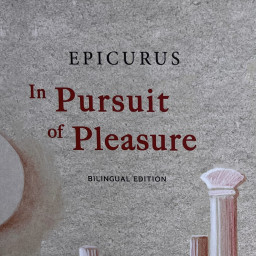




 I describe it as erudite but conversational. It's very approachable but comes with a deep understanding of Epicurus's philosophy. Hope you enjoy.