

More on garlands;
On first blush, I like where you're going since it has that festive connotation.
I'll get back to you ASAP
PS I'm also at a craft beer festival so ...![]()
New Graphics: Are You On Team Epicurus? | Comparison Chart: Epicurus vs. Other Philosophies | Chart Of Key Epicurean Quotations | Accelerating Study Of Canonics Through Philodemus' "On Methods Of Inference" | Note to all users: If you have a problem posting in any forum, please message Cassius
More on garlands;
On first blush, I like where you're going since it has that festive connotation.
I'll get back to you ASAP
PS I'm also at a craft beer festival so ...![]()
I'm curious to know what you've found from Clay,
Definitely on my list of things to do. I was able to pick it up yesterday. On quick glance, he seems to entertain the 3-wheel cart but there's also footnote to the Glossarium Epicurean. I may have to hit Bryan up for a lookup.
Fascinating video from Luke Ranieri
So I write just to emphasize that the "all we can" is limited to "under the present state of affairs," and that "present state of affairs" will almost certainly change.
Although, the more Epicureans; the more likelihood of schisms and denominations. Three vs four legs is just the tip of the iceberg.
I'm pondering this question today (again)...of which there are two sides...1) "what would make me Epicurean" and 2) "what would make someone else Epicurean" or to "appear to be Epicurean" (such as people we know or characters in a movie).
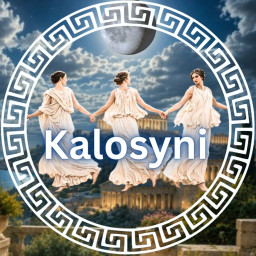
Revisiting Kalosyni 's post that revitalized this thread.
My perspective is that both 1 and 2 hinge on motivation. We can't know someone else's (2) motivation. They can tell us, but we can't know what's really in their minds. That's why, I feel, we can assess behavior in others but not their motivation. Someone can say "I party because I'm an Epicurean, man!" We can ask "How did you feel the next day?" But we can't police (simply for lack of a better word) who calls themselves an Epicurean... Any more than Christians can't police who calls themselves a Christian.
Now, for (1), that's another thing. If I call myself an epicurean simply because I like to eat fancy food, and drink fine wine, that's one thing and a very surface stereotype understanding of what that word means (hence my not capitalizing the word). But we can't forbid that usage. If, on the other hand, we decide - are motivated - to lean about this philosophy and to apply it to living our lives, we think of ourselves as Epicureans. Someone who lives a minimalist lifestyle may also honestly call themselves an Epicurean from another popular understanding of the actual philosophy. We here would tend to disagree with them, but can we - should we - try to make them stop? I'd say no. None of us have that authority. There is no "apostolic succession" from Epicurus to our time. And there could be denominations if there even were! The most we can do is try to get a deeper understanding of the philosophy out there and encourage sincere students of Epicurus.
The poet Lucretius, secular as he was, featured her prominently in his poem for that and other reasons.
Yes, at least 14 times by name, and most prominently, of course, right at the start.
And the traditional gods are fine to use metaphorically. I always seem to go back to...
...whoso
Decides to call the ocean Neptune, or
The grain-crop Ceres, and prefers to abuse
The name of Bacchus rather than pronounce
The liquor's proper designation, him
Let us permit to go on calling earth
Mother of Gods, if only he will spare
To taint his soul with foul religion.
So precision is generally a good idea. No true Epicurean would want to be less than clear!
Well played! I see what you did there.![]()
Onenski has articulated much more eloquently than I could the thoughts that have been rolling around in my mind on this topic. Thank you!
The question comes down to "Who gets to be the gatekeeper?" and "Who defines the in-group and who gets to exclude the out-group?" That's what I like about Onenski 's five categories. They show the spectrum of potential inclusivity and exclusivity. Granted, *I* can say who *I* think should be "allowed" to carry the label of "Epicurean," but I cannot assert any authoritative mandate on the "proper" use of that "title."
We could maybe/probably assess someone's (or some character's) behavior as more or less prudent, more or less likely to lead to a pleasurable outcome. Even Epicurus, I would argue, did that! But do we get to assess whether someone gets to call themselves an "Epicurean"? Of that, I'm a little more skeptical. Honestly, I have a hard time "accepting" that Thomas Jefferson was a "real" Epicurean even though he was a self-professed one. But then I would appear to be falling into that fallacy I brought up, wouldn't I?
One thing to watch out for in conversations like this is not to fall into the "no true Scotsman" fallacy.
Realizing this is way off topic for the thread:
On the "three-wheeled cart", DeWitt cites his own paper in his footnote: 13 "N. W. DeWitt, "The Three-Wheeled Chair of Epicurus," CP 35(1940) 183-185.
For the Pamela Gordon footnotes, it appears that in Diskin Clay's Paradosis and survival : three chapters in the history of Epicurean philosophy. According to our library catalog, it's supposed to be on the shelf in our Main Library - Social Sciences Department B512 .C57 1998. I'm putting this here for reference so I can look it up tomorrow. I'm really curious if Clay himself translates it that way.. or if he's referencing DeWitt.
I've seen it glossed as metaphorically "easily influenced" (lit., thrice-rolled). So the line would end up being, “If you [plural], and Themista in particular invite me, I am capable of being easily influenced and rushing to wherever you are.” That seems more colloquial. The word also appears to be a hapax legomena (I just love that phrase. It just means "only occuring once in the corpus of texts"), so interpretation is virtually wide open.
Maybe the symbol of Epicureanism should be a tricycle!
LOL. That's taken, sort of...
For what it's worth, here's my page on that...
Don, do you have a vector file of your Four Atoms version of it
I just threw that together on Paint.net. The image I posted is all I have.
the larger atom at the top
I couldn't not see that as a hair curl in the middle of his forehead, like Superman.
I guess my pareidolia is overactive.
Somehow I can't see it (on your wall)? Can you please also post it to this thread?
I couldn't post images to my wall, so I edited the post above.
I very much like the variant of the moon Don
My major misgiving about the moon I'm using is that it can be interpreted as a moon with a surprised look on its face. (Once you see it, you can't unsee it.)
LOL I got tired of looking at the Moon going "Oh!" That experiment didn't last long. For those who are curious what that moon looked like, I'll post here for future reference:
I've gone back to Eikadistes ' 20er moon logo. It pairs nicely with my Epicurist tagline. I still like the waning gibbous moon as a symbol.
I very much like the variant of the moon Don
My major misgiving about the moon I'm using is that it can be interpreted as a moon with a surprised look on its face. (Once you see it, you can't unsee it.)
alluding to the shibboleth of the size of the sun.
You are clever. That didn't even cross my mind ![]()
I like the simplicity of the moon symbol, however it's similarity to the crescent and star might be confusing for some and offensive to others.
Yes, now I begin to think that could be an issue.
Also maybe looks "wiccan".
Thinking to set this idea aside for now.
Honestly, I'd be more inclined to adopt the 20er moon given those others who use moons. Nobody has a monopoly on the phases of the moon.
PS. In light of that, I've taken Kalosyni 's version of Eikadistes' 20er moon phase and added 4 atoms of 4 different sizes in a diamond pattern inspired by Godfrey 's post above. I'm saying they represent atoms (varying in size) as well as the 4 lines of the Tetrapharmakos. I could have gone with three for the Canon. To be clear: I'm NOT endorsing this. Merely playing and "trying it on for size" for a little while.