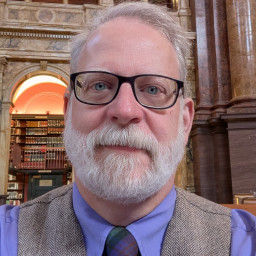


The following lines were first to be meant as a commentary on one of Cassius' statements in our last Sunday Zoom Meeting, but they perfectly fit into this discussion!
"Developing one's best potential" or something similar was a statement of Cassius at the end of our Zoom meeting. Perhaps it's an American perspective to seek for the highest, the best, the ultimate and has to be seen in its cultural context. Or I just don't get him right.
But I'm critical of this phrase as it appears to my ears. According to my understanding, Epicureanism isn't about living a frugal life and achieving tranquility under a state of painlessness. Furthermore, it's searching for pleasure, trusting one's senses, feelings, conceptions of the world. Bringing them together to "dance", as Cassius wrote in his poem "Thus Purred Catius' Cat". According to my understanding, pleasure is both epistemological (a canonical term) and teleological. It's based on our very conditions as human beings and defines also the aims of our life. It is the beginning and the end of the happy life.
In a world where every sensation that isn't painful is pleasant, we just have to open our senses and to see how many pleasurable experiences are at our hands. It enables us to enjoy and enrich ourselves with all that tiny little good influences around us. Good food (especially food!), a nice breeze under a blue sky, a vibrant talk with a friend while walking a thriving urban landscape or a magnificent peace of nature. There are so many good things around all the while, hence I'm not seeking for more, for the better, for the Everest. I am just satisfied and happy. I don't need to be a dollar millionaire, although everybody around me will tell me otherwise. Instead of living a life based on the very foundations of the human nature - as Epicurus emphasizes over and over again in the fragments that are available to us - they worry about abstract things which have no connection to happiness in the first place but are grounded in empty desire. I know, there is this relativism going on, teaching a broad definition of pleasure that is so common that there is ultimately no need for any philosophical insight anymore. I'm not talking about the little obsessions that people are striving for but e.g. about people in their 60s who worry as wealthy persons more about money as they did when they were young and had no money. They think wealth will give them security (and finally immortality!), all the while they should pursue their fundamentals: Learning philosophy, understanding the good life. They end up fighting with their relatives for the bigger share of the inheritance of their parents, ironically they are themselves already in cognitive decline. Otherwise they would recognize they give up precious relationships which build up a cornerstone of happiness. This isn't an extraordinary example but an usual experience you will find all over the place. 10 or 20 years later they end up in a nursing home, money and power then doesn't matter anymore but "moral" strength would, the capacity to stand firm, having a philosophy that guides them through the last mile. Diogenes of Oinoanda, having reached old age is the extraordinary man who reflects his past life, rejoices in the pleasures and the superior understanding of the universe he has achieved. He is at the top, having reached the heights where no snow falls and pure light is shining. This is the man I would like to be!
I like Epicurus' categorisation of desires. According to my understanding, a common misunderstanding is to assume that unnecessary desires are just something that is unnecessary and can be pursued whenever it seems they do not harm. The problem ist, I suggest, that the just natural but unnecessary category already covers what most of us think of as "unnecessary": Something that is related to our natural basis and because of that it is able to give us joy, but it's nothing that is necessary for survival. I am totally okay with that.
The neither natural nor necessary category is there because it relates to events and experiences in life that just nurish abstract ideas and notions about the world. The example of some senior citizens, seduced by greed for money and hunger for endless life, instead of recognizing their limits is something that has a very strong impression on me.
I know Cassius' is fighting the image of the minimalist frugal Epicurean who lives on bread and water but I would like to see more sensitivity as to why there is a category of"unnecessary desires" in the first place.
 I'll try to join, too.